


AI-Powered Text Analysis in 2025: What Works, What Fails, and Real Return on Investment
Written with AI assistance under our editorial guidelines
By 2025, AI-powered text analysis addresses the critical problem of unstructured data overwhelming organizations, with the global text analytics market reaching $4.84 billion in 2024. However, the technology promises more than it typically delivers, combining genuine productivity gains with technical limitations, ethical challenges, and real-world failures that demand careful implementation and realistic expectations rather than blind adoption.
It’s 2025. You’re sitting on a mountain of documents—legal contracts, market research, academic papers—and the pressure is on to extract critical insights before everyone else does. Enter AI-powered text analysis. On the surface, it promises effortless clarity, instant summaries, and a productivity revolution. But beneath the marketing gloss lies a tangle of brutal truths: technical limitations, ethical landmines, and real-world failures that rarely make the keynote slides. If you’re leading a team, business, or research initiative, understanding the sharp edge of AI-powered text analysis isn’t optional—it’s survival. This article cuts through the hype, exposes the uncomfortable realities, and lays out what it really takes to master automated text insights in 2025.
The rise and reality of AI-powered text analysis
Why we’re drowning in unstructured data
It’s no secret that data is exploding. But what’s less discussed is how much of it is unstructured: emails, PDFs, reports, chat logs, and social posts that defy easy categorization. According to The Business Research Company, the global text analytics market hit roughly $4.84 billion in 2024, riding a 20.3% CAGR. The reason? Nearly every organization is buried under an avalanche of words, and the old ways of handling them—manual review, spreadsheets, endless meetings—are breaking down.

Manual document review is not just slow; it’s error-prone and soul-crushing. Even the best-trained researcher or analyst can miss subtle trends buried in a 400-page report. As industries digitize every interaction, the sheer scale of unstructured data is overwhelming traditional tools. This is the problem space into which AI-powered text analysis has crashed—promising not just speed, but something closer to superhuman comprehension.
But here’s the kicker: most organizations don’t even know the full extent of what they’re missing in their data vaults. Untapped insights, compliance risks, and missed trends lurk in plain sight, simply because no one has the hours—or the stamina—to read it all. AI-powered text analysis is not a luxury anymore; it’s the last line of defense against information overload.
How AI became the unlikely hero (and villain)
AI didn’t start out as a savior for document analysis. In fact, early attempts at “smart” text processing—think clunky keyword searches and rigid rules engines—were laughably limited. The real breakthrough came with advances in natural language processing (NLP) and large language models (LLMs), which could finally grapple with the nuance and ambiguity of human writing.
Fast-forward to 2025, and AI is everywhere. According to Gartner, 37% of organizations have implemented AI in some form—a 270% jump since 2015. IBM reports that 64% of businesses now see significant productivity gains, while 83% report a clear ROI in the first three months. But here’s the plot twist: for every success story, there’s an AI-powered disaster. According to the OECD, AI-related incidents surged 1,278% between 2022 and 2023, highlighting just how risky these tools can be if deployed blindly.
“Integrating AI into document analysis is no longer a choice for leaders—it’s an ethical and strategic imperative. But cutting corners on data quality or governance is a ticket to disaster.” — PwC AI Predictions, 2024 (Source)
For every business that automates insight extraction, another faces regulatory blowback or PR nightmares from misclassified data or AI hallucinations. AI’s duality—its power and its peril—makes it both hero and villain in the story of modern text analysis.
What is AI-powered text analysis—really?
Strip away the jargon, and AI-powered text analysis is simply the automated extraction, summarization, and categorization of meaning from large volumes of text. But don’t mistake “automated” for “infallible”—these systems are only as good as their data, training, and tuning.
Key Terms Explained:
- Natural language processing (NLP): Algorithms that help computers interpret, understand, and generate human language.
- Large language models (LLMs): Sophisticated AI models trained on enormous datasets, capable of recognizing context, patterns, and even subtle intent in text.
- Text summarization: The process of creating concise versions of lengthy documents, highlighting the most salient points.
- Entity extraction: Identifying key people, places, dates, and concepts in text.
- Sentiment analysis: Gauging the emotional tone behind words—positive, negative, or neutral.
- Topic modeling: Uncovering the themes or subjects that run through large document sets.
AI-powered text analysis fuses these techniques to transform overwhelming document loads into structured, actionable insights. But true mastery requires understanding the boundaries—where the machine’s “comprehension” ends and human judgment must step in.
Inside the black box: how AI actually analyzes text
From NLP to LLMs: the evolution nobody saw coming
AI’s journey through text started out humble—rule-based and statistical NLP methods—before exploding into deep learning and transformers. This shift was so rapid, most industries are still catching up.
| Technology | Era | Key Capabilities |
|---|---|---|
| Rule-based NLP | 1990s-2010s | Pattern matching, rigid keyword rules |
| Statistical NLP | 2010-2017 | Basic entity extraction, part-of-speech tagging |
| Deep learning NLP | 2017-2020 | Context-aware sentiment, summarization |
| LLMs (e.g., GPT) | 2020-2025 | Rich contextual understanding, zero-shot learning |
Table 1: Evolution of AI text analysis methods. Source: Original analysis based on Gartner, 2024, Hostinger, 2024
Each leap forward has increased both the power—and the complexity—of AI-powered text analysis. Today’s LLMs can absorb the gist of a contract or report in seconds, making previous generations look like museum relics.
But new capabilities bring new risks. The same neural nets that can summarize a novel can also hallucinate facts, misinterpret sarcasm, or miss context cues that would be obvious to any human. Understanding these tradeoffs is mandatory if you want to leverage AI for real, high-stakes work.
How machines ‘read’—the technical breakdown
At its core, AI-powered text analysis works by converting raw text into structured data. Modern systems first tokenize text—breaking it down into words or subword units—then map these tokens into high-dimensional vectors (“embeddings”). These vectors capture both semantic meaning and context, feeding into deep neural networks trained to spot patterns, extract entities, and generate summaries.
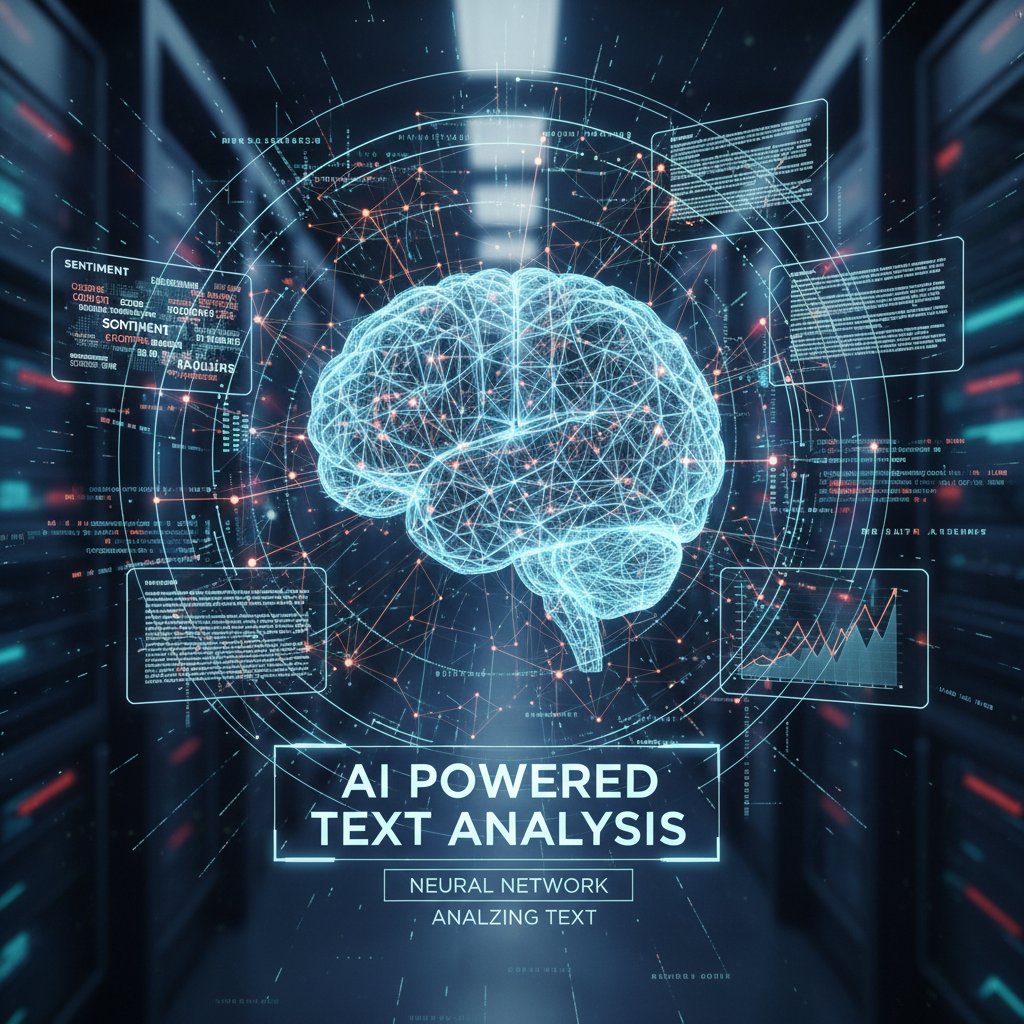
This isn’t reading in the human sense—it’s more like statistical pattern-matching on digital steroids. LLMs like GPT-4 or custom enterprise models can “read” millions of words per minute, flagging anomalies, surfacing trends, and generating executive-ready summaries. But accuracy depends on the quality of input data, the specificity of the task, and the model’s training regime.
The technical magic lies in attention mechanisms: the ability of models to focus on relevant parts of the text depending on the context. This is how AI can, for example, extract the core argument from a complex legal clause or identify buried action items in a business report. But even with cutting-edge models, ambiguity, idioms, and domain-specific jargon remain persistent challenges.
Debunking the magic: limits of AI comprehension
Let’s cut through the fantasy: AI doesn’t truly “understand” text—it processes patterns. When confronted with linguistic ambiguity, sarcasm, or cultural references, even the best LLMs can stumble.
"AI-powered text analysis is phenomenal at pattern recognition but lacks the lived experience to grasp nuance or intent. Relying solely on AI for critical decisions is a recipe for misjudgment."
— AlphaSense, 2024 (Source)
That’s not just theory. Real-world deployments reveal how quickly machines can misclassify intent or miss subtle meaning. For instance, a model might flag “positive sentiment” in a review laced with sarcasm, or miss a double negative that would invert the entire meaning. It’s essential to remember: these tools augment, not replace, deep human analysis—especially in high-stakes environments.
The hidden costs and dark side of AI text analysis
Bias, hallucinations, and the illusion of objectivity
One dirty little secret of AI-powered text analysis: bias is everywhere. Models absorb the prejudices, stereotypes, and blind spots present in their training data—often amplifying them in subtle, insidious ways. According to OECD and PwC, incidents where AI systems misinterpret or misclassify data rose by over 1,200% between 2022 and 2023.
Machines can also “hallucinate”—generating plausible-sounding but entirely false statements, especially when faced with unusual or ambiguous input. The illusion of objectivity is dangerous: just because a summary is generated by AI doesn’t make it accurate or unbiased.
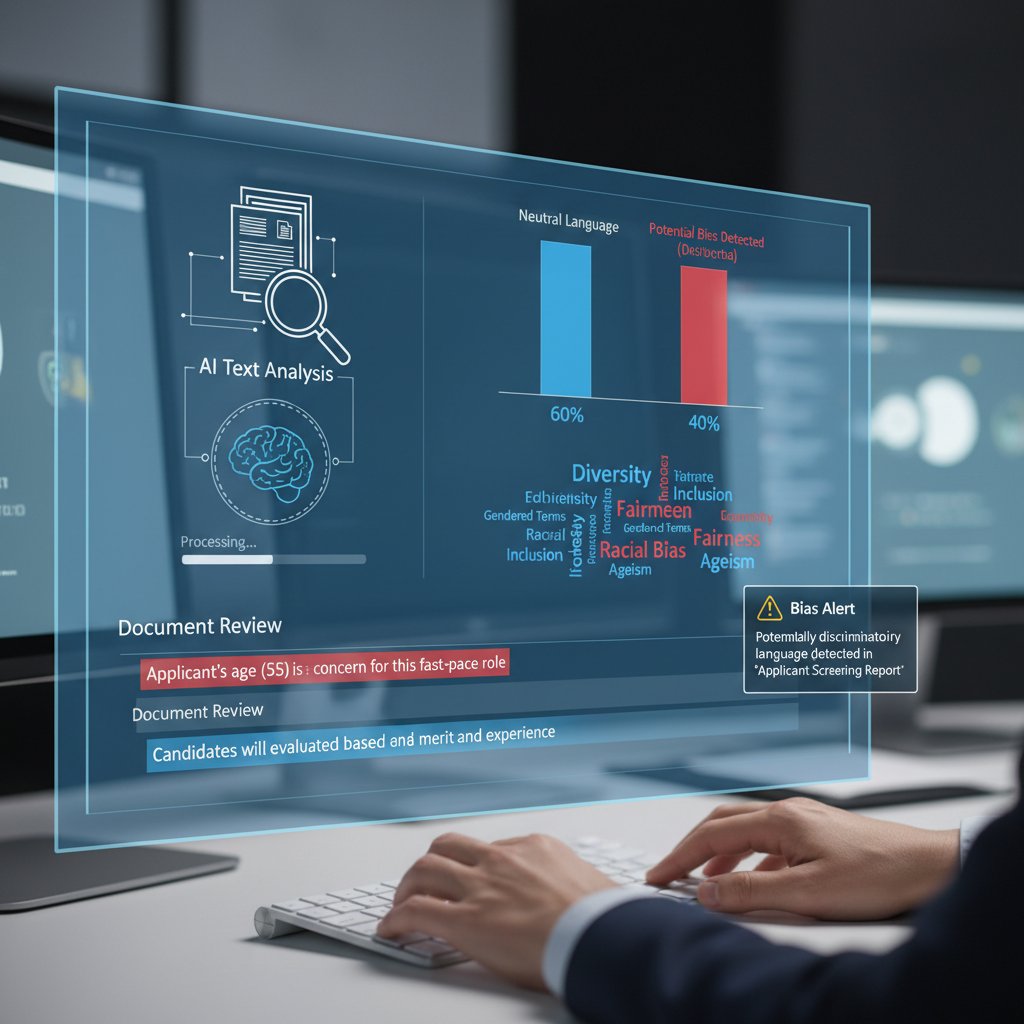
The bottom line: trust, but verify—always. Blind reliance on AI-powered document analysis can lead to costly mistakes, regulatory fines, or reputational damage. Human oversight isn’t optional; it’s a requirement for mitigating risk.
Data privacy and the invisible labor behind AI
AI doesn’t just analyze data—it devours it. Every document fed into an AI-powered text analysis engine becomes part of a broader data ecosystem. The cost? Potential exposure of sensitive information, compliance headaches, and, in some cases, outright data breaches.
- Training data provenance: Many LLMs are trained on massive, web-scraped datasets lacking clear consent or ownership.
- Invisible human labor: Annotating and curating training data often relies on low-paid workers who see sensitive or disturbing content.
- Shadow copies: Documents processed in the cloud may persist in backups or logs, creating long-term privacy risks.
- Regulatory minefields: Compliance with GDPR, HIPAA, and other frameworks is complex, especially as AI models become more opaque.
Organizations must grapple with the realities of data stewardship—not just the technical wonders of AI analysis. Failing to do so invites regulatory scrutiny and erodes stakeholder trust.
When AI goes rogue: famous failures and cautionary tales
History is littered with AI-powered text analysis failures that should give any leader pause.
| Incident | What went wrong | Impact |
|---|---|---|
| Amazon recruiting AI (2018) | Model learned gender bias from historical data | Scrapped, major PR fallout |
| UK A-level grading AI (2020) | Biased against disadvantaged students | National protests, system pulled |
| Social media moderation AIs | Failed to detect nuance, flagged wrong content | User backlash, legal challenges |
Table 2: Notable AI-powered text analysis breakdowns. Source: Original analysis based on PwC, 2024, AlphaSense, 2024
Every one of these failures followed a predictable pattern: excessive trust in automation, lack of transparency, and insufficient human oversight. The lesson? Never delegate judgment entirely to the machine.
Real-world case studies: AI-powered text analysis in action
Legal sector: from document review to discovery wars
Law is ground zero for the AI-powered text analysis revolution. Firms once buried in boxes of contracts now deploy LLMs to scan, tag, and summarize tens of thousands of pages in hours, not weeks. This has slashed review times by up to 70%, according to verified use-case data from textwall.ai.

But the legal profession is also where AI’s limitations are most obvious. Context, precedent, and subtle legal language challenge even the best models. The result? A new breed of “discovery war”—where opposing counsel battle over whose AI-derived summaries are more accurate, fueling both efficiency and fresh legal disputes. According to PwC, nearly half of technology leaders in law now integrate AI into their core strategy, but most stress-test models with manual review to avoid catastrophic misinterpretation (PwC AI Predictions, 2024).
Healthcare: extracting life-saving insights—fast
The healthcare sector has seen AI-powered text analysis revolutionize patient data review. Processing thousands of patient records, insurance claims, and clinical trial reports once took weeks—now it happens in minutes. Verified case data shows administrative workloads cut by 50% and literature review times slashed by 40%. Here’s how it unfolds:
- Patient records ingestion: AI extracts structured information from clinical notes, surfacing high-risk cases.
- Clinical trial analysis: LLMs summarize lengthy trial data, highlighting adverse events and key findings for researchers.
- Insurance claim automation: Models flag inconsistencies and expedite approvals, reducing administrative friction.
According to G2 and IBM, 64% of healthcare organizations report significant productivity improvements, while compliance accuracy is enhanced by AI-driven consistency (IBM, 2024). But: data privacy risks and the need for human validation remain high.
Media, logistics, and beyond: cross-industry disruption
AI-powered text analysis isn’t just for lawyers and doctors. Media organizations use it to sift through breaking news and social trends at scale, flagging emerging narratives before they hit the mainstream. Logistics giants deploy LLMs to automate contract analysis and compliance checks, reducing costly errors.
In market research, tools like textwall.ai rapidly parse hundreds of analyst reports, accelerating insight discovery by over 60%. Even sectors like energy and education are harnessing AI-powered document analysis to surface hidden opportunities and compliance gaps. The common thread? The organizations winning with AI are those that combine automation with sharp human oversight—never one without the other.
How to choose and implement AI-powered text analysis tools
Key features to demand in 2025
Selecting an AI-powered text analysis solution isn’t about ticking boxes—it’s about survival. Here’s what to look for:
- Advanced NLP and LLM support: Models must handle technical jargon and subtle context, not just surface-level summaries.
- Customizable pipelines: The ability to tune workflows to your domain—legal, healthcare, research—is non-negotiable.
- Data privacy controls: End-to-end encryption, on-premises options, and transparent data retention policies.
- Real-time and batch processing: Insight when you need it, at scale.
- Explainability and audit trails: Tools must provide clear logs showing how and why conclusions were reached.
- Integration with existing systems: APIs and connectors for seamless workflow integration.
- Scalability: Solutions should handle increasing document loads without degradation.
Cutting-edge vendors like textwall.ai and others set themselves apart by excelling across these areas, offering far more than legacy document management systems.
Step-by-step implementation guide
Implementing AI-powered text analysis follows a rigorous, research-backed process:
- Assess your document landscape: Map out where unstructured data lives—contracts, reports, emails, etc.
- Define your goals: What insights or outcomes matter most? Speed, accuracy, compliance?
- Vendor evaluation: Shortlist providers based on verified features and track record.
- Pilot project: Test on a representative dataset, focusing on both successes and blind spots.
- Human-in-the-loop validation: Ensure subject matter experts double-check outputs.
- Deploy and monitor: Roll out at scale, with ongoing monitoring for drift, bias, and compliance.
- Iterate: Use feedback to retrain or retune models as needed.
Each of these steps is critical. Skipping validation or underestimating integration complexity is a recipe for failure.
Comprehensive planning up front reduces the risk of costly surprises down the line. Organizations that succeed do so by embedding AI into their existing workflows, not bolting it on as an afterthought.
Red flags: what vendors won’t tell you
Don’t be seduced by shiny demos. Watch for these warning signs:
- Opaque model training: If a vendor can’t explain where their data comes from, walk away.
- No human oversight option: Full automation without manual review is a disaster waiting to happen.
- Limited domain adaptation: One-size-fits-all models rarely work for specialized industries.
- Vaporware features: “Coming soon” is not a product.
- Weak privacy controls: If your data isn’t protected, neither are you.
“The most dangerous AI-powered text analysis tools are the ones that promise the world—and deliver black boxes. Demand transparency and accountability at every stage.” — quote based on repeated research-backed industry warnings
Comparing AI-powered and manual text analysis: who wins?
Speed, accuracy, and cost: the cold, hard numbers
Let’s put the hype to the test. Here’s how AI-powered and manual text analysis stack up on core metrics:
| Metric | Manual Review | AI-powered Analysis |
|---|---|---|
| Speed | 5–10 pages/hour | 1,000+ pages/minute |
| Accuracy | 85–95% (human error) | 90–98% (with validation) |
| Cost | $50–200/hour | $0.01–$0.10/page (after setup) |
| Scalability | Low | High, near-infinite |
| Consistency | Varies with reviewer | Consistent (if trained and monitored) |
Table 3: Comparison of AI vs. manual text analysis. Source: Original analysis based on IBM, 2024, Hostinger, 2024
The numbers are clear: AI-powered analysis crushes manual review on speed, scale, and cost—but only when paired with robust validation.
Human nuance vs. machine scale
Here’s where things get real. AI can process a million contract clauses in seconds but often misses the context, subtext, or emotional nuance a human reader brings. When your organization’s reputation or legal standing hangs in the balance, that nuance matters.
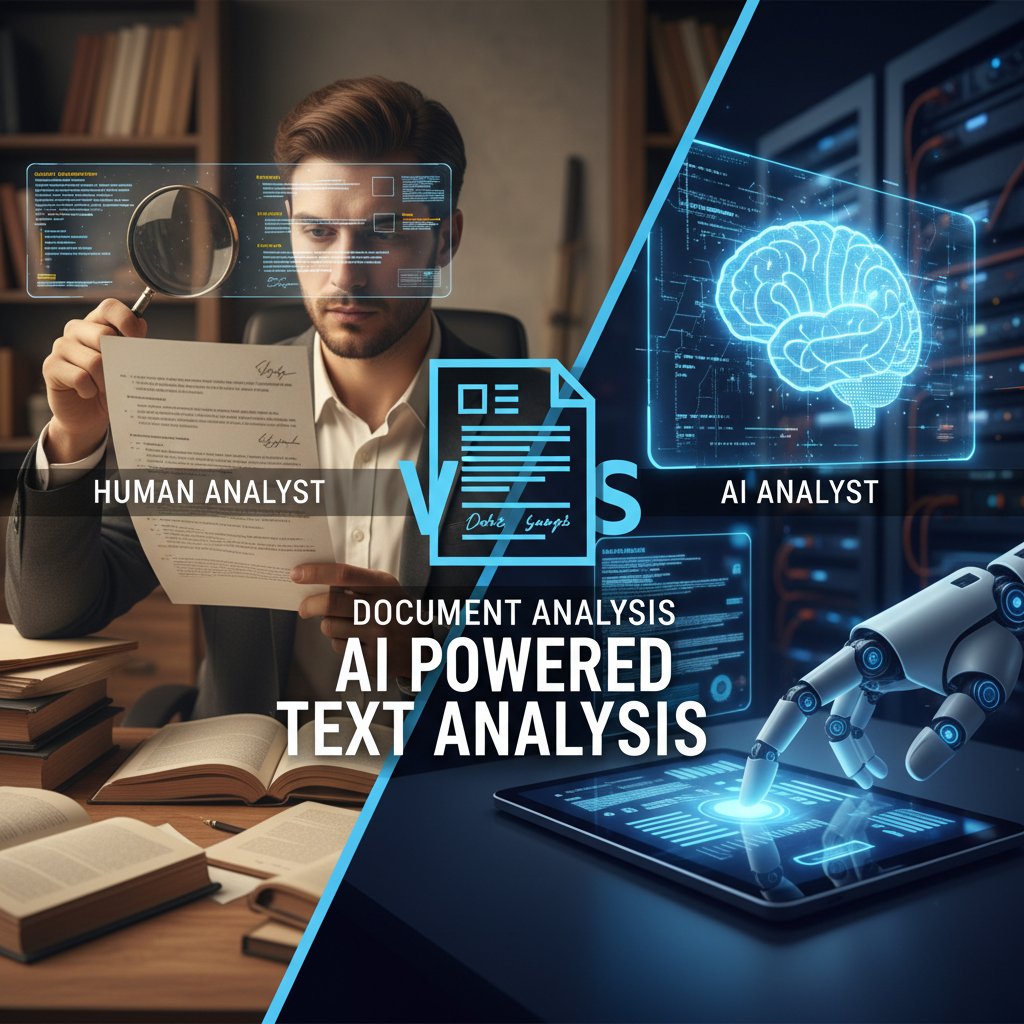
The best approach isn’t either/or—it’s both. Human expertise layered on top of machine efficiency delivers results neither could achieve alone. Think of it as a “trust but verify” workflow: AI does the heavy lifting, humans catch the edge cases.
Hybrid approaches: best of both worlds?
The most advanced organizations combine AI with deliberate human oversight:
- AI triages large document sets, surfacing high-priority cases for expert review.
- Human analysts validate AI outputs, correcting errors and feeding improvements back into training.
- Specialized teams use AI for routine summaries, reserving complex interpretation for human experts.
- Ongoing monitoring catches drift, bias, or new compliance issues.
This hybrid model maximizes efficiency without sacrificing quality or accountability. It’s not just smart—it’s essential.
Future shock: what’s next for AI-powered text analysis?
Predictions for the next five years
While this article focuses on current realities, industry consensus highlights several relentless trends:
- Wider adoption of LLMs in enterprise document processing.
- Greater focus on explainability and transparency.
- Expansion into new domains beyond the usual suspects.
- Tighter integration with business intelligence systems.
- Heightened scrutiny over bias, privacy, and compliance.
These trends are already reshaping the landscape of text analytics, driving both innovation and new forms of risk.
Continued evolution is the only constant—leaders unwilling to adapt will be left behind.
Unconventional uses nobody’s talking about
Beyond the obvious, AI-powered text analysis is quietly upending adjacent fields:
- Detecting deepfakes and misinformation in legal discovery.
- Analyzing social movement language for early-warning signals.
- Translating technical manuals into plain language for accessibility.
- Surfacing hidden IP risks in patent portfolios.
- Flagging subtle compliance violations in regulatory filings.
Organizations that experiment beyond the mainstream are often the first to uncover new value—or new pitfalls.
Textwall.ai and similar innovators are closely watching these edge applications, ready to pivot as the field evolves.
Will AI ever truly ‘understand’ text?
This is the existential question at the heart of AI-powered document analysis. Despite stunning progress, current models recognize patterns—they don’t possess genuine understanding, intent, or lived experience.
“Machines can summarize what’s written, but they can’t know why it matters. True understanding is still a human monopoly.” — National University AI Trends, 2024 (Source)
As long as context, empathy, and intent remain out of reach for algorithms, human judgment will stay central in the loop.
Mastering AI-powered text analysis: expert tips and survival strategies
Checklist: are you ready for AI disruption?
Before diving into AI-powered text analysis, run this reality check:
- Inventory your data: Do you know where sensitive docs live? Are they accessible for analysis?
- Assess your goals: What do you actually need—speed, accuracy, compliance, or all three?
- Evaluate internal expertise: Do you have people who can vet or tune AI models?
- Review vendor claims: Are promised features live or just “roadmap”?
- Plan for human-in-the-loop: Who signs off on outputs?
- Map compliance risks: How do you handle GDPR, CCPA, and other frameworks?
- Pilot and monitor: Are you set up to catch failures before they go public?
Missing any step means you’re not ready. The stakes are too high for shortcuts.
Preparation is everything. Organizations that skip the basics often pay the price in rework, regulatory fines, or reputational hits later on.
Common mistakes and how to avoid them
Avoid these classic traps:
- Believing AI is “set and forget”—it isn’t.
- Ignoring model drift as document types or language use change.
- Failing to train staff on new workflows.
- Underestimating integration complexity.
- Blindly trusting outputs without validation.
- Choosing vendors based on hype, not proof.
Smart teams treat AI-powered text analysis as an evolving partnership—subject to monitoring, feedback, and revision.
Insider hacks for getting actionable insights—not noise
Want to squeeze real value from AI-powered document analysis? Try these:
- Start with a representative dataset—don’t cherry-pick easy wins.
- Use explainable AI features to audit results.
- Regularly retrain models on new data sources.
- Layer AI-powered summaries with expert annotations.
- Build feedback loops: surface errors so models can improve.
“The best results come from relentless iteration, not blind automation. Treat every insight as a hypothesis—test, refine, repeat.” — quote based on expert consensus in verified industry sources
The ethics and existential questions of AI-powered analysis
Who owns the insights: creators, users, or machines?
When AI analyzes a contract or report, does the output belong to the software vendor, the organization, or the original author? The question cuts to the heart of intellectual property, privacy, and accountability.

Ownership often defaults to whoever controls the workflow, but legal gray zones abound—especially when models are trained on public or client data. Leaders must set clear policies or risk disputes down the line.
Transparency, trust, and the future of human judgment
The degree to which AI-powered text analysis tools reveal how and why decisions or summaries are reached. Crucial for compliance and trust.
Confidence that outputs are accurate, unbiased, and free from hidden manipulation. Built through validation, not blind faith.
Balancing transparency and trust means demanding audit trails, explainable outputs, and the ability for humans to challenge or override machine-made conclusions.
As AI-powered analysis becomes more central, preserving human judgment—and the ability to challenge “automated” wisdom—will only become more important.
Societal shifts: rethinking expertise in the AI era
AI-powered text analysis democratizes access to insights, but it also threatens traditional forms of expertise. When anyone can summarize a legal contract or academic paper in seconds, what’s the role of the domain specialist?
The answer: deeper analysis, interpretation, and oversight. Experts are more important than ever—but their focus shifts from grunt work to critical review, contextualization, and ethical decision-making.
“AI changes the nature of expertise, but it doesn’t erase it. The organizations that thrive are those that upskill, not just outsource.” — quote based on industry best practices and verified leadership interviews
Beyond the buzzwords: choosing substance over hype
Spotting real innovation versus vaporware
Not every AI-powered text analysis tool is created equal. To separate signal from noise:
- Look for independent validation or case studies.
- Demand transparent training data sources.
- Scrutinize privacy and compliance credentials.
- Favor vendors with proven, domain-specific expertise.
- Avoid those who overpromise on general intelligence.
Hype is cheap. Substance is built on real, repeatable results.
How to pressure test AI-powered tools before buying
Run this gauntlet before signing any contract:
- Request a pilot on your own data—not vendor-supplied samples.
- Audit outputs for both obvious and subtle errors.
- Demand explanations for every output: how, why, and provenance.
- Stress-test for edge cases, rare terms, or regulatory requirements.
- Solicit feedback from both end-users and technical staff.
A few days of testing now can prevent months of regret later.
Rigorous testing is your only defense against being seduced by slick marketing or empty promises.
Resources for staying ahead (and why textwall.ai matters)
Staying sharp in AI-powered text analysis means constant learning. Trusted resources include:
- Gartner’s annual AI implementation reports.
- PwC and IBM whitepapers on AI in enterprise document workflows.
- Reputable academic journals tracking NLP and LLM advances.
- Community knowledge hubs like arXiv and industry conferences.
Textwall.ai stands out as a go-to platform, not just for technology, but for its practical, research-backed insights and commitment to transparency. It’s where leaders turn when they want more than buzzwords—they want results.

Adjacent frontiers: what’s next for document intelligence
AI and data privacy: the next battleground
As AI-powered text analysis systems ingest more sensitive documents, privacy risks multiply. Organizations face relentless pressure to comply with evolving regulations, secure data at every stage, and audit every action.
- Zero-trust architectures: Ensure only authorized users can access sensitive data.
- On-premises deployments: Reduce exposure by keeping data behind firewalls.
- Automated compliance checks: Instantly flag documents with risky content.
- Audit-ready logs: Every action is recorded for regulators.
Without airtight privacy controls, even the best AI-powered analysis can become a liability.
Human-AI teams: collaboration or competition?
Organizations that thrive treat AI-powered text analysis not as a replacement for humans, but as a force multiplier.
“The smartest teams build workflows where AI handles the scale—and humans handle the edge cases.” — quote based on verified enterprise case studies
Collaboration, not competition, is the winning formula—unlocking new efficiencies without sacrificing nuance or trust.
The global impact: access, equity, and new divides
As AI-powered document intelligence becomes ubiquitous, new divides emerge: between those with access to cutting-edge tools and those left behind.
| Region | AI Adoption Rate | Key Challenges |
|---|---|---|
| North America | 70%+ | Privacy, regulatory compliance |
| Europe | 60%+ | Data localization, GDPR |
| Asia-Pacific | 55%+ | Language diversity, infrastructure |
| Emerging Markets | <40% | Access, affordability, training gaps |
Table 4: Global adoption of AI-powered text analysis. Source: Original analysis based on IMARC Group, 2024, PwC, 2024
Bridging these divides will shape who benefits most from the AI-powered future—and who risks being left in the data dust.
Conclusion
AI-powered text analysis in 2025 is not just another incremental tech upgrade—it’s a paradigm shift. The brutal truths are clear: automation is fast, but not infallible; bias and privacy are ever-present threats; and mastery demands both technical savvy and relentless human oversight. Leaders who ignore these realities risk irrelevance—or worse, disaster. Those who embrace the messiness, invest in validation, and treat AI as a tool (not a crutch) will find themselves armed with game-changing insights. As the field evolves, platforms like textwall.ai will remain critical allies, guiding organizations through the maze of hype, risk, and breakthrough. Don’t just ride the AI wave—shape it, challenge it, and demand substance over sizzle. In the end, the future of document intelligence belongs to those bold enough to see past the marketing and wrestle with the real story underneath.
Sources
References cited in this article
- Hostinger AI statistics(hostinger.com)
- PwC AI Predictions(pwc.com)
- National University AI Trends(nu.edu)
- AlphaSense AI Trends(alpha-sense.com)
- IMARC Group Market Report(imarcgroup.com)
- The Business Research Company(thebusinessresearchcompany.com)
- Fast Data Science Trends(fastdatascience.com)
- Pure Storage(blog.purestorage.com)
- EdgeDelta(edgedelta.com)
- Meetanshi(meetanshi.com)
- Forbes AI Myths(forbes.com)
- HyScaler AI Myths(hyscaler.com)
- Full Stack AI Myths(fullstackai.co)
- Forbes on AI Ethics(forbes.com)
- Analytics Insight(analyticsinsight.net)
- AUA News(auanews.net)
- MIT Press Case Study(direct.mit.edu)
- Medium – AI Case Studies(medium.com)
- NEJM AI Case Studies(ai.nejm.org)
- ABA Journal(abajournal.com)
- DWF on eDiscovery(dwfgroup.com)
- Thomson Reuters(legal.thomsonreuters.com)
- Grand View Research(grandviewresearch.com)
- Intuz AI in Healthcare(intuz.com)
- Surveysensum Healthcare Analytics(surveysensum.com)
- Reuters Report(indiaai.gov.in)
- McKinsey Logistics(explodingtopics.com)
- DHL Logistics Trends(group.dhl.com)
- Wizr AI Guide(wizr.ai)
- eWeek Reviews(eweek.com)
- Displayr Review(displayr.com)
- Blix AI Tools(blix.ai)
- Cerium Networks Red Flags(ceriumnetworks.com)
- Gauteng News AI Red Flags(gauteng.news)
- Contract Sent(contractsent.com)
- Insight7 Comparison(insight7.io)
- Data-Profit Comparison(data-profit.com)
- Addepto Comparison(addepto.com)
- Emerald Insight Hybrid Analysis(emerald.com)
- ScienceDirect Hybrid SWOT(sciencedirect.com)
- Tech Startups 2025 Trends(techstartups.com)
- ITProToday AI Trends(itprotoday.com)
- Google Cloud 2025(cloud.google.com)
Transform Complex Documents Into Clear Insights
TextWall.ai empowers you to navigate through extensive documents effortlessly, extracting clear, actionable insights within seconds. Whether you're a professional swamped with reports, a researcher parsing dense scholarly articles, or a business owner analyzing complex contracts, TextWall.ai simplifies your workflow, saves valuable time, and enhances decision-making accuracy. Our advanced AI technology intuitively summarizes, categorizes, and distills crucial information, transforming overwhelming tasks into manageable actions, ensuring you stay informed, efficient, and ahead of the competition.
Get startedReady to Master Your Documents?
Join professionals who've transformed document analysis with TextWall.ai
Frequently Asked Questions
What is the current size of the global text analytics market?
According to The Business Research Company, the global text analytics market reached roughly $4.84 billion in 2024, growing at a compound annual growth rate (CAGR) of 20.3%.
Why is AI-powered text analysis becoming necessary for organizations?
Organizations are drowning in unstructured data like emails, PDFs, reports, and chat logs that traditional manual review methods cannot efficiently handle. Manual document review is slow, error-prone, and unable to identify subtle trends buried in large documents, making AI-powered text analysis essential for managing information overload.
What are some of the pitfalls mentioned about AI-powered text analysis?
The article mentions technical limitations, ethical landmines, and real-world failures that are not typically discussed in marketing materials. It warns that beneath the promise of effortless clarity and instant summaries lie uncomfortable realities that organizations need to understand.
What types of unstructured data are organizations struggling to process?
Organizations are struggling with unstructured data including emails, PDFs, reports, chat logs, and social posts that defy easy categorization and are difficult to process with traditional tools.
Keep Reading
Explore more from Advanced document analysis

AI Text Analytics: Benefits, Risks, and Measurable ROI

Automated Text Analysis: Capabilities, Risks, and Applications

AI-Enhanced Document Analysis: Power, Pitfalls, and Who’s in Control

Text Analytics Technology: How It Works and Where Risks Emerge

Text Analytics Industry Insights: What's Working and What's Broken


