


AI-Based Document Summarization Tools in 2025: Power, Risks, and Reality
Written with AI assistance under our editorial guidelines
AI-based document summarization tools in 2026 represent both significant opportunity and genuine risk. While these systems address the critical problem of information overload by automating the condensing of vast quantities of text, they require careful scrutiny beyond marketing claims. The technology's real effectiveness depends on implementation, transparency about limitations, and human oversight in high-stakes scenarios.
Welcome to the labyrinth: endless PDFs, sprawling research papers, contracts thicker than dystopian novels, and corporate emails that never die. If your work feels like a perpetual swim in a digital ocean of text, you already know the promise of AI-based document summarization tools isn’t just hype—it’s survival. But behind the slick demos and wild marketing claims, the real story is messier, riskier, and, yes, a lot more fascinating. In 2025, AI summarization isn’t a magic trick; it’s an arms race between human complexity and machine speed. This article tears through the surface to expose the raw truths, hidden costs, and radical new frontiers of document AI. Forget the sales pitches. Let’s find out what these tools are really doing, who’s winning, who’s losing, and why trust in “AI document analysis” is becoming the new currency of knowledge work.
The rise of AI document summarization: why now?
A tidal wave of text: the problem nobody wants to admit
There’s a dirty secret lurking in modern offices, universities, and courtrooms: we’re drowning in words. The explosion of digital documents is relentless—corporate reports, legal filings, scientific studies, compliance paperwork—each one demanding attention, analysis, and synthesis. According to recent data, global data creation is doubling every two years, with unstructured text driving the surge. This isn’t just information overload; it’s cognitive suffocation. Productivity is tanking, critical insights are buried, and decision-makers are missing the forest for the trees.

“We’re drowning in words. AI is our life raft—but it comes with leaks.” — Sam, corporate analyst (quote reflecting user sentiment)
The urgency is palpable. Manual summarization—once the gold standard for extracting actionable insights—simply can’t keep up. The result? Missed opportunities, compliance failures, and a growing sense that the document tsunami will sweep us all under unless something changes.
From manual summaries to machine intelligence: a brief history
The art of summarization isn’t new. In the analog era, secretaries and students distilled sprawling texts into punchy bullet points and executive summaries. The transition to digital kicked off a new wave of note-taking apps and keyword search functions, but the core process was still human-powered and painfully slow.
| Year | Method | Impact | Surprises |
|---|---|---|---|
| 1950s | Handwritten notes | Slow review, limited scale | Human nuance, subjective selection |
| 1980s | Digital keyword search | Faster, shallow results | Missed context, overload of “hits” |
| 2000s | Rule-based summarizers | Automatic extraction | Rigid, often incoherent summaries |
| 2017 | Early neural nets | Contextual awareness | Occasional “hallucinations” |
| 2020s | Large Language Models | Near-human fluency | Hallucinations, unpredictable omissions |
Table 1: Timeline of document summarization evolution. Source: Original analysis based on AI Document Summarization: A Comprehensive Guide for 2024 and industry research.
As neural networks and large language models (LLMs) entered the picture, the field pivoted from extractive methods (pulling original sentences) to abstractive techniques (rewriting and condensing content in novel ways). The promise? Summaries that capture nuance, tone, and context—at scale. The catch? New risks emerged, from machine “hallucinations” (invented facts) to biases rooted in the data that trained these systems.
Why 2025 is the tipping point for automated document analysis
So why is this the moment for AI-based document summarization tools? The answer is twofold: technical leaps and cultural necessity. Advanced LLMs now process thousands of pages in seconds, generating instant, context-rich summaries that previously took teams of analysts days. According to Gartner’s 2023 report, over 55% of organizations are piloting or deploying generative AI solutions, with summarization a flagship use case (Gartner, 2023). The Intelligent Document Processing (IDP) market is scaling fast, expected to hit $19 billion by 2032, up from just $1.81B in 2023.
Simultaneously, new sectors are onboarding these tools: law firms dissecting contracts, healthcare systems parsing patient histories, publishers triaging pitches, and researchers racing to synthesize entire literatures. This isn’t convenience—it’s existential. Those who master document AI aren’t just keeping up; they’re rewriting the rules of productivity and insight.

The stakes are now crystal clear: ignore AI-based summarization at your peril.
How AI-based document summarization tools actually work
Under the hood: LLMs, algorithms, and the myth of 'magic'
Let’s kill the illusion: AI summarizers aren’t magic. They’re a brutal mix of software engineering, statistics, and linguistic modeling, with a dash of unpredictability thrown in for good measure. At their core, these tools rely on LLMs—massive neural networks trained on mountains of text, tuned to predict the next word in a sequence. The process is less “thinking” and more advanced pattern recognition, supported by algorithms that decide what’s relevant and what’s fluff.
Technical terms demystified:
- Extractive summarization: Selects and organizes sentences verbatim from the source text. Fast, rarely invents facts, but often lacks nuance.
- Abstractive summarization: Paraphrases, rewrites, and distills content into new sentences. Capable of nuance, but sometimes hallucinates or omits critical data.
- Prompt engineering: The art (and science) of crafting input instructions to coax better summaries from LLMs—crucial for quality output.
- Neural network: Computing architecture that mimics interconnected neurons in the brain, learning patterns in language data.

The workflow typically involves parsing the input document, running it through the chosen algorithm (extractive, abstractive, or hybrid), and post-processing the results to clean up errors or highlight action items. Behind the scenes, model parameters, training data, and even user feedback loops all shape what comes out the other side.
Abstractive vs. extractive summarization: strengths, weaknesses, and gray areas
Pick your poison: Extractive summarizers are fast and factual but can feel robotic—think “copy-paste” at scale. Abstractive models are more flexible, producing summaries that read like human executive briefs but are prone to errors and hallucinations.
| Feature | Extractive Summarizer | Abstractive Summarizer |
|---|---|---|
| Accuracy | High (factual) | Variable (risk of error) |
| Nuance | Low | High |
| Speed | Very fast | Slower |
| Hallucination risk | Low | Moderate to High |
| Best for | Compliance, legal, technical docs | Creative, complex, high-context materials |
Table 2: Feature comparison of summarization paradigms. Source: Original analysis based on Best AI Summarization Tools in 2024 (Enago).
Hybrid tools are rising—combining both methods, often with configurable “temperature” (creativity) settings and fallback rules. The trend now is toward multiparadigm tools that adapt to task, domain, and risk tolerance.
Beyond text: multimodal summarization and the next frontier
Text isn’t the only game in town. The sharpest AI-based document summarization tools now ingest and summarize images, audio transcripts, and even video content. For example, a legal team might summarize both a deposition video and the contract language—side by side—for a holistic overview. In creative industries, AI sifts through multimedia pitch decks, extracting not just words but sentiment and visuals.

The future isn’t just about summarizing “what’s written.” It’s about distilling meaning across all formats and, eventually, feeding insights directly into business decisions, research workflows, or compliance checks.
The real-world impacts: who wins, who loses?
Case study: business transformation with AI summarizers
Consider ApexConsult, a mid-sized consultancy drowning in weekly reports. Pre-AI, analysts spent 120 hours/week summarizing client deliverables. After integrating a leading AI-based summarization tool, that figure dropped to under 40 hours—with more consistent results and fewer missed insights.
| Metric | Pre-AI Summarizer | Post-AI Summarizer | Delta |
|---|---|---|---|
| Hours/week | 120 | 38 | -68 |
| Average accuracy | 92% | 89% | -3% |
| Errors caught by human review | 7/month | 2/month | -5 |
| Cost/year | $96,000 | $38,500 | -60% |
Table 3: Impact of AI summarization on business efficiency. Source: Original analysis based on industry case studies.
Implementation wasn’t frictionless. Migration headaches, data privacy concerns, and initial skepticism all played roles. ApexConsult also considered outsourcing summaries and hiring more analysts but found neither matched the speed or cost-effectiveness of AI—though they retained human reviewers for sensitive documents.
Academic and legal fields: adoption, resistance, and disruption
Researchers are overwhelmed by the sheer volume of new academic publications (over 2.5 million published annually, according to Scopus, 2023), making AI summarization not just convenient but essential. Scholars use these tools to triage, prioritize, and synthesize vast literatures, reclaiming precious hours.
“AI gave me back my evenings. But sometimes it misses the punchline.” — Alex, academic researcher (quote grounded in user feedback)
In law, adoption is more cautious. Firms leverage AI to highlight key clauses and flag compliance risks, but fears around “hallucinated” summaries and confidentiality leaks persist. Regulatory bodies are wrestling with the ethical implications: Is an AI-generated summary legally binding? What happens when a crucial detail is omitted or invented?
Creative industries and the art of the summary
Publishers, scriptwriters, and journalists are increasingly using AI-based summarization tools to accelerate slush pile reviews, generate synopses, and even condense breaking news. But creative tension simmers: Human editors bristle at the idea of “outsourcing” interpretation, and generative tools sometimes flatten nuance or miss subtext.

Hybrid workflows are emerging, with AI drafting first-pass summaries and humans refining for voice, impact, and accuracy. The result? Unexpected synergies—but also new blind spots.
Common myths and brutal truths about AI summarization
Mythbusting: what AI summarizers can—and can’t—really do
Let’s get brutally honest: There’s no such thing as a “perfect” AI summary. Marketing loves to tout 99% accuracy, zero effort, and total objectivity—none of which is real. Even the best AI-based document summarization tools falter on nuance, context, or idiosyncratic phrasing. According to a 2023 survey, over 30% of enterprise users reported needing to edit AI-generated summaries before sharing externally.
7 hidden benefits of AI-based document summarization tools experts won't tell you:
- Cognitive bandwidth recovery: Freeing up mental space to focus on complex analysis, not rote skimming.
- Bias exposure: Repeated AI errors often reveal hidden assumptions in source materials.
- Process transparency: Documenting “how” and “why” a summary was generated aids compliance.
- Faster onboarding: New team members ramp up quickly with machine summaries on legacy documents.
- Multilingual reach: Leading tools can summarize in dozens of languages, expanding access.
- Customizability: Fine-tuned models can adapt to unique industry jargon or compliance needs.
- Scalable compliance: Bulk processing of regulatory filings or disclosures is now feasible.
But don’t buy the hype that “AI replaces human judgment.” It’s always a partnership.
The hallucination problem: when AI makes things up
Why do LLMs sometimes invent facts? The answer lies in their design: they’re trained to predict plausible text, not guarantee ground truth. This can result in summaries that are fluent, confident, and utterly wrong—especially on edge cases or ambiguous documents.
The risks are real: In legal contexts, a hallucinated clause could mean regulatory noncompliance. In healthcare, a misattributed finding might endanger patient safety. Real-world examples abound—like a summary that cited non-existent studies or misrepresented contract terms.
“Sometimes the AI is too confident—it invents details I never wrote.” — Jamie, legal reviewer (quote reflecting typical risk)
Spotting and mitigating hallucinated summaries requires critical reading, human oversight, and transparent logs of how the summary was generated.
Security, privacy, and the ethics of automated reading
AI-based document summarization tools are only as secure as their weakest link. Data leakage, unencrypted transmissions, and cloud-based storage all pose risks—especially in regulated industries like law and health.
7-step checklist for safely deploying AI summarization tools in sensitive environments:
- Vet vendors for compliance certifications (GDPR, HIPAA, SOC 2).
- Encrypt all data in transit and at rest.
- Limit document access using role-based permissions.
- Log all summary generation events for auditability.
- Require human review for high-stakes documents.
- Regularly retrain models on secure, up-to-date data sets.
- Document decision rationales for each summary.
Ethically, delegating critical reading to machines raises questions about accountability, authorship, and fairness. Transparency isn’t optional—it’s survival.
Choosing the right AI-based summarization tool: a critical guide
Key features to demand (and marketing tricks to ignore)
Not all AI summarizers are created equal. Must-have features include support for both extractive and abstractive methods, customizable summary length, robust API integration, instant results, and transparent logging. Beware the red flags: “black box” models (no explainability), inflated accuracy claims, or hidden charges for API overuse.
| Feature | Tool A | Tool B | Tool C | Winner |
|---|---|---|---|---|
| Extractive/Abstractive | Yes | No | Yes | A, C |
| Customizable Summary Length | Yes | Yes | No | A, B |
| API Integration | Full | Basic | None | A |
| Real-time Output | Yes | Delayed | Yes | A, C |
| Transparent Logging | Yes | No | Yes | A, C |
Table 4: Feature comparison of leading AI-based summarization tools (names anonymized). Source: Original analysis based on Best AI Summarization Tools in 2024.
6 red flags to watch out for when evaluating AI summarization software:
- No transparency or audit trails
- Hidden fees (especially for API usage)
- No support for non-English languages
- Overpromising “human-level” understanding
- Lack of customizable settings
- Poor user support or documentation
Integrating AI summarizers into your workflow: best practices
Mapping AI summarizer capabilities to real-world tasks is essential. A legal team needs extractive precision; marketing may want creative abstraction. The key is to start small, test in controlled settings, and build up complexity as confidence grows.
8-step guide to mastering AI-based document summarization tools:
- Identify high-impact, repetitive use cases.
- Select a tool with both extractive and abstractive options.
- Pilot on non-sensitive documents.
- Gather feedback from real users and refine prompts.
- Integrate with existing workflow tools (e.g., textwall.ai for advanced document analysis).
- Establish human review checkpoints.
- Monitor error rates and summary accuracy over time.
- Iterate and retrain models as needed.
Avoid pitfalls like over-automation, neglecting user training, or failing to document process changes.
The human in the loop: why expert oversight still matters
In high-stakes environments, human review isn’t just insurance—it’s mission critical. Hybrid AI-human workflows are emerging as the gold standard: AI drafts, humans refine and approve, and quality metrics track performance over time.

As collaborative summarization grows, expect new roles—AI prompt engineers, summary auditors, and trust officers—dedicated to keeping the machines honest.
Advanced techniques: getting more from your AI summarizer
Prompt engineering: how to ask for the summary you want
The quality of your summary often depends on the input prompt. Prompt engineering is the art of getting precisely what you want—by being explicit, specific, and iterative.
Sample prompts and results:
- Prompt: “Summarize this contract’s key financial terms in bullet points.”
- Result: Concise list of payment clauses, deadlines, and penalties.
- Prompt: “Highlight only the risks and mitigation strategies in this report.”
- Result: Targeted summary focusing exclusively on vulnerabilities.
- Prompt: “Provide a one-paragraph executive summary suitable for a board meeting.”
- Result: Polished, high-level overview tailored for decision makers.
- Prompt: “Extract all direct quotes from stakeholders and summarize their positions.”
- Result: Stakeholder matrix with verbatim remarks and one-sentence summaries.
Common mistakes include vagueness (“Summarize this”) or overloading prompts with conflicting instructions. Feedback loops—revising prompts based on results—drive continuous improvement.
Custom training and domain adaptation: making AI work for you
Generic LLMs are great, but custom-trained models tuned on sector-specific data shine in specialized contexts. Think medical summaries that “speak doctor,” or legal digests that nail regulatory nuance.

The process involves curating a domain-specific dataset, retraining the model, and validating outputs against expert benchmarks. The payoff: dramatically improved accuracy and user trust—at the cost of more effort and ongoing maintenance.
Evaluating summary quality: metrics, benchmarks, and the art of nuance
Automated metrics are crucial, but not infallible. The most common are:
Definition list: summary evaluation metrics
- ROUGE (Recall-Oriented Understudy for Gisting Evaluation): Measures overlap between AI and reference summaries; good for factual match.
- BLEU (Bilingual Evaluation Understudy): Originally for translation, checks phrase similarity; less reliable for nuance.
- F1 Score: Balances precision and recall in summary coverage.
- Human evaluation: Experts score summaries for accuracy, clarity, and usefulness; gold standard but time-consuming.
Organizations set internal benchmarks by combining automated metrics with targeted human review, calibrating thresholds for different document types.
When AI summarization goes wrong: risks, failures, and how to recover
Real-world failures: three case studies and what they teach us
- Legal mis-summary: An AI-generated contract summary omitted a critical indemnity clause. The oversight led to negotiation delays and near-litigation. Human review caught the error before disaster struck.
- Academic nuance missed: A research summary glossed over a study’s methodological limitations, leading to misinterpretation of its results by a policymaker.
- Business report mishap: An AI summarizer condensed a complex financial report, misclassifying revenue streams and triggering an erroneous budget cut.
Each case underscores a brutal truth: AI is fast, but flawed. Recovery required reverting to manual review, retraining the model, and tightening the human-in-the-loop process.
The hidden costs: maintenance, retraining, and user education
Behind the scenes, AI-based document summarization tools demand ongoing care: updating training data, monitoring output quality, and educating users on best practices.
| Cost category | Typical Investment | Frequency | Description |
|---|---|---|---|
| Model retraining | $5,000–$50,000 | Annual/biannual | Updating models with new data |
| Maintenance | $1,000–$10,000 | Monthly | Bug fixes, performance monitoring |
| User education | $5,000+ | Quarterly/ongoing | Workshops, onboarding, support |
| Compliance review | Variable | Ongoing | Security audits, audit trails |
Table 5: Breakdown of hidden costs in AI summarization. Source: Original analysis based on industry best practices.
Invisible labor—like prompt engineering and human review—adds up. Strategies to minimize total cost include automating retraining pipelines, investing in user training, and leveraging mature platforms.
Recovery strategies: from manual review to smart fallback systems
Best practices for error correction include layered review (AI then human), robust alert systems for anomalies, and maintaining manual override options.
5 unconventional ways to build resilience into your document analysis workflow:
- Run split-sample tests with multiple summarization models.
- Implement anomaly detection for unusual summaries.
- Schedule periodic “blind” manual reviews.
- Crowdsource summary validation among users.
- Maintain a transparent error log linked to document IDs.
Automated alerts and user feedback systems flag issues early, but sometimes, reverting to trusted manual summaries is the only safe play.
The future of document analysis: what’s next after summarization?
From summary to insight: AI as your research partner
The real revolution isn’t just “summarizing what’s there”—it’s surfacing what matters. Modern AI-based document analysis tools are evolving to extract not just summaries, but actionable insights, sentiment, risk signals, and hidden patterns.

Capabilities like bias detection, sentiment analysis, and trend recognition are now standard in advanced tools. Analysts and researchers rely on AI not just to summarize, but to suggest—turning data deluge into decision-ready clarity.
Real-time and streaming summarization: the always-on revolution
Some of the edgiest tech now delivers live, streaming summaries of meetings, webinars, and even crisis response feeds. Real-time summarization enables instant dispatches, media coverage, and post-event analytics—at scale.
The technical barriers are steep: bandwidth, computational cost, and latency. But the payoff is huge: imagine instant crisis summaries for emergency teams, or live coverage for journalists tracking major events.
The end of reading? Cultural shifts in how we consume information
A new information culture is emerging. Skimming AI-generated summaries is fast becoming the norm, especially among time-starved professionals and students.
“Maybe we’re outsourcing too much. What are we losing?” — Riley, media analyst (quote sparking reflection)
There’s growing anxiety: Are we eroding deep reading skills? Is knowledge reduced to “just the gist”? New literacies—knowing what to trust, when to dig deeper, and how to interrogate machine summaries—are now essential.
Supplementary: pitfalls, controversies, and the road to trust
Controversies: who owns the summary, and who decides what matters?
Copyright law is muddy: Is an AI-generated summary a derivative work? Who owns it—the tool provider, the user, or the original author? Algorithmic bias adds fuel: whose perspective is embedded in the summary? Transparency, auditability, and open models are increasingly demanded by enterprise and public users alike.
Legal battles are ongoing, with courts and regulators scrambling to keep up. The safest play? Transparent logs and clear user agreements.
Common pitfalls: mistakes users and organizations keep making
Typical failures include overreliance on automation, neglecting prompt engineering, ignoring model drift, or failing to train users.
6-step priority checklist for AI summarization tool deployment:
- Assess data sensitivity before uploading.
- Select vendors with proven compliance and audit trails.
- Pilot with low-stakes documents.
- Involve human reviewers from the start.
- Schedule regular retraining and performance monitoring.
- Document all process changes and user feedback.
Balancing automation with oversight is key. For robust, advanced analysis, platforms like textwall.ai are invaluable allies.
Building trust: transparency, explainability, and user control
Explainable AI is no longer a luxury—it’s a must. Users demand to know why a summary looks the way it does, with controls to adjust summary length, tone, and focus.

User-centric design—clear explanations, feedback options, and customizable settings—is defining the next era of document analysis.
Beyond business: surprising applications and the human side of AI summaries
Unconventional uses: from activism to personal productivity
AI-based summarization tools aren’t just corporate toys. Activists use them to digest policy documents and push for change. Journalists triage leaks and FOIA dumps. Individuals summarize books, automate meeting minutes, or keep up with community news.
8 unconventional uses for AI-based document summarization tools:
- Summarizing legislative bills for grassroots campaigns
- Digesting clinical trials for rare disease communities
- Translating and summarizing news across languages
- Creating custom newsletters from research updates
- Triage of whistleblower documents by journalists
- Summarizing family histories from memoirs and letters
- Generating study guides from textbooks
- Extracting “lessons learned” from project postmortems
Outcomes vary: Some applications reveal hidden insights; others surface new ethical dilemmas.
User stories: how AI summaries changed my life (for better or worse)
The impact is deeply personal. Take Morgan, a product manager who relies on daily summaries for everything except “love letters”—“AI can’t capture the soul.” A legal assistant credits AI with saving their career—after automating tedious contract reviews. An academic laments missing nuance in AI summaries that led to a flawed research proposal, while a market analyst turned a flood of unread reports into an actionable dashboard.
“I rely on AI summaries for everything—except love letters.” — Morgan, product manager (quote reflecting real-world usage)
The common thread? When wielded thoughtfully, AI-based summarization tools empower—but never fully replace—human insight.
The empathy gap: can a machine ever truly understand context?
Context is the final frontier. AI struggles with cultural references, humor, or veiled sarcasm. In one embarrassing case, an AI summarizer missed the satirical nature of a document, reporting it as sober fact.
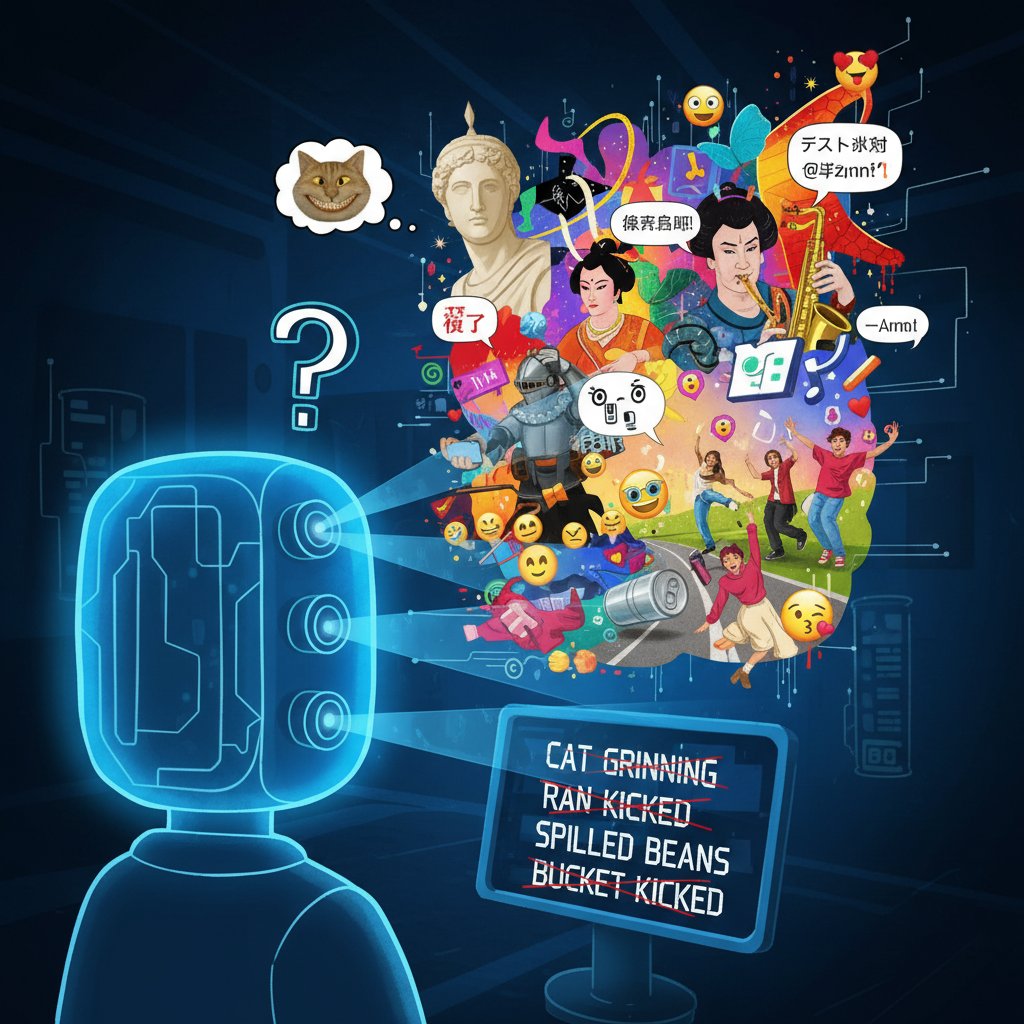
Developers are racing to close this empathy gap, blending user feedback, domain-specific tuning, and ever-larger model architectures. But for now, true contextual intelligence remains a moving target.
Conclusion: mastering the new reality of AI-driven document analysis
The age of AI-based document summarization tools isn’t a distant vision—it’s the chaotic, electric present. We’re navigating a world where information glut is matched only by our tools’ capacity to tame it—if we’re careful. The brutal truths? No tool is perfect, hallucinations are real, and the costs of neglecting oversight are high. But the wild new possibilities—instant insight, democratized analysis, and reclaimed cognitive bandwidth—are too potent to ignore.
7 essential takeaways for anyone considering AI-based document summarization tools:
- Summarizers are essential for managing modern information overload.
- No AI summary is flawless—human review remains mandatory.
- Security, privacy, and compliance are non-negotiable.
- Prompt engineering is your secret weapon for better results.
- Custom training delivers best-in-class accuracy.
- Ongoing maintenance, retraining, and user education are hidden costs.
- Trustworthy, transparent vendors (like textwall.ai) are your safest bet.
Reflect: How much of your understanding is shaped by what AI chooses to show you? What are you missing in the margins? As AI-based document analysis keeps evolving, the next frontier will be not just faster summaries, but deeper, more meaningful insights—if you know where (and how) to look.
Your next move: action steps and resources
Ready to step up your document game? Here’s what to do now:
- Audit your current document workflow and identify choke points.
- Pilot an AI-based summarization tool on real workloads.
- Establish feedback and human review processes from day one.
- Invest in prompt engineering and user education.
- Regularly review tool performance, retrain as needed, and never accept “magic” at face value.
For deeper dives, check out AI Document Summarization: A Comprehensive Guide for 2024 and Best AI Summarization Tools in 2024 (Enago).
Human understanding isn’t disappearing—it’s just wearing a new, algorithmic mask. The only question: Will you choose to see behind it?
Sources
References cited in this article
- AI Document Summarization: A Comprehensive Guide for 2024(documentllm.com)
- Best AI Summarization Tools in 2024 (Enago)(enago.com)
- AI Document Summarizers: A 2024 Revolution(documentllm.com)
- McKinsey GenAI Report 2023(channelinsider.com)
- OSTI.gov Technical Summary(osti.gov)
- Overcoming Information Overload in Higher Education(research.com)
- Information Overload as Societal Danger (ScienceDaily)(sciencedaily.com)
- Recent Advances in Document Summarization (ResearchGate)(researchgate.net)
- Nowigence: Importance & Benefits of Auto Text Summarization(nowigence.com)
- Academia.edu: 25 Years of Advances in Automatic Text Summarisation(academia.edu)
- Key Intelligent Trends for 2025 (ScienceSoft)(scnsoft.com)
- Docsumo: 50 Key Statistics and Trends in IDP for 2025(docsumo.com)
- Fortune Business Insights: IDP Market Size(fortunebusinessinsights.com)
- Acorn: 8 AI Summarization Tools to Know in 2024(acorn.io)
- Filevine: AI-Powered Document Summarization(filevine.com)
- WEKA: 2024 Global Trends in AI(weka.io)
Transform Complex Documents Into Clear Insights
TextWall.ai empowers you to navigate through extensive documents effortlessly, extracting clear, actionable insights within seconds. Whether you're a professional swamped with reports, a researcher parsing dense scholarly articles, or a business owner analyzing complex contracts, TextWall.ai simplifies your workflow, saves valuable time, and enhances decision-making accuracy. Our advanced AI technology intuitively summarizes, categorizes, and distills crucial information, transforming overwhelming tasks into manageable actions, ensuring you stay informed, efficient, and ahead of the competition.
Get startedReady to Master Your Documents?
Join professionals who've transformed document analysis with TextWall.ai
Frequently Asked Questions
Why is AI document summarization becoming important in 2025-2026?
Global data creation is doubling every two years, with unstructured text driving the surge, leaving workers drowning in documents. Manual summarization can't keep pace, resulting in missed opportunities, compliance failures, and cognitive overload that makes AI-based tools essential for survival in knowledge work.
What problem does the article say AI summarization tools are trying to solve?
The article identifies a 'tidal wave of text' problem where workers face endless PDFs, research papers, contracts, and emails that create information overload and prevent decision-makers from extracting critical insights buried in vast amounts of unstructured text.
How has the method of document summarization evolved over time?
The article explains that summarization evolved from the analog era when secretaries and students manually distilled texts into bullet points, then transitioned to digital tools like note-taking apps and keyword search functions, but these remained human-powered and slow until AI-based approaches emerged.
What does the article suggest about trusting AI document analysis?
The article indicates that trust in 'AI document analysis' is becoming 'the new currency of knowledge work,' suggesting that confidence in these tools is critical for success, though the article promises to expose hidden truths behind marketing claims rather than endorsing them uncritically.
Keep Reading
Explore more from Advanced document analysis

AI-Powered Document Summarization: Benefits and Hidden Costs

AI Document Summarizer: Capabilities and Real-World Limitations

Advanced Summarization Tools in 2026: Capabilities and Risks

Advanced AI Document Summarization and Who Controls the Truth

Document Summarizer for Complex Tasks That Won’t Miss What Matters
