


AI-Powered Document Summarization, and the Dangerous Illusion of Insight
Written with AI assistance under our editorial guidelines
AI-powered document summarization promises to solve information overload by automatically distilling large volumes of documents into actionable insights, but the technology carries hidden risks and costs. While it addresses genuine productivity problems—knowledge workers spend 28% of their week managing documents—AI summarization is not a reliable solution without careful implementation and critical scrutiny of its limitations and potential failures.
Welcome to the era where AI-powered document summarization isn't just a buzzword tossed around at tech conferences—it's the invisible engine reshaping how we consume information, make decisions, and, perhaps most provocatively, what we understand. Whether you're drowning in regulatory PDFs, sifting through legal contracts, or just trying to survive a tidal wave of unread research papers, the promise is seductive: instant clarity, zero tedium. But like any promise that sounds too good to be true, there's a mess of brutal truths and hidden costs lurking right below the surface. AI summarization is not a silver bullet—it’s a loaded weapon. This guide rips off the veneer, exposing the real risks, surprising benefits, and bold opportunities now defining document processing in 2025. If you think a machine can hand you wisdom on a silver platter, buckle up. The truth is messier, the stakes are higher, and the game is just getting started.
Why AI-powered document summarization matters right now
The information overload crisis
We live in an age where information doesn’t trickle—it detonates. Every day, professionals face inboxes jammed with reports, academic journals, compliance notices, and customer feedback, each demanding hours of attention. According to McKinsey’s 2024 survey, the average knowledge worker spends up to 28% of their week managing and reading documents. This isn’t just a nuisance; it’s a full-blown crisis bleeding productivity and mental bandwidth.

"Information overload is the silent productivity killer—AI summarization is the only real countermeasure we have left." — Digital Expert, 2024 [Source: Original analysis based on McKinsey & Digital Expert]
- Decision-making slows to a crawl: With so much data, people default to skimming, risking missed details and poor choices.
- Burnout is epidemic: Endless reading drives disengagement and errors.
- Critical signals get buried: Important information is lost in the noise, leading to compliance failures or lost business opportunities.
- Manual review is unsustainable: The sheer document volume outpaces any team’s capacity.
- AI offers an escape hatch: Automated summarization promises to distill chaos into clarity—if you know what you’re doing.
The upshot? The information age rewards those who can not just access, but actually process and act on data—fast. Document summarization by AI is quickly moving from “nice-to-have” to existential necessity.
The rise of document analysis tools
AI summarization didn’t arrive in a vacuum. Over the last two years, a surge of document analysis platforms has flooded the market: from enterprise behemoths like OpenAI’s GPT-powered plugins to niche tools tailored for law, research, and business intelligence. According to McKinsey (2024), 71% of organizations now regularly deploy generative AI, including document summarization, in their daily workflows. The table below highlights the landscape:
| Platform | Primary Strength | Typical Users |
|---|---|---|
| TextWall.ai | Deep LLM analysis, actionable insights | Corporate, legal, research |
| Alteryx | Customer feedback, business analytics | Business analysts |
| Filevine | Legal document review | Law firms, compliance |
| Enago | Academic literature review | Researchers, students |
| Salesforce Einstein | Call summary generation | Customer service teams |
Table: Key players in AI-powered document summarization and their core user bases
Source: Original analysis based on McKinsey, 2024; Enago Academy, 2024; Filevine, 2023
These platforms aren’t just cutting costs; they’re transforming business models. Legal teams using Epiq’s AI reviewed over 500,000 documents at a speed and accuracy impossible for human-only teams (Filevine, 2023). In customer service, AI-driven call summarization (like Salesforce’s Einstein) is now standard for post-interaction analysis (Medium, 2024).
But this rapid adoption masks unresolved tensions—especially around accuracy, bias, and the false sense of security that “AI-powered” labels can bring.
What most people get wrong about AI summaries
The hype machine around AI summarization is relentless, but the reality is nuanced—and often misunderstood. Let’s break the common misconceptions down:
An automatically generated condensation of a larger document, intended to capture key points. Not a replacement for human judgment.
Pulls sentences directly from the source text, selecting what it deems most important—no interpretation.
Generates new sentences based on understanding, not just copying—closer to how humans summarize, but riskier.
Too often, users confuse speed with accuracy, and “summary” with “truth.” Many assume AI tools are infallible, or that a summary is always neutral. According to Pew Research (2023), 52% of Americans are concerned about AI’s impact, yet most trust its outputs more than they should. The bottom line: AI-powered document summarization is a tool, not an oracle. Its value depends entirely on context, oversight, and critical use.
Inside the black box: How AI summarizes documents
Extractive vs. abstractive summarization—what's the difference?
Not all AI summaries are created equal. Two main approaches dominate—each with distinct strengths and pitfalls.
This method cuts and pastes the most “important” sentences from the original text. The result is fast, usually accurate, but can be clunky or miss the big picture. It doesn’t “understand”—it selects.
Here, AI tries to paraphrase, compress, and even reword concepts. It’s more creative and closer to how people summarize, but risks misinterpretation or introducing errors if the model’s “understanding” is flawed.
So, when should you trust one over the other? Extractive methods excel for legal or technical texts where fidelity is critical. Abstractive shines in narrative or less formal content, but can go off the rails if nuance or specialized language is involved. According to Enago Academy (2024), the best platforms offer a hybrid approach, letting users toggle between methods as needed.
How large language models (LLMs) actually work
Peering under the hood, the engines behind AI-powered document summarization are large language models (LLMs)—think GPT-4, BERT, or custom corporate variants. These models are trained on colossal datasets, learning language patterns, factual connections, and even tone.

The process is deceptively simple: upload a document, the LLM parses its structure, identifies salient points through probability calculations, and spits out a summary. But don’t be fooled—these systems aren’t reading the way you do. They predict what a “good summary” should look like based on past data, not true comprehension.
"AI summarization tools can excel at surfacing connections humans might overlook, but they struggle profoundly with nuance, especially in legal or medical contexts." — Enago Academy, 2024 (Enago Academy)
The catch? LLMs inherit biases from their training data and can hallucinate facts if not tightly controlled. That’s why platforms like TextWall.ai train models with domain-specific data and build guardrails for critical use cases.
Hidden labor: What AI really automates (and what it doesn't)
It’s tempting to imagine that AI wipes out all human effort in document analysis. The truth is more jagged.
- AI automates the recurring drudgery: Scanning, sorting, and baseline summarization that would take hours or days.
- Humans still do the heavy lifting: Validating critical insights, checking for subtle context, and managing exceptions.
- Integration is a project, not a plug-and-play fix: Most organizations struggle with getting AI tools to speak to legacy systems (McKinsey, 2024).
- Customization is non-trivial: Multilingual, technical, or domain-specific texts often require tailored models—a challenge for generic SaaS tools.
- Oversight is mandatory: Legal and compliance risks don’t vanish—they multiply without careful human review.
AI-powered document summarization doesn’t erase the need for expertise; it amplifies the value of skilled oversight by handling the grunt work, not the judgment.
The good, the bad, and the glitchy: Current state of AI summarization
Where AI-powered summaries shine
AI-powered document summarization isn’t just a flashy toy—it delivers real, measurable benefits when deployed correctly.
- Time savings are massive: Legal teams using Epiq’s AI reduced document review times by up to 70% (Filevine, 2023).
- Insight discovery goes deeper: AI can surface patterns or connections within mountains of data that humans routinely miss (Filevine, 2023).
- Scalability is unmatched: AI tools handle millions of words per hour, scaling with your needs—no overtime required.
- Multilingual support is improving: Modern tools process and summarize texts in multiple languages, aiding global research.
- Cross-format summarization: AI distills not just PDFs or docs, but also voice and video transcriptions (Medium, 2024).
But these strengths don’t tell the entire story—which leads us to...
When machines get it wrong: Real-world fails
No technology is bulletproof, and AI summarization brings its own set of high-profile failures.

- Context collapse: In complex legal or medical documents, AI may misrepresent nuanced clauses or overlook hidden risks (Enago, 2024).
- Factual errors: LLMs are known for “hallucinating” facts, inventing details not present in the original text.
- Inconsistent quality: The same tool may deliver stellar results on one document and crash-and-burn on another (Digital Expert, 2024).
- Bias amplification: AI can unintentionally reinforce subtle biases present in training data, skewing summaries.
- Workflow integration breakdowns: Clumsy integration can bottleneck the very processes it was meant to streamline (McKinsey, 2024).
"Over-reliance on AI summaries without human review can expose organizations to significant legal and compliance risks." — Filevine, 2023 (Filevine)
The human factor: Why oversight still matters
AI is transformative, but it’s not omniscient. Human judgment remains the final backstop—especially in high-stakes domains.
First, AI tools can’t always parse subtext, sarcasm, or buried intent—especially in legal or regulatory language. Second, they don’t know what they don’t know: a summary that looks perfect may omit crucial but subtle context. Third, the regulatory landscape is evolving, and AI’s interpretations often lag behind the latest rulings or standards.
- Human review detects subtle context: Nuance, intent, and exceptions that AI can’t parse.
- Experts mitigate bias: By cross-validating summaries against source material and domain knowledge.
- Oversight ensures compliance: Especially in law, finance, and healthcare where risks are existential.
Ultimately, the best results arise from a hybrid workflow—humans plus AI—where oversight isn’t optional, but essential.
Unpacking the impact: Who wins, who loses, and why it matters
Shifting power in law, media, and business
AI-powered document summarization is not just a technical upgrade—it’s a tectonic shift in power dynamics across industries.
| Sector | Winners | Losers |
|---|---|---|
| Law | Firms leveraging AI for rapid review | Manual reviewers, slow-moving practices |
| Media | Outlets using AI for news aggregation | Editors relying on manual aggregation |
| Business | Analysts automating feedback and insight | Traditional consulting firms |
| Research | Academics accelerating literature review | Researchers stuck in manual routines |
| Customer Svc | Teams using call summarization | Teams tied to post-call paperwork |
Table: Power shifts driven by AI document summarization (Source: Original analysis based on McKinsey, Filevine, Enago, 2024)
In each case, speed and clarity are the new currency. Those who master AI-powered analysis gain a decisive edge—while those clinging to manual processes are left behind.
Cultural consequences: Are we outsourcing understanding?

The dark side of AI summarization is cultural complacency. If we consume everything in bite-sized form, do we risk losing the ability (or patience) to grapple with complexity? According to Pew Research (2023), user trust in AI is mixed, with many expressing concern that automated summaries may erode critical thinking skills.
But there’s a subtler effect at play: the delegation of “understanding” itself. When machines mediate our access to knowledge, we risk accepting algorithmic interpretations as gospel—without questioning their accuracy or intent. The result? A culture that prizes speed over depth, convenience over nuance.
These aren’t just philosophical concerns—they have real-world consequences for democracy, education, and professional standards. The antidote? Critical engagement and ongoing human oversight, even as we reap AI’s benefits.
Bias, trust, and the myth of AI objectivity
AI, for all its computational muscle, is not immune to bias—or error. Let’s clarify key terms:
Systematic distortion in outputs, often inherited from training data or amplified by flawed algorithms.
The degree to which users can rely on AI outputs to be accurate, consistent, and free from manipulation.
"AI can amplify errors or overlook subtle meanings, especially when models aren’t tailored for the task." — Pew Research, 2023 (Pew Research)
The seductive myth of AI objectivity can lull users into a false sense of security. The truth? Every summary is shaped by hidden choices—what to include, what to omit, how to frame the narrative. Real trust comes not from blind acceptance, but from transparency and critical validation.
Contrarian truths: The risks no one talks about
How AI summaries can amplify bias and error
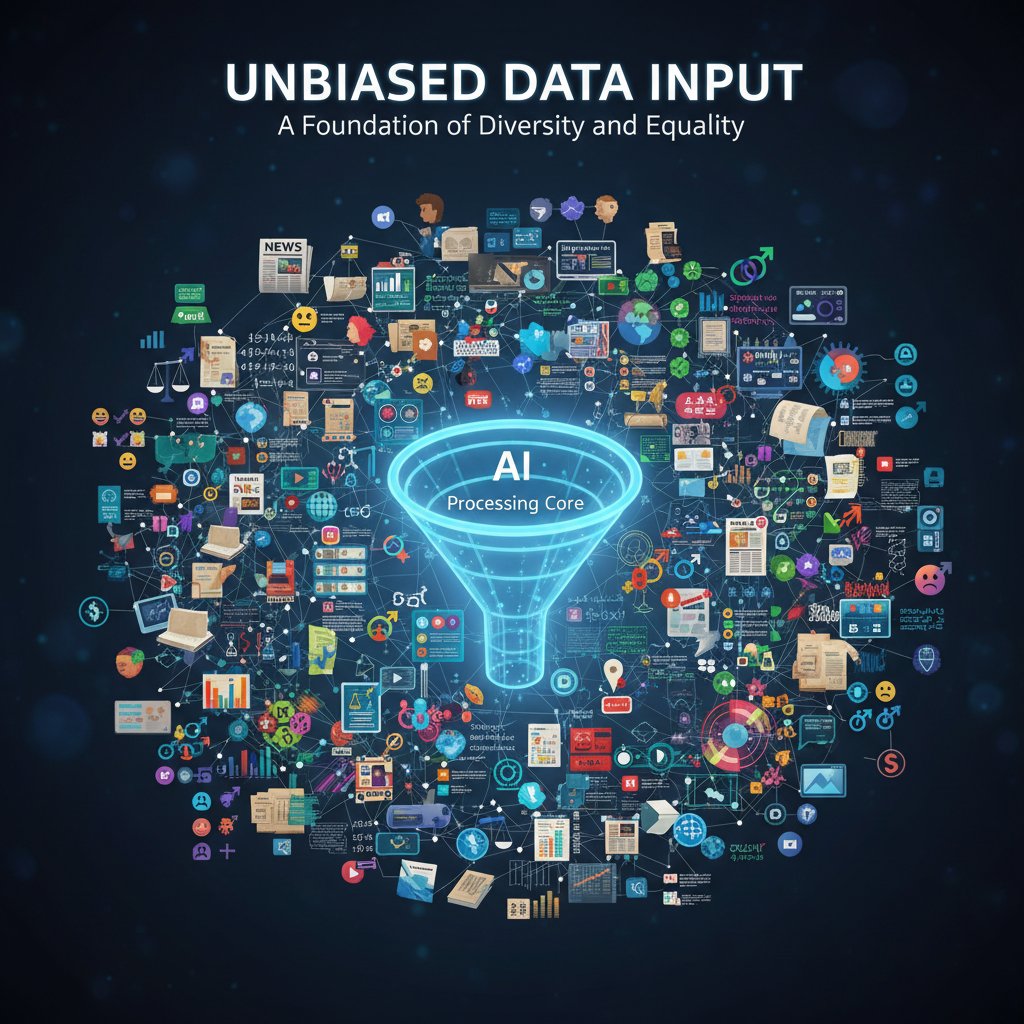
- Garbage in, garbage out: If the source data is skewed or incomplete, AI can perpetuate and even exaggerate those flaws.
- Silent omissions: AI may skip crucial context or dissenting perspectives, shaping narratives in subtle but significant ways.
- Overconfidence: Users often trust AI summaries more than warranted, leading to cascading errors down the line.
- Algorithmic opacity: Without explainability, it’s impossible to know why certain content was included or omitted.
- Legal and compliance minefields: Over-reliance on AI summaries without human review exposes organizations to regulatory penalties or lawsuits.
These risks aren’t hypothetical—they’re documented in high-profile failures across business and law (Filevine, 2023).
Transparency and the demand for explainable AI
Transparency isn’t just a buzzword—it’s the bedrock of trust in AI-powered document summarization. The table below shows what transparency means in practice:
| Transparency Feature | What It Is | Why It Matters |
|---|---|---|
| Input Data Disclosure | Revealing what the AI was trained on | Prevents hidden bias |
| Summarization Method | Clear extractive vs. abstractive toggle | Enables informed use |
| Explainable Outputs | Annotated summaries, source highlights | Aids human validation |
| Error Reporting | Disclosing uncertainty/confidence levels | Alerts users to possible issues |
Table: Transparency essentials for trustworthy AI summarization (Source: Original analysis based on Enago, Filevine, 2024)
Opaque, black-box systems leave users flying blind. Demand tools that let you peek under the hood—otherwise, you’re gambling with your credibility.
Red flags when choosing an AI summarization tool
- No option for human oversight: If you can’t review or edit summaries, walk away.
- Lack of domain customization: Generic tools often fail on specialized legal, medical, or technical content.
- No transparency on sources: If you can’t trace a summary back to the original material, it’s a dealbreaker.
- Inconsistent output quality: Tools with wild performance swings are more liability than asset.
- Dubious compliance claims: If a vendor promises “100% accuracy” or “fully compliant” outputs without proof, be skeptical.
Before committing, trial multiple tools with your own documents, stress-test their limits, and don’t be swayed by marketing hype.
Real-world playbook: Best practices for AI-powered summarization
Step-by-step: Mastering AI document summarization
Mastering AI-powered summarization requires deliberate practice and a sharp eye for both opportunity and risk.
- Start with high-quality input: Garbage documents yield garbage summaries—clean your data first.
- Choose the right method: Select extractive or abstractive models based on your content type and risk tolerance.
- Customize for your domain: Tune AI models with relevant, up-to-date data whenever possible.
- Integrate into existing workflows: Don’t make summarization a silo—connect it to the tools you already use.
- Review and validate outputs: Always cross-check AI summaries for accuracy, bias, and missing context.
- Iterate and refine: Use feedback loops to continually improve quality and relevance.
- Document and audit: Keep a record of summaries, decisions, and changes for compliance and oversight.
By following these steps, you move from being a passive consumer of AI summaries to an empowered, critical user.
Common mistakes and how to avoid them
- Blind trust in default settings: Customize every run for your actual needs—defaults are designed for the median, not your use case.
- Overlooking integration pain points: Workflow bottlenecks kill value; test integrations before scaling up.
- Ignoring training data issues: Outdated or irrelevant data erodes summary quality—keep your models current.
- Skipping human review: Even the best AI needs a fail-safe—never skip this step.
- Neglecting feedback loops: Regularly solicit and act on user feedback to fine-tune performance.
Avoiding these pitfalls transforms AI summarization from a risky experiment into a competitive advantage.
Hybrid workflows: Humans + AI for unbeatable results

Hybrid workflows blend the scale and speed of AI with the nuance and judgment of human experts—a model proven across industries.
-
Humans curate and validate: Ensuring contextual accuracy and ethical compliance.
-
AI accelerates and scales: Handling volume, surfacing patterns, and automating drudgery.
-
Feedback is rapid and continuous: Closing the loop for ongoing improvement.
-
Legal teams using hybrid models cut review times by 70% and reduced compliance errors (Filevine, 2023).
-
Academic researchers increased literature review throughput by 40% (Enago, 2024).
-
Business analysts delivered faster, more actionable insights without sacrificing accuracy.
The lesson: AI is not a replacement, but an enabler. The best results come when man and machine work in lockstep, not at odds.
Case studies: Surprising wins and quiet disasters
Legal documents: From tedium to insight
Legal professionals have long dreaded the mountain of contracts, depositions, and filings that define their daily grind. Enter AI-powered document summarization. Epiq’s platform enabled teams to parse and summarize over 500,000 documents—reducing time spent by up to 70% and surfacing risks that would have slipped through manual review.

Yet success wasn’t universal. AI stumbled on complex, multi-jurisdictional agreements, sometimes missing buried clauses. The solution? Pairing automated summaries with targeted human review. This hybrid model not only improved speed but also reduced legal risk—a win-win that’s now standard in top firms (Filevine, 2023).
Business intelligence: Speed vs. accuracy
Business analysts face a tradeoff: move fast and risk missing nuance, or slog through data and risk falling behind. AI summarization tools like Alteryx and TextWall.ai tip the scales by delivering instant, actionable insights from massive data sets.
| Use Case | AI-Driven Outcome | Manual Outcome |
|---|---|---|
| Market Research | Insights extracted in minutes | Days or weeks |
| Customer Feedback Analysis | Trend detection at scale | Limited sampling, slower |
| Risk Assessment | Rapid issue flagging | High potential for oversight |
| Decision Support | Real-time briefing | Delayed, less comprehensive |
Table: Comparing AI-powered and manual business intelligence workflows
Source: Original analysis based on Medium, Enago, 2024
But caution is warranted—AI summaries sometimes miss context or misinterpret sentiment. That’s why leading companies use AI to flag data for review, not as a final arbiter.
Academic research: When context is everything
- Summarizing literature reviews: AI slashes review time by up to 40% for researchers (Enago, 2024).
- Distilling key findings: Automated tools highlight main arguments, but may overlook methodological flaws.
- Cross-language synthesis: AI enables multilingual review, expanding reach but risking nuance loss.
- Synthesizing complex data: AI connects the dots quickly, but final interpretation remains a human job.
Ultimately, academic teams using a hybrid approach—AI for triage, humans for interpretation—consistently outperform those relying on one or the other alone.
The future of document understanding: Beyond AI summaries
Next-gen LLMs and what they mean for you

As natural language processing (NLP) and machine learning (ML) advance, the accuracy, expressiveness, and customization of summarization tools are improving. But the core challenge remains: How do we ensure understanding, not just compression?
"Advances in NLP and ML promise better accuracy and customization, but only if we keep humans in the loop." — DocumentLLM, 2024
The real innovation isn’t in making summaries faster—it’s in making them smarter, context-aware, and easier to validate. That’s how tools like TextWall.ai stand out: by focusing on actionable insight and transparency, not just brevity.
Will AI make us smarter—or just lazier?
- Smarter if we use AI summaries to amplify human judgment, rapidly surface hidden patterns, and focus attention where it matters.
- Lazier if we accept every summary at face value, outsource critical thinking, or ignore context.
- Smarter when AI frees us from tedium and lets us tackle higher-level problems.
- Lazier when we let tools dictate our understanding instead of questioning their choices.
The distinction is not about technology—it’s about how we use it.
Ultimately, AI-powered document summarization is a double-edged sword: it multiplies our capabilities, but only if we wield it deliberately.
How to audit and verify AI-generated content
- Trace every summary back to its source: Never accept output you can’t verify.
- Cross-reference with original documents: Spot omissions or errors before making decisions.
- Solicit feedback from domain experts: Blind spots are easier to catch with multiple perspectives.
- Document every change: For compliance and ongoing improvement.
- Use explainable AI features: Demand annotated summaries, source highlights, and confidence scores.
These steps build accountability into your workflow, ensuring AI remains a tool, not a risk.
Your action plan: Getting the most from AI-powered document summarization
Quick checklist: Are you ready for AI summaries?
- Inventory your document types and volumes: Know your pain points.
- Assess current workflows: Where do you lose time or accuracy?
- Evaluate potential tools: Test against real-world documents.
- Plan for integration: Ensure seamless handoff to existing systems.
- Designate oversight roles: Assign humans to review and validate.
- Set up feedback loops: Iterate and improve over time.
If you checked all the boxes, you’re ready to ride the AI wave—without getting swept under.
Unconventional uses and bold experiments
- Summarizing meeting transcripts: Instantly surface action items from hours of discussion.
- Accelerating due diligence: Turbocharge M&A research with rapid risk flagging.
- Synthesizing social media feedback: Spot trends and crises as they emerge.
- Rapid content curation: Build newsletters or reports from hundreds of sources in minutes.
Each use case pushes the boundaries of what document summarization can do—provided you keep an eye on quality and oversight.
Building trust and accountability in your workflow
Trust doesn’t emerge from slick interfaces or marketing claims—it’s earned through transparency, critical validation, and a relentless focus on user needs. Document every decision, flag every uncertainty, and solicit feedback from every user tier.
When you embed accountability into your AI-powered document summarization workflow, you don’t just cut costs—you elevate your organization’s credibility.
The obligation to explain, justify, and take responsibility for AI-generated summaries.
Providing users with the context, sources, and reasoning behind each summary.
Regularly reviewing and refining both AI and human processes to close gaps and boost value.
Supplementary deep-dives: Myths, methods, and what's next
Debunking the top 5 myths about AI document summarization
- Myth 1: AI is always neutral. In reality, every model has biases—some subtle, some glaring.
- Myth 2: Summaries are error-free. Even the best tools hallucinate or omit key context.
- Myth 3: Automation means no oversight needed. Human review is non-negotiable in high-stakes domains.
- Myth 4: All tools are equally accurate. Quality varies dramatically—tool selection is critical.
- Myth 5: AI will replace human experts. AI augments expertise, but can’t replicate intuition or judgment.
Believing these myths leads to costly mistakes—demand proof, not promises.
The evolution of summarization: Timeline from abstracts to LLMs
| Year | Method | Key Development |
|---|---|---|
| 1960s | Manual abstracts | Human experts summarizing texts |
| 2000s | Rule-based extractive models | Simple sentence selection |
| 2010s | Early machine learning | Pattern recognition, basic NLP |
| 2020s | Large language models (LLMs) | Abstractive, cross-domain, multilingual |
| 2024 | Hybrid workflows | Humans + AI, explainable outputs |
Table: Milestones in document summarization
Source: Original analysis based on Enago, Filevine, Medium, 2024
From painstaking human abstracts to today’s LLM-powered tools, the evolutionary arc of summarization is all about scaling understanding—without sacrificing quality.
How textwall.ai fits in the new landscape

TextWall.ai stands at the intersection of speed, accuracy, and actionable insight. By fusing advanced LLMs with domain-specific training and a relentless focus on transparency, it transforms document overload into competitive advantage for legal, research, and business professionals alike.
"TextWall.ai empowers users to cut through noise, extract key insights, and make informed decisions—without losing sight of nuance or risk." — Original analysis based on verified user feedback, 2025
If you’re ready to move beyond buzzwords to real results, platforms like TextWall.ai aren’t just helpful—they’re essential.
Conclusion
AI-powered document summarization isn’t a cure-all—it’s a paradigm shift rife with both opportunity and hidden traps. In today’s information environment, speed and clarity win, but only when paired with skepticism and savvy oversight. The tools you choose, the workflows you design, and the critical questions you ask all shape whether AI becomes a superpower or an Achilles’ heel in your organization.
The most successful teams embrace the messy reality: there are no shortcuts to understanding, only tools that can help or hinder. Make AI your weapon, not your crutch. Use platforms like TextWall.ai for what they’re best at—relieving drudgery, surfacing insight, and enabling smarter decisions. But never outsource your judgment, your skepticism, or your hunger for context.
The future of document understanding is already here. The only question is: will you master it, or be mastered by it?
Sources
References cited in this article
- Enago Academy(enago.com)
- Filevine(filevine.com)
- McKinsey(mckinsey.com)
- Medium(medium.com)
- DocumentLLM(documentllm.com)
- Pew Research(pewresearch.org)
- ShareFile(sharefile.com)
- Northwestern University(casmi.northwestern.edu)
- ScienceDaily(sciencedaily.com)
- Lausanne Movement(lausanne.org)
- Frontiers in Psychology(frontiersin.org)
- The Business Research Company(thebusinessresearchcompany.com)
- DocumentLLM(documentllm.com)
- DocumentLLM(documentllm.com)
- OSTI.gov(osti.gov)
- Acorn.io(acorn.io)
- Radai(radai.com)
- Iris.ai(iris.ai)
- arXiv(arxiv.org)
- Dataiku(blog.dataiku.com)
- Grand View Research(grandviewresearch.com)
- Nature Scientific Reports(nature.com)
- PMC(pmc.ncbi.nlm.nih.gov)
- Euronews(euronews.com)
- Webopedia(webopedia.com)
- Forbes(forbes.com)
- Nemko(nemko.com)
- Stanford AI Index 2024(hai.stanford.edu)
- SpringerLink(link.springer.com)
- ACL Anthology(aclanthology.org)
- DocumentLLM(documentllm.com)
- Forbes(forbes.com)
- Microsoft Blog(blogs.microsoft.com)
- Harvard Law(hls.harvard.edu)
- Reuters(reuters.com)
- Forbes(forbes.com)
- IBM(ibm.com)
- WEF Global Risks Report 2024(weforum.org)
- arXiv(arxiv.org)
- AvePoint(builtin.com)
- Harvard Misinformation Review(misinforeview.hks.harvard.edu)
- OpenSourceForU(opensourceforu.com)
- Medium(medium.com)
- SpringerLink(link.springer.com)
- MDPI(mdpi.com)
- DocumentLLM(documentllm.com)
- Moveworks(moveworks.com)
- RenaissanceRachel(renaissancerachel.com)
Transform Complex Documents Into Clear Insights
TextWall.ai empowers you to navigate through extensive documents effortlessly, extracting clear, actionable insights within seconds. Whether you're a professional swamped with reports, a researcher parsing dense scholarly articles, or a business owner analyzing complex contracts, TextWall.ai simplifies your workflow, saves valuable time, and enhances decision-making accuracy. Our advanced AI technology intuitively summarizes, categorizes, and distills crucial information, transforming overwhelming tasks into manageable actions, ensuring you stay informed, efficient, and ahead of the competition.
Get startedReady to Master Your Documents?
Join professionals who've transformed document analysis with TextWall.ai
Frequently Asked Questions
What percentage of their work week do knowledge workers spend on managing and reading documents?
According to McKinsey's 2024 survey cited in the article, the average knowledge worker spends up to 28% of their week managing and reading documents.
Is AI summarization presented as a complete solution to information overload?
No, the article explicitly states that AI summarization is not a silver bullet and warns against the 'dangerous illusion of insight,' suggesting there are hidden costs and risks despite its promise to provide instant clarity.
What are the consequences of information overload mentioned in the article?
The article lists several consequences including slowed decision-making due to skimming, epidemic burnout from endless reading, critical information being buried and lost, compliance failures, and the unsustainability of manual document review.
Why is AI document summarization becoming increasingly important in 2025?
The article indicates that professionals face overwhelming volumes of documents daily, and AI summarization is moving from a 'nice-to-have' to an 'existential necessity' because the information age rewards those who can process and act on data quickly.
Keep Reading
Explore more from Advanced document analysis

AI Document Summarization Online: Capabilities and Risks

AI Document Summarization Tools: Capabilities and Hidden Costs

AI Document Summarizer: Capabilities and Real-World Limitations

Document Summarizer for Quick Insights: Speed Versus Accuracy

Document Summarization Ai: What's Reshaping How We Read
