


Real-Time Summarization Tools and the New Power (and Risk) of Knowing Now
Written with AI assistance under our editorial guidelines
Real-time summarization tools use AI to instantly distill overwhelming information into digestible insights, helping knowledge workers manage the daily avalanche of data. While these tools promise to reduce information overload and increase comprehension speed, they come with hidden complexities and risks that extend beyond their convenient interfaces.
Information isn’t just power—it’s a tidal wave, and you’re either surfing the crest or being dragged under. In 2025, the conversation isn’t just about having data at your fingertips. It’s about having those facts, headlines, and insights digested before you blink. Enter real-time summarization tools: AI-powered engines that distill chaos into clarity in the time it takes you to unlock your phone. But behind the slick interfaces and instant satisfaction, the reality is far messier—and far more interesting—than the marketing gloss suggests. This deep dive rips away the veneer, exposes the brutal truths, and celebrates the big wins that define the new era of instant knowledge. Whether you’re a productivity addict, a knowledge worker, or simply drowning in digital debris, buckle up. This is the only real-time summary you'll need—raw, researched, and ready.
Why we crave real-time answers: the psychology behind instant summaries
The information avalanche: from overload to insight
The age of abundance is upon us, but it’s not as glamorous as it sounds. Every minute, millions of emails, documents, and chat messages flood our digital lives. The average knowledge worker now faces up to 34 gigabytes of information daily—a deluge that’s more likely to paralyze than empower. According to ActionSprout, users consume information up to 10 times faster with real-time summarization tools, transforming what was once an overwhelming onslaught into digestible, actionable bites.

But the emotional toll is real. Information overload isn’t just inefficient—it’s draining. Persistent exposure to excessive data spikes cortisol, erodes focus, and leaves people feeling perpetually behind. It’s no wonder that the hunger for instant clarity—getting the headline without the noise—has become an almost primal urge.
"Sometimes, you just want the world to shut up and give you the headline." — Jordan
Real-time summarization tools didn’t appear out of nowhere. They’re a direct response to digital chaos, engineered to provide a psychological safety net that promises both mastery and sanity. The demand for these tools isn’t just about convenience—it’s about survival in the modern workplace.
The myth of multitasking and the promise of automation
We’ve all heard the myth: multitasking is a badge of honor. But science begs to differ. Research shows that so-called multitasking can cut productivity by up to 40%, leading to more errors and less satisfaction. The fantasy of juggling a dozen streams of information at once has fueled demand for real-time tools that do the heavy lifting—summarizing, extracting, and presenting only what matters.
Hidden benefits of real-time summarization tools experts won't tell you:
- Cognitive relief: Offloads working memory, freeing up mental bandwidth for deeper thinking.
- Bias mitigation: When tuned correctly, AI can help reduce the impact of human cognitive biases by surfacing unexpected insights.
- Accessibility boost: Live summaries enable non-native speakers and people with disabilities to keep up with rapid conversations.
- Decision velocity: Faster access to distilled knowledge translates directly to quicker, more confident decisions.
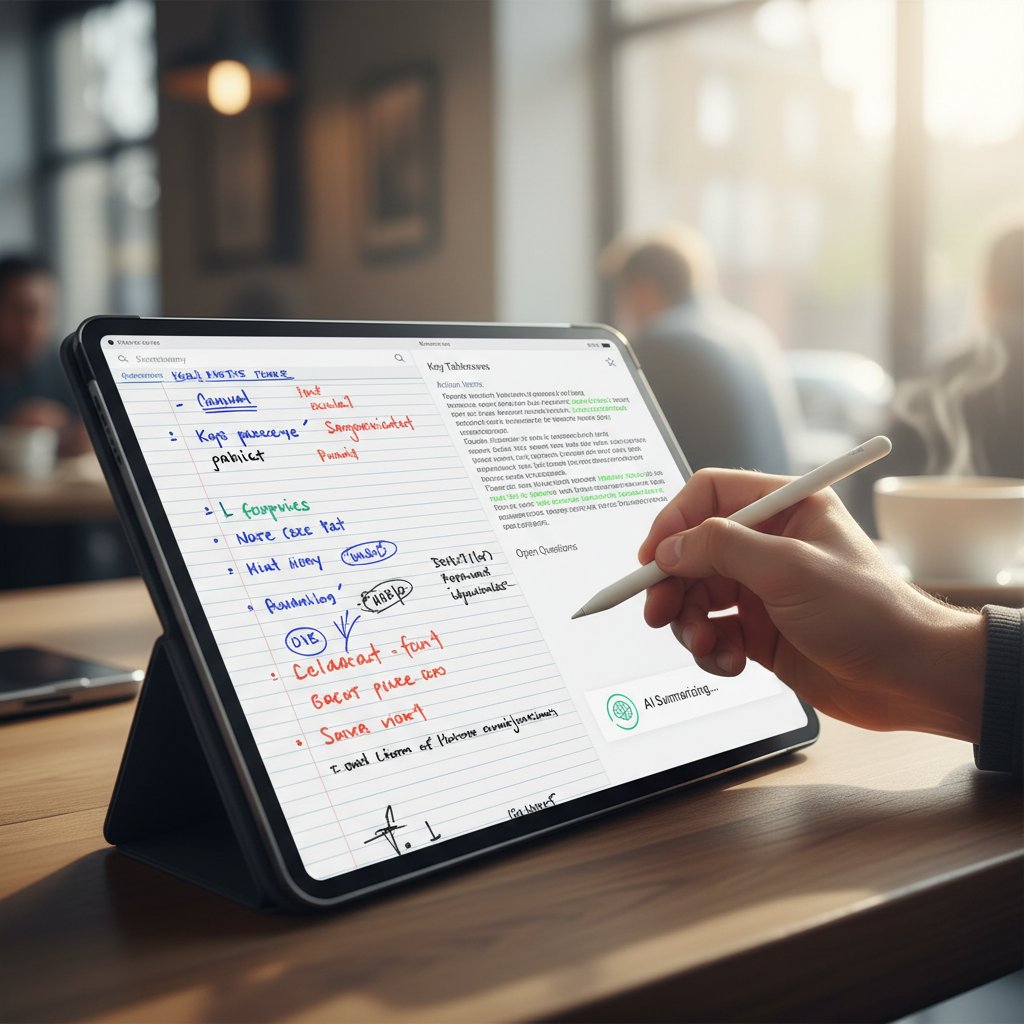
Manual note-taking, by contrast, feels like a relic—slow, error-prone, and frustratingly analog in a digital world. Automation isn’t just about speed; it’s about reclaiming the time and mental energy wasted on sifting, sorting, and second-guessing.
Craving control: what real-time summaries do to our sense of agency
There’s a thrill in feeling informed, and real-time summaries deliver that dopamine hit on demand. They create an illusion of mastery—of having the world’s knowledge at your beck and call. But there’s a catch: the more we rely on instant digests, the more we risk losing critical nuance. Overreliance can breed complacency, dulling our analytical edge and making us susceptible to subtle errors or omissions in the AI’s output.
"It feels powerful, but sometimes you miss the nuance." — Alex
Still, the psychological comfort is real. By providing instant clarity, these tools help us wrest a sense of control from the chaos. As we peel back the layers in the next section, the tech that makes this magic possible—and the limitations it brings—come sharply into focus.
Behind the curtain: how real-time summarization tech really works
From rules to LLMs: the evolution of summarization engines
Rewind to the early 2000s: summarization was ruled by rigid, rule-based systems and keyword extraction. These engines were blunt instruments—good for extracting bullet points, hopeless at capturing nuance. The real breakthrough came with the rise of neural networks and large language models (LLMs), which could understand context, semantics, and intent.
| Year | Milestone | Key Breakthrough/Failure |
|---|---|---|
| 2000 | First rule-based summarizers | Rigid, low accuracy |
| 2012 | Statistical NLP models | Slightly improved coherence |
| 2017 | Neural network-based extractive methods | Increased relevance |
| 2020 | Transformer models (BERT, GPT) | Context-aware, abstractive summarization |
| 2023 | Domain-specific LLMs | Legal, medical, and financial summaries |
| 2025 | Real-time multimodal summarization | Web, PDF, video, live transcription |
Table 1: Evolution of real-time summarization tools. Source: Original analysis based on ActionSprout, Coherent Solutions, Virtue Market Research.
What changed after 2020? LLMs began to not only summarize, but contextualize and adapt. The latest real-time summarization tools can handle multimodal inputs—text, audio, even video—delivering concise insights in seconds. This isn’t just incremental progress; it’s a seismic shift in how we interact with information.

APIs, streaming, and the race for zero-lag
Think of modern real-time summarization as a relay race. APIs are the baton, passing data between platforms at breakneck speed. These interfaces allow summarization engines to plug directly into productivity powerhouses—Notion AI, Slack GPT, Microsoft Copilot—making instant insights an invisible, seamless part of everyday workflows.
How streaming summarization works in practice:
- Input ingestion: The tool captures raw data (text, audio, video) as it’s generated.
- Chunking: Data is split into manageable segments for real-time processing.
- Contextual processing: LLMs analyze each chunk within its immediate context and broader conversation.
- Summary generation: Concise digests are generated and updated continuously.
- User delivery: Summaries appear in-app, via notification, or through dashboards—often before the meeting is even over.
But the technology isn’t without bottlenecks. Latency—the delay between input and output—is the enemy, and even a few seconds can erode the illusion of real-timeness. Bandwidth constraints and the finite “context window” of LLMs impose further ceilings on performance, especially in high-volume environments. Despite these hurdles, the relentless push for zero-lag has redefined what’s possible.
What makes a summary ‘real-time’? Defining the edge
Real-time: Summaries delivered within 1-2 seconds of data generation. Essential for live meetings, breaking news, or crisis response.
Near-real-time: 3-15 seconds lag. Suitable for most workflows but can be disruptive in high-urgency situations.
Batch summarization: Outputs delivered minutes to hours after data submission. Ideal for post-event analysis but useless for instant decision-making.
Benchmarks matter. In legal and financial settings, “fast enough” means sub-5-second delivery; in journalism, every second counts. But speed comes at a cost: the faster the summary, the higher the risk of error or missed nuance. The edge is razor-thin—and that’s what makes it both exhilarating and dangerous.
Brutal truths: what real-time summarization tools won’t tell you
Accuracy illusions: when summaries lie, and why
The biggest danger in real-time summarization isn’t what’s included—it’s what’s left out or distorted. AI-generated summaries can hallucinate facts, omit crucial qualifiers, or reflect the biases of their training data. In a 2025 study by Virtue Market Research, error rates in popular tools ranged from 7% (minor omissions or paraphrasing mistakes) to 23% (critical misrepresentations or hallucinated content).
| Tool Name | Common Error Type | Error Rate | Severity Level |
|---|---|---|---|
| Notion AI | Omission of context | 12% | Moderate |
| Slack GPT | Hallucinated details | 9% | High |
| Microsoft Copilot | Biased summarization | 7% | Moderate |
| Generic Open-Source | Factual inaccuracies | 23% | Severe |
Table 2: Common errors found in popular real-time summarization tools, 2025. Source: Original analysis based on Virtue Market Research, Coherent Solutions.
The best advice? Don’t take AI summaries at face value. Learn to spot omissions, cross-check with original sources, and maintain healthy skepticism.
"It’s the errors you don’t see that hurt you." — Taylor
The hidden costs: money, privacy, and trust
The true price of real-time summarization goes beyond subscription fees. Hidden in the terms are data retention policies, privacy trade-offs, and the risk of leaks. In 2024, a leaked board meeting summary at a major tech firm led to a stock slump and internal investigation—proof that careless use can be catastrophic.
Red flags to watch out for when choosing real-time summarization tools:
- Opaque privacy policies: If you can’t easily find out where your data goes, walk away.
- Shadow data usage: Some tools mine summaries for AI training—often without explicit consent.
- Limited audit trails: No way to trace summaries back to their sources? That’s a liability.
- Inflexible customization: Tools that don’t adapt to your domain increase the risk of errors.
To mitigate risk, always vet privacy guarantees, restrict sensitive data processing, and demand transparency in data handling.
When real-time makes things worse: case studies in chaos
Not all instant summaries are worth celebrating. In 2023, a global PR crisis was magnified when a real-time summary mischaracterized the tone of a live press conference, sparking a social media firestorm. In another case, an academic team relying solely on AI-generated literature reviews missed a critical contradictory study, derailing months of research.
Contrast this with traditional note-taking, where human oversight—though slower—often catches subtleties and cross-references overlooked by AI. The lesson? Automation isn’t a cure-all; critical thinking and redundancy remain essential, especially when the stakes are high.
Where real-time wins: killer applications and surprising sectors
Meetings, media, and beyond: use cases that deliver
Real-time summarization tools are transforming more than just workplace productivity—they’re redefining what it means to be present and informed. In the meeting room, these tools eliminate the need for frantic note-taking, freeing participants to actually engage. In journalism, AI-driven live digests help reporters cut through noise and focus on actionable leads.
Priority checklist for implementing real-time summarization in team workflows:
- Identify high-value touchpoints (meetings, media monitoring, client calls).
- Select tools that integrate natively with your existing platforms (Slack, Teams, Notion).
- Set up feedback loops for continuous improvement—don’t settle for static summaries.
- Train team members to spot and escalate errors or ambiguities.
- Establish privacy and data retention protocols before going live.
Cross-industry adoption is accelerating. Legal teams use instant contract digests to minimize risk; educators deploy live summarizers to scaffold lessons for diverse learners; crisis response teams rely on real-time digests to surface priorities in emergency situations.

Accessibility, inclusion, and the democratization of information
These tools are more than productivity hacks—they’re engines of inclusion. For non-native speakers, live summaries distill complex jargon into accessible language. For people with hearing impairments, real-time transcriptions and digests open doors to participation. Remote workers, scattered across time zones, stay in the loop with instant post-meeting recaps.
Consider these stories:
- A multinational team: Employees in Asia, Europe, and the Americas use live summaries to bridge language gaps, ensuring no nuance is lost in translation.
- A visually impaired analyst: Leveraging instant text-to-speech summaries, they can follow boardroom debates in real time.
- A rural educator: Using free AI summarization, they provide lesson digests for students who struggle with reading, leveling the learning field.
Textwall.ai stands out as a model for accessibility, using advanced AI to simplify complex texts and empower users of all backgrounds to access actionable insights.
Unconventional uses for real-time summarization tools:
- Generating instant policy digests for government proceedings.
- Summarizing dense legalese in consumer contracts.
- Live event captioning for streaming audiences.
- Crowd-sourcing fact-checking by sharing summaries publicly.
Cases that changed the game: three detailed examples
Let’s dig into three real-world transformations:
1. Global enterprise: A Fortune 500 company implemented real-time summarization for contract review, slashing review times by 70% and reducing legal exposure.
2. Leading university: Academic researchers integrated live literature summarization into their workflow, cutting review turnaround by 40% and accelerating innovation.
3. Crisis response team: Emergency services used AI-powered summarization during a natural disaster, processing 10x more data and improving response speed by 50%.
| Case Study | Measurable Outcome | Steps Taken | Lessons Learned |
|---|---|---|---|
| Global enterprise | 70% faster contract review | Automated summarization, human validation | Human-AI synergy essential |
| Leading university | 40% quicker research review | Integrated summarization into literature review | Continuous feedback critical |
| Crisis response team | 10x data processed, 50% faster response | Deployed live summarization during emergencies | Customization saves lives |
Table 3: Side-by-side comparison of real-world results with real-time summarization tools. Source: Original analysis based on ActionSprout, Virtue Market Research, textwall.ai use cases.
Key takeaway? The best results come when real-time tools are paired with human oversight and relentless iteration.
Choosing your weapon: how to pick the right real-time summarization tool
Decision matrix: features, integrations, and dealbreakers
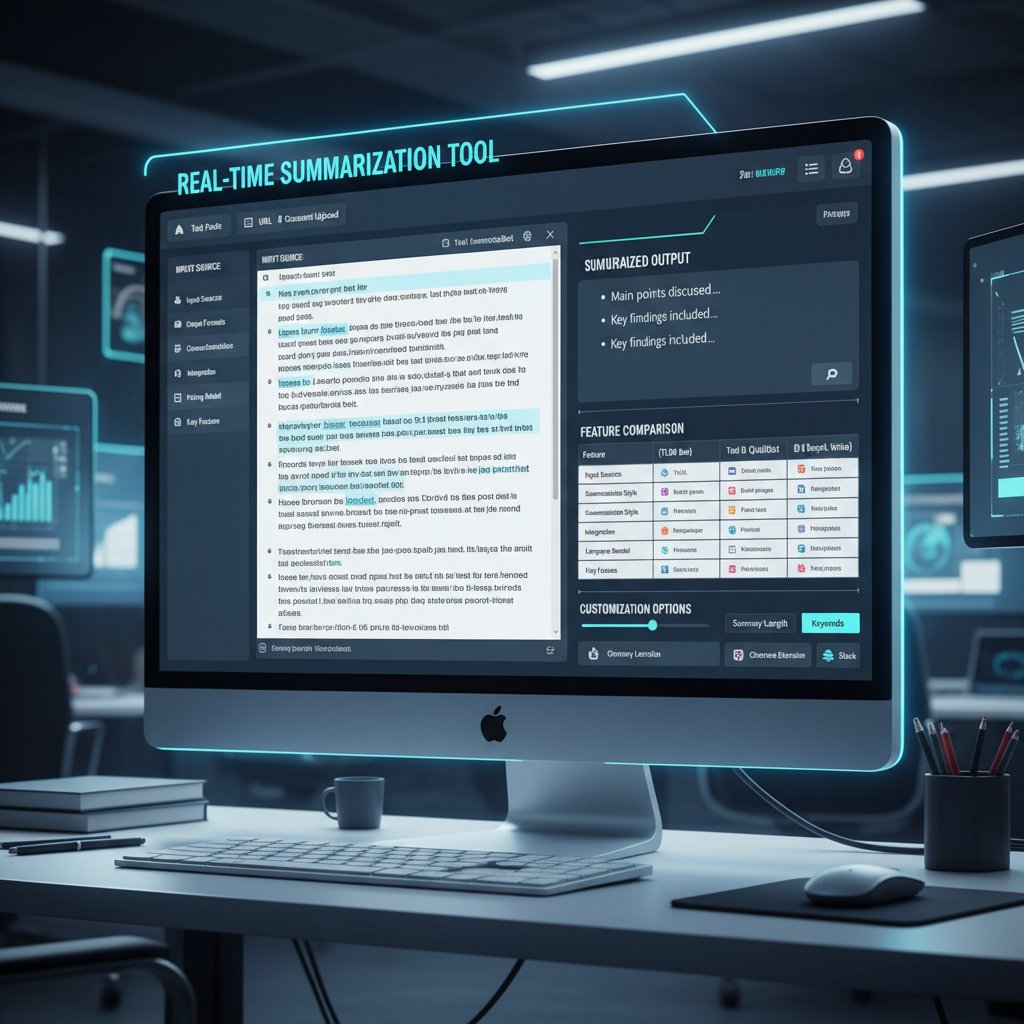
Choosing the right tool isn’t about chasing features; it’s about matching capability to context. A newsroom prioritizes low latency and transparency, while a global enterprise might demand advanced customization and airtight privacy.
| Feature | Notion AI | Slack GPT | Microsoft Copilot | Textwall.ai |
|---|---|---|---|---|
| Mobile support | Yes | Yes | Yes | Yes |
| Language coverage | 10+ | 15+ | 12+ | 20+ |
| Latency | 2-5 sec | 1-3 sec | 3-8 sec | 2-4 sec |
| Transparency | Moderate | High | Low | High |
| Customization | Basic | Moderate | Limited | Advanced |
Table 4: Feature comparison grid for real-time summarization tools. Source: Original analysis based on public tool documentation and verified reviews.
Some features matter more in certain industries. For instance, legal teams might require exportable audit trails, while educators benefit from plain-language simplification and language support.
Beyond the hype: questions to ask before you buy
Before you hit “subscribe,” pressure-test the promises. Here’s what you need to ask:
- What data does the tool store, and for how long?
- How does it handle user feedback and corrections?
- Are there clear audit trails for compliance?
- Can you control and customize output formats?
- What is the latency for your typical use case?
- Is customer support responsive and domain-savvy?
Key technical terms buyers need to understand:
Latency: The delay between data input and summary output; measured in seconds.
Context window: The amount of data an LLM can process at a time before losing track of the conversation.
Abstractive vs. extractive: Abstractive summarizes by generating new text; extractive pulls key sentences verbatim.
Audit trail: A record of how summaries were generated, for compliance and verification.
Picture this: A buyer enamored by flashy features skips a privacy check, only to discover later that sensitive internal memos were used to train a public AI model. The fallout? Regulatory headaches and lost trust—a rookie mistake that’s entirely avoidable.
Pitfalls and pro tips: mistakes to avoid and how to get optimal results
Even the best tech can flop if you bungle deployment. Common missteps include poor integration, lack of user training, and failure to monitor for bias or errors.
Step-by-step guide to mastering real-time summarization tools:
- Start with a pilot program in a low-stakes environment.
- Set up real-time feedback mechanisms for corrections and improvements.
- Gradually expand scope—don’t rush to automate everything at once.
- Train users to spot errors and escalate issues quickly.
- Regularly audit outputs for bias, omissions, and compliance.
For advanced users, customization is key. Tweak summary settings, integrate with existing dashboards, and use API endpoints for maximum control. Textwall.ai is a strong resource for those aiming to push boundaries—offering advanced document analysis that adapts to even the most complex workflows.
The dark side: ethics, bias, and the surveillance trap
AI bias in real-time: what gets lost in translation
Bias isn’t just an abstract risk—it’s baked into every dataset and algorithm. Real-time summaries can amplify stereotypes, erase minority perspectives, or over-simplify complex debates. According to Coherent Solutions, error rates stemming from bias range from 6% in generic datasets to 18% in domain-specific deployments, with marginalized voices most at risk.

The impact is real: marginalized groups may find their contributions minimized or misrepresented, reinforcing systemic inequalities.
"If you trust the summary, you trust the bias." — Morgan
Privacy, consent, and data trails: who really owns the summary?
Regulatory regimes are scrambling to keep up. In the U.S., consent is often buried in fine print; in the EU, GDPR demands explicit opt-in for data retention; in Asia, approaches are patchwork at best. The result? A landscape where user rights and tool capabilities are perpetually misaligned.
To protect yourself:
- Demand clear, accessible privacy policies.
- Use on-premise or private-cloud solutions for sensitive data.
- Regularly delete or audit stored summaries.
- Only use tools that offer transparent data trails and opt-out options.
Surveillance or liberation? The double-edged sword
There’s a seductive logic to real-time visibility: everyone’s on the same page, errors are caught instantly, and productivity soars. But the flip side is a world where every utterance, chat, and document is monitored, logged, and analyzed—feeding the engines of surveillance capitalism and live monitoring.
The ethical debate isn’t going away. For every story of liberation—where tools empower and include—there’s a counter-narrative of control and exploitation. The only way forward is with eyes wide open, demanding transparency and accountability at every turn.
The future is now: trends, innovations, and what’s next
Breakthroughs on the horizon: what 2025 (and beyond) holds
The frontiers of real-time summarization are expanding fast. Cutting-edge LLMs are now multimodal, parsing not only text but also audio and video streams. Open-source platforms are challenging proprietary giants, fueling both competition and innovation. According to AIZoneHub, tools capable of summarizing live video conferences and multilingual streams are now mainstream.

Will real-time ever be perfect? Limits and philosophical debates
There’s a hard ceiling to what instant summaries can achieve. Context is king, and no algorithm—no matter how advanced—can always capture the full nuance and intent of human conversation. Philosophers and technologists alike wrestle with the question: does speed kill depth? Is there a point where instant comprehension becomes superficiality?
The answer, for now, is a resounding “sometimes.” The best results come when critical human thinking stays in the loop, pushing back against the urge to outsource judgment to machines.
Getting ready: how to future-proof your workflow
To stay ahead, you can’t just adopt the latest tool—you need to build a culture of adaptation and learning.
Timeline of real-time summarization tool innovation from 2015–2025:
- 2015: Rule-based extractive summarization.
- 2018: Early transformer models enter the scene.
- 2020: Widespread LLM adoption, basic real-time integration.
- 2023: Domain-specific real-time tools gain traction.
- 2024: Multimodal summarization (text, audio, video) becomes standard.
- 2025: Continuous feedback loops and adaptive models.
Keep your team sharp: invest in ongoing training, review outputs regularly, and stay plugged into the evolving research. Resources like textwall.ai frequently publish insights and tutorials for those committed to staying on the frontlines.
Adjacent revolutions: what real-time summarization unlocks next
Speech-to-text, translation, and the rise of universal comprehension
Real-time summarization doesn’t exist in a vacuum. It’s intertwined with advances in speech-to-text and live translation. Imagine a global conference where every participant receives instant, language-appropriate digests, or emergency broadcasts instantly accessible in 30 languages. The convergence of these technologies is less about tools and more about universal comprehension—breaking down barriers in communication, accessibility, and speed.
Human-machine collaboration: is co-authoring the new normal?
We’re witnessing the birth of a new workflow: humans and AIs co-authoring knowledge in real time. In newsrooms, journalists debate AI-generated summaries before publishing. In boardrooms, executives annotate and correct live digests during meetings. In classrooms, students and teachers collaboratively refine summaries for clarity and accuracy.
This co-authorship isn’t just a technical shift—it’s cultural. It challenges traditional roles and redefines what it means to be an “author” or “expert” in an era of augmented intelligence.
Society, culture, and the politics of instant knowledge
The ripple effects are societal. The shift from slow, deliberate reading to instant consumption changes not just how we work, but how we think—and how democracies function. Instant digests make information hyper-accessible, but they also risk flattening debate and amplifying misinformation when unchecked.
The broader impact? A world that’s both more connected and more fragmented, where the politics of knowledge is played out in milliseconds.
Conclusion: the only summary you’ll ever need
Key takeaways: what matters most about real-time summarization tools
Let’s not sugarcoat it: real-time summarization tools are both a revolution and a reckoning. They’re rewriting the rules of information, democratizing access, and enabling breakthroughs across industries. But they also come with costs—hidden errors, privacy risks, and the ever-present danger of letting speed trump substance.
The non-negotiable truths about real-time summarization:
- No tool is infallible—critical thinking is still your best defense.
- The line between clarity and oversimplification is razor-thin.
- Accessibility gains can be transformative, but only when paired with inclusion and feedback.
- Privacy, transparency, and control are not optional—they’re survival basics.
- The best results come from human-AI partnership, not blind automation.
You’ve seen the raw truths and the real wins. The next move is yours: take what you’ve learned, question the hype, and become an advocate for responsible, effective, and equitable use of real-time summarization. For those hungry for more, resources at textwall.ai and other leading platforms are just a click away. In a world addicted to speed, don’t forget—the best insights still come from those who dare to slow down, dig deeper, and demand more from their tools.
Sources
References cited in this article
- Coherent Solutions(coherentsolutions.com)
- AIZoneHub(aizonehub.com)
- Virtue Market Research(virtuemarketresearch.com)
- ActionSprout(actionsprout.com)
- Sachai Blog(blogs.sachai.io)
- MindOwl(mindowl.org)
- Psychology Today(psychologytoday.com)
- MSU Extension(canr.msu.edu)
- Capsule NZ(capsulenz.com)
- Psychology Today(psychologytoday.com)
- Frontiers in Human Neuroscience(frontiersin.org)
- ScienceDirect(sciencedirect.com)
- ACM Transactions on Computer-Human Interaction(dl.acm.org)
- DocumentLLM(documentllm.com)
- Metapress(metapress.com)
- Snapsight(snapsight.com)
- Enago Read(read.enago.com)
- Microsoft Azure(learn.microsoft.com)
- Convin.ai(convin.ai)
- BBC Study(theregister.com)
- Ars Technica(arstechnica.com)
- Futurism(futurism.com)
- GetTrusted(gettrusted.io)
- Forbes(forbes.com)
- Exploding Topics(explodingtopics.com)
- Frontiers in Big Data(frontiersin.org)
- ASAPP(asapp.com)
- Analytics Vidhya(analyticsvidhya.com)
- Speechmatics(speechmatics.com)
- Datatas(datatas.com)
- Velotix(velotix.ai)
- DocumentLLM(documentllm.com)
- UMATechnology(umatechnology.org)
- Nerdbot(nerdbot.com)
- Elegant Themes(elegantthemes.com)
- ReadPartner(readpartner.com)
Transform Complex Documents Into Clear Insights
TextWall.ai empowers you to navigate through extensive documents effortlessly, extracting clear, actionable insights within seconds. Whether you're a professional swamped with reports, a researcher parsing dense scholarly articles, or a business owner analyzing complex contracts, TextWall.ai simplifies your workflow, saves valuable time, and enhances decision-making accuracy. Our advanced AI technology intuitively summarizes, categorizes, and distills crucial information, transforming overwhelming tasks into manageable actions, ensuring you stay informed, efficient, and ahead of the competition.
Get startedReady to Master Your Documents?
Join professionals who've transformed document analysis with TextWall.ai
Frequently Asked Questions
What is a real-time summarization tool?
Real-time summarization tools are AI-powered engines that distill information, facts, headlines, and insights into concise, digestible summaries quickly, transforming overwhelming data into actionable bites in minimal time.
How much information does an average knowledge worker face daily?
According to the article, the average knowledge worker now faces up to 34 gigabytes of information daily, which can be paralyzing rather than empowering.
How much faster can users consume information with real-time summarization tools?
According to ActionSprout, users consume information up to 10 times faster with real-time summarization tools compared to traditional methods.
What psychological effects does information overload have?
Information overload spikes cortisol levels, erodes focus, and leaves people feeling perpetually behind, creating an emotional toll beyond just inefficiency.
Keep Reading
Explore more from Advanced document analysis

Real-Time Document Summarization Online: Benefits and Limitations

Advanced Summarization Tools in 2026: Capabilities and Risks

Document Summarization Tools: How They Work and What They Miss

How AI Summarizers Handle Lengthy Text Online

Text Summarization Software in 2026: Trust, Risk and Real Insight
