


Automated Legal Compliance Tools in 2025: What Actually Works and What Doesn't
Written with AI assistance under Advanced document analysis's editorial guidelines. Editorial guidelines
Automated legal compliance tools promise efficiency gains but face significant practical challenges. While regulatory updates have increased nearly 25% in two years, creating urgent compliance demands, these tools still require substantial human oversight, struggle with accuracy issues, and cannot eliminate regulatory uncertainty entirely. Success depends on realistic expectations about their limitations rather than viewing them as complete solutions.
When it comes to automated legal compliance tools, hype and reality wage a constant battle—a tug-of-war that defines the legal tech landscape in 2025. We’re told the age of “set-it-and-forget-it” compliance is here. Sales decks shimmer with promises: instant compliance, risk banished, human error a relic of the past. But beneath the glossy pitch, the hard truths grind away. In practice, legal teams still sweat the details, AI hallucinates, and regulatory chaos waits to break your most elegant automation. This article pulls back the curtain on the real story: the unspoken risks, the unvarnished costs, and the transformation happening where human grit meets machine precision. Whether you’re a compliance leader, legal pro, or just trying to keep your business out of the headlines, it’s time to get past the sales fantasy. Let’s dissect what automated legal compliance tools actually achieve—and what they don’t—so you can make decisions grounded in truth, not hope.
Why everyone’s talking about automated legal compliance tools
The compliance crisis: Too many rules, too little time
If it feels like the compliance burden has exploded, you’re not hallucinating. According to recent data, the global regulatory landscape has reached a tipping point—over 300 major regulatory updates land every single day, up nearly 25% from just two years ago. Legal teams face a relentless barrage of new standards, shifting privacy laws, and industry-specific edicts. It’s a world where “ignorance of the law” isn’t just an excuse—it’s a liability that can sink companies overnight.

| Year | Average Daily Regulatory Updates | % Increase YoY |
|---|---|---|
| 2021 | 225 | - |
| 2022 | 252 | 12% |
| 2023 | 280 | 11% |
| 2024 | 312 | 11.4% |
Table 1: The relentless growth of regulatory updates increases legal teams’ workload annually. Source: Original analysis based on Cascadia LegalTech Industry Report 2024
This explosion creates an unsustainable workload for compliance departments. Traditional manual monitoring—think spreadsheets, email chains, and late-night document reviews—has hit a breaking point. The risk? Missing a rule, triggering audits, fines, or worse: reputational meltdown. No wonder organizations are in a feverish hunt for a way out—the promise of AI-driven solutions that can parse, flag, and track swathes of regulation in real time is more seductive than ever.
How AI became the compliance world’s latest obsession
The legal world isn’t known for early adoption, but when the dam broke, it broke hard. In 2023, only 19% of law firms reported significant use of AI-based compliance tools. By 2024, that figure had skyrocketed, with over 64% of companies now using purpose-built compliance technology instead of manual methods.
The new breed of automation tools claim to monitor regulatory changes, review contracts, and spot red flags—faster than any human possibly could. According to the FutureMarketInsights Compliance Automation Tools Market 2034, the global market for automated legal compliance tools reached $2.9 billion in 2024, growing at a blistering 16.4% CAGR, fueled by regulatory complexity and demand for scalable solutions.
These tools don’t just promise efficiency. They dangle the prospect of bulletproof compliance: no more missed deadlines, no more unflagged risks. AI now powers everything from contract lifecycle management to real-time regulatory tracking, creating a seismic shift in how legal professionals approach their workload.
“Automation is not an end in itself, but a way to reclaim time and focus for higher-order legal problem-solving. The tools are only as good as the people guiding them.” — Extracted from Cimphony: 7 AI Tools for Legal Document Automation in 2024

What users hope for (and what they’re really afraid of)
Every new tech wave brings its cocktail of anticipation and anxiety. Compliance leaders eye these tools hoping for fewer sleepless nights—and fewer regulatory bullets to dodge. But they’ve also learned to be wary of silver bullets.
- Hope: End-to-end automation of compliance monitoring and reporting, slashing the time and costs tied to manual reviews.
- Hope: AI-driven document review that instantly flags risky clauses or outdated regulatory language.
- Hope: Seamless integration into existing workflows, boosting accuracy and minimizing human error.
Yet the fears run deep:
- Fear: The system missing a critical update due to poor data or “AI hallucinations,” triggering catastrophic non-compliance.
- Fear: Vendor lock-in, with proprietary platforms trapping data and limiting future flexibility.
- Fear: Data privacy breaches—exposing sensitive legal or client information to new risks.
In short, users crave relief from the compliance grind, but they also know that real-world automation comes bundled with hard limits and hidden dangers. The best tools, like those at textwall.ai/document-analysis, promise to tip the scales, but trust is earned, not assumed.
The automation illusion: What these tools can’t actually do
The myth of ‘set it and forget it’ compliance
It’s the most seductive pitch in legal tech: flip a switch and watch compliance handle itself. In reality, full automation is a myth. Even the most advanced platforms require constant human oversight—especially when regulatory environments shift overnight.
The problem? No AI on earth can instantly grasp the intent and nuance of every new regulation. Rules are often ambiguous, riddled with exceptions, and laced with region-specific caveats. Tools can detect patterns, flag changes, or process documents, but human judgment remains the final authority. According to the Concord Complete Guide to Legal Tech Tools in 2024, vendors rarely highlight the resources still needed for validation and escalation.
“Legal automation tools are invaluable for speed, but the notion that they replace expert oversight is dangerously oversold. Human intervention is non-negotiable for anything mission-critical.” — Extracted from Concord: The Complete Guide to Legal Tech Tools in 2024
The best platforms augment, not replace, legal teams. They shoulder the grunt work—summarizing, flagging, and notifying—but the ultimate responsibility for compliance remains stubbornly human.
Real-world fails: When automation backfires
If you want to understand the limits of automation, just look at the headlines. There have been multiple high-profile cases where automated compliance went off the rails:
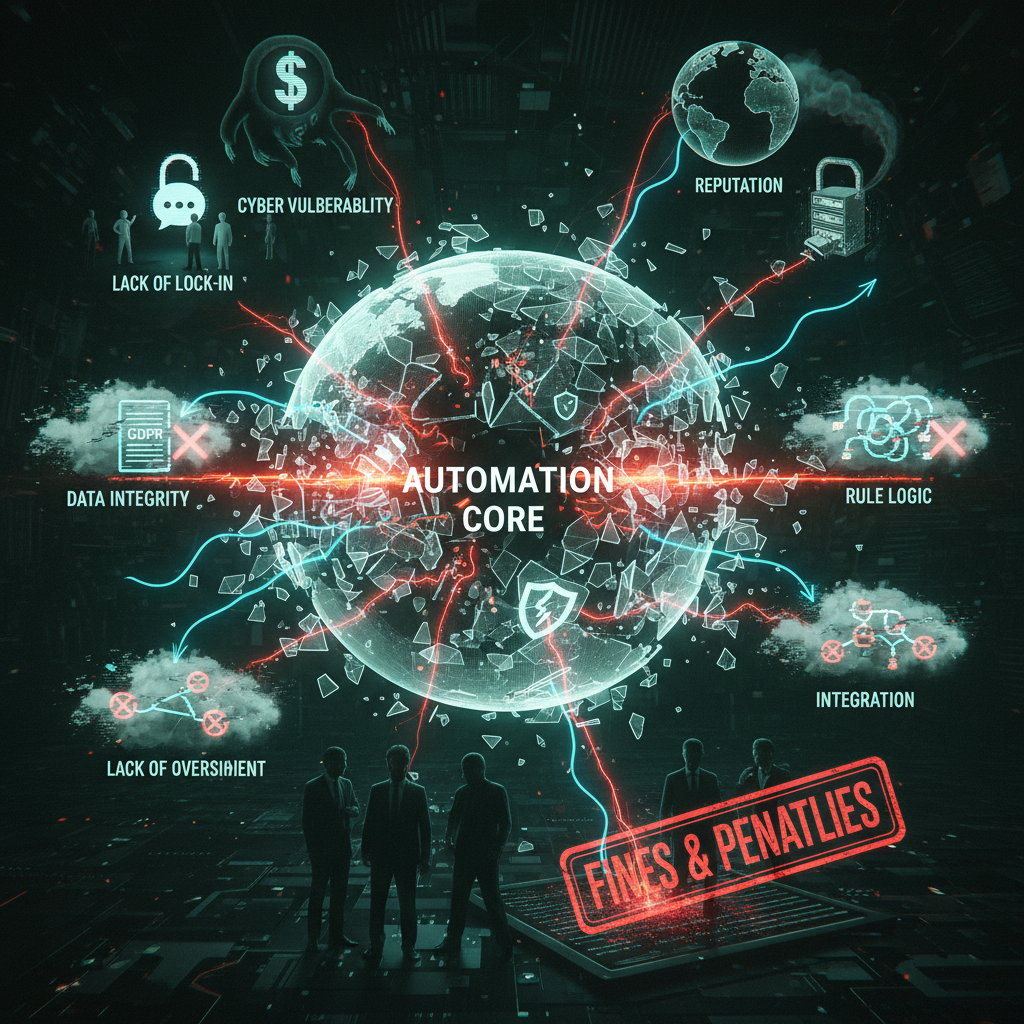
- Missed regulatory updates: An international bank relied on automated feeds for anti-money laundering updates. When the tool missed a jurisdictional change due to a data lag, the bank was slapped with a $10 million fine for non-compliance.
- False positives overload: A global pharma company automated its contract review. The tool flagged 90% of clauses as “risky,” overwhelming legal staff and driving them back to manual review.
- Integration disaster: A Fortune 500 manufacturer tried to bolt compliance tools onto a legacy ERP. Data mismatches and format errors triggered weeks of downtime.
Each of these stories shares a common thread: unchecked belief in the promises of automation, coupled with a lack of process validation. The takeaway? When automation backfires, the fallout is expensive, embarrassing—and painfully public.
What AI gets wrong: Hallucinations and bias in legal tools
From ChatGPT to custom legal bots, “hallucination” (generating plausible-sounding but flat-out wrong information) is an AI Achilles’ heel. Legal compliance is unforgiving; a single hallucinated clause or misread statute can unleash regulatory hell.
| Error Type | Frequency | Impact Level | Typical Cause |
|---|---|---|---|
| False positives | Common | Medium | Overly broad algorithms |
| False negatives | Occasional | High | Missed updates, incomplete data |
| Biased recommendations | Occasional | High | Training data imbalance |
| Hallucinated summaries | Rare | Catastrophic | LLM overreach, poor validation |
Table 2: Common AI failure modes in automated legal compliance tools. Source: Original analysis based on [Cimphony, Concord, Cascadia Capital 2024]
When mistakes happen, they’re rarely self-correcting. The most robust platforms now include “human-in-the-loop” review, mandatory signoffs, and detailed audit trails, but the risk remains. As AI grows more sophisticated, so do its blind spots.
When the tool flags a perfectly compliant document as risky, triggering unnecessary reviews and delays.
When the tool misses a genuine compliance issue due to limited data or algorithmic bias—a mistake with potentially severe consequences.
AI-generated content or decision that appears credible but is factually incorrect or legally invalid.
The anatomy of automated legal compliance tools
Core features: From document analysis to regulatory tracking
At their best, automated compliance platforms are Swiss Army knives for risk management. But don’t be blinded by long feature lists—the difference lies in execution and depth.
- Automated document review: Parses contracts, policies, and disclosures, flagging risky language and outdated clauses.
- Real-time regulatory tracking: Monitors thousands of regulatory sources, alerting teams to relevant changes as they happen.
- Workflow automation: Routes documents for approval and signoff, with audit trails for every action.
- Integration APIs: Connects compliance tools to existing legal or ERP systems for end-to-end process automation.
- Advanced document analysis: Uses NLP and AI to extract actionable insights, categorize risks, and generate summaries in seconds.
The core differentiator? Not the breadth but the intelligence: how well the platform learns from your data, adapts to your workflows, and supports human decision-making. For example, solutions like textwall.ai/advanced-document-analysis have raised the bar, making sense of even the most labyrinthine documents.
How advanced document analysis is changing the game
Until recently, sifting through a 70-page contract or a dense regulatory bulletin was a week’s work. Now, advanced document analysis tools can summarize, extract key points, and surface compliance risks in minutes.

This isn’t just about speed. AI-driven analysis detects patterns across vast corpora—reviewing not just the “what,” but the “why” behind legal language. As more firms deploy these tools, the gap widens between organizations that can process knowledge at scale and those drowning in paperwork.
| Feature | Benefit | Example Use Case |
|---|---|---|
| Summarization | Quick insights from lengthy documents | Reviewing 100+ page regulatory filings |
| Clause extraction | Isolates risky terms for fast review | Identifying GDPR-noncompliant language in contracts |
| Risk categorization | Prioritizes issues needing human attention | Flagging high-risk supplier agreements |
| Audit trail generation | Tracks all changes and approvals | Legal defensibility in audits |
Table 3: Key capabilities of advanced document analysis in compliance automation. Source: Original analysis based on [textwall.ai, Concord Guide, 2024]
Integrating AI with legacy systems: Nightmares and breakthroughs
Legacy software: the graveyard where good compliance ambitions go to die. Most law firms and corporations have 10+ year old systems embedded deeply into their processes. Integrating new AI-driven tools is rarely plug-and-play.
- Data migration headaches: Extracting, cleansing, and mapping decades of legacy data to new platforms is a marathon, not a sprint.
- Compatibility gaps: Proprietary formats and outdated APIs trigger cascading integration failures.
- Change management drama: Staff pushback, retraining, and workflow redesigns can derail even the best-laid plans.
Yet breakthroughs are real. Forward-thinking organizations pilot integrations in phases, using middleware and API-based connectors to bridge the gap. The result? Gradual, less risky modernization—swapping brute-force for surgical precision.
Who’s really using these tools—and why some refuse
Industries leading the charge (and those lagging behind)
Compliance automation isn’t spreading evenly. Highly regulated industries—finance, healthcare, pharmaceuticals—are at the tip of the spear, driven by relentless oversight and outsized risk. Meanwhile, laggards abound in less-regulated sectors or small businesses daunted by upfront costs.
| Industry | Adoption Rate (2024) | Key Drivers | Barriers |
|---|---|---|---|
| Financial Services | 82% | Regulatory fines, audits | Legacy systems, integration |
| Healthcare | 78% | HIPAA, patient privacy | Data security concerns |
| Pharma/Biotech | 73% | FDA, patent compliance | Complexity of documentation |
| Manufacturing | 52% | Global supply chain | ROI uncertainty |
| Retail | 45% | Consumer protection | Perceived lower risk |
Table 4: Adoption of compliance automation tools by industry. Source: Original analysis based on Cascadia LegalTech Industry Report 2024
The trend is unmistakable: the higher the regulatory burden, the greater the appetite for automation. But for every adopter, there’s a skeptic who’s seen too many promises turn to dust.
The human factor: Resistance, relief, and the new compliance job
Even the best tools are nothing without buy-in. For some, automation signals relief—an escape from soul-crushing admin work. For others, it’s a threat, conjuring visions of job obsolescence.
“The shift isn’t about fewer compliance jobs—it’s about evolving the role. We now hire for tech-savvy legal minds, not paper-pushers.” — Extracted from Cascadia LegalTech Industry Report 2024
- Resistance: Legal veterans may distrust “black box” AI recommendations or fear deskilling.
- Relief: Junior staff embrace time saved on repetitive tasks, freeing them for higher-impact projects.
- New roles: Organizations now need “compliance technologists”—hybrids fluent in both law and data science.
Ultimately, the human factor shapes the success or failure of automation rollouts. Training, transparency, and clear role evolution are as critical as software selection.
Case studies: Wins, disasters, and lessons from the field
Real-world stories show the spectrum of outcomes:

- The big win: A global law firm slashed review time for M&A contracts by 70% using advanced document analysis, redirecting hours to complex deal work and boosting profits.
- The near-miss: A mid-size pharmaceutical company’s AI tool flagged a non-existent risk, causing a week-long contract freeze. Manual review revealed a language nuance the tool didn’t grasp.
- The disaster: A regional bank’s automation platform missed a critical regulatory update, leading to a six-figure fine and public apology.
Lesson: Even the best tools amplify both strengths and weaknesses. Strategic deployment, coupled with robust human validation, separates the winners from the cautionary tales.
The hidden costs (and unexpected savings) of automation
The true price tag: More than just software fees
Vendors love to quote per-seat pricing, but the true cost of automated legal compliance tools is layered and often opaque.
| Cost Component | Typical Range | Hidden Factors |
|---|---|---|
| Software subscription | $15k–$250k/year | Volume of documents, number of users |
| Integration/setup | $10k–$200k (one-time) | Legacy system complexity, data migration |
| Training/change mgmt | $5k–$50k | Staff turnover, ongoing updates |
| Customization | $15k–$100k+ | Proprietary formats, special workflows |
| Ongoing support | 10–15% of annual subscription | 24/7 SLAs, priority response times |
Table 5: Layered costs in compliance automation projects. Source: Original analysis based on [FutureMarketInsights 2024 Report, Concord 2024 Guide]
That said, the cost calculus isn’t just about checks written. Unexpected savings emerge—like reducing outside counsel spend or eliminating entire administrative job categories. The key? Map your full cost landscape before you sign.
Shadow compliance: What still needs human oversight
No vendor will admit it, but “shadow compliance”—all the manual checks, escalations, and signoffs that surround an automated tool—remains essential.

- Manual validation of flagged items: Ensures nuanced cases aren’t misclassified.
- Periodic audits of automated outputs: Catches creeping bias or data drift.
- Training AI on new regulations: Requires ongoing curation, not just a one-off setup.
- Escalation of outlier cases to human experts: Retains legal defensibility.
Until AI can explain its reasoning as clearly as a human lawyer, shadow compliance is your insurance policy.
ROI or regret? Measuring value beyond the sales pitch
Calculating ROI for compliance automation is messier than a vendor’s slide deck admits. Savings in time and headcount are real, but so are hidden costs and new categories of risk.
A 2024 survey by Cascadia LegalTech Industry Report found that 58% of adopters reported cost reductions within 18 months, but 29% faced unanticipated costs that eroded ROI. The lesson? Treat every automation project as an ongoing experiment, not a one-time fix.
"Automation delivered immediate wins, but hidden costs surfaced—ongoing training, missed edge cases, and vendor lock-in. The real ROI is in continuous improvement, not a static metric." — Extracted from Cascadia LegalTech Industry Report 2024
Bottom line: The payoff is there, but only for those who keep a sharp eye on both sides of the ledger.
Step-by-step: How to implement automated compliance (without getting burned)
Readiness checklist: Is your organization prepared?
Before chasing the automation dream, ask if your organization has the muscle for real change.
- Inventory your workflows: Map current compliance processes, identifying bottlenecks and manual pain points.
- Assess your data hygiene: Clean, well-structured data is non-negotiable for effective automation.
- Evaluate system compatibility: Can your legacy platforms integrate with modern tools via APIs or middleware?
- Secure leadership buy-in: Is your C-suite committed beyond the pilot phase and willing to fund change management?
- Plan for ongoing training: Staff need upskilling to use tools properly and interpret outputs.
If you flinch at any checkpoint, slow down. Rushing into implementation without readiness is a blueprint for regret.
Pitfalls to avoid at each stage
Automation projects flounder for predictable reasons:
- Underestimating integration complexity: “Plug and play” is mostly a myth in legal tech. Plan for hands-on work.
- Neglecting user training: Tools are only as good as their users. Invest in onboarding and ongoing education.
- Failing to customize workflows: One-size-fits-all rarely fits anyone. Tailor automations to your real processes.
- Ignoring post-implementation audits: Regular performance checks catch drift and prevent silent failures.
- Overlooking data privacy risks: AI tools process sensitive info—ensure airtight security protocols.
Pause, regroup, and attack each stage with eyes wide open.
Making the most of advanced document analysis
The holy grail is not just automation, but actionable insight. Advanced document analysis platforms can accelerate contract reviews, uncover trends in regulatory filings, and surface risks that go unnoticed in manual workflows.

The trick? Don’t just “run” documents—set up clear criteria, review flagged items with a critical eye, and establish feedback loops so the tool learns from your context. Use advanced features—summarization, clause extraction, trend detection—to make your compliance team smarter, not just faster.
Debunking the biggest myths about compliance automation
Myth-busting: What the marketing never tells you
Let’s get real about the “facts” of compliance automation:
- “100% accuracy is guaranteed.” False. Even top-tier tools suffer from false positives and negatives.
- “Once set up, no maintenance required.” Fantasy. Regulations evolve—tools must be updated and tuned.
- “Manual oversight is obsolete.” Dangerous myth. Legal defensibility demands human checks.
- “All data is secure by default.” Not true. Data privacy demands active, ongoing security management.
- “Vendor lock-in isn’t an issue.” Reality: Proprietary formats can hold your data hostage.
Remember: If a vendor’s pitch sounds too good to be true, it probably is.
Human expertise vs. machine precision: The hybrid future
The ability to interpret ambiguous legal language, spot context-specific risks, and make defensible judgment calls. No AI can match a seasoned legal mind.
The turbocharged power of algorithms to process thousands of documents an hour, flag patterns, and surface anomalies that humans could miss.
“The next wave is hybrid: AI handling the grunt work, humans making the calls that matter. Anything less is risky—and in compliance, risk is everything.” — Extracted from Concord: The Complete Guide to Legal Tech Tools in 2024
AI will replace compliance teams? Not so fast
- AI automates repetitive, rules-based tasks: Think initial document review, not strategic decision-making.
- Human oversight remains essential: For exceptions, novel cases, or gray areas.
- New roles emerge: Compliance technologist, AI trainer, data privacy lead.
The upshot: AI is a force multiplier, not a pink slip generator. Human talent steers, validates, and ultimately owns the compliance outcome.
The future of compliance: Trends, threats, and the road ahead
2025 and beyond: What’s next for legal automation?
The present is already wild. Blockchain is moving from hype to reality for smart contracts, AI is entrenched in contract lifecycle management, and regulatory tracking is more real-time than ever.

But complexity breeds new threats. Regulatory bodies worldwide are only starting to grapple with what “AI-assisted compliance” means for legal defensibility and liability.
In this turbulent environment, the winners will be those who never cede critical thinking to the machine. Automation is a tool, not a verdict.
Algorithmic accountability: Who’s responsible when AI gets it wrong?
- The developer: For flaws in design, bias, or insufficient explainability.
- The vendor: For over-promising or failing to maintain tools as regulations shift.
- The user organization: For unchecked reliance on automation without human validation.
- Regulators: For clarity on standards, auditability, and enforcement.
“AI is only as accountable as the systems—and people—that govern it. Legal risk doesn’t disappear; it changes address.” — Extracted from Cascadia LegalTech Industry Report 2024
Global regulatory chaos: Can automation keep up?
| Region | Regulatory Volatility | Automation Readiness | Key Challenge |
|---|---|---|---|
| North America | High | High | Patchwork state/federal laws |
| Europe | Very High | Medium | GDPR, cross-border issues |
| Asia-Pacific | Medium | Low | Rapid regulatory evolution |
| Latin America | High | Low | Enforcement unpredictability |
Table 6: Global regulatory volatility and compliance automation readiness. Source: Original analysis based on [FutureMarketInsights, 2024; Cascadia Capital, 2024]
The bottom line? Automation struggles when rules shift faster than code can be written. Human oversight remains the only constant.
How to choose the right automated legal compliance tool for you
Feature matrix: What matters (and what’s just hype)
| Feature | Essential | Nice-to-Have | Red Flag if Missing |
|---|---|---|---|
| Advanced document analysis | ✔ | ||
| Real-time regulatory tracking | ✔ | ||
| API integration | ✔ | ||
| Transparent audit trails | ✔ | ||
| User-friendly interface | ✔ | ||
| Customizable workflows | ✔ | ||
| Proprietary data lock-in | ✔ | ||
| Manual validation workflows | ✔ |
Table 7: How to separate substance from sizzle in compliance tool selection. Source: Original analysis based on [textwall.ai, Concord, Cimphony 2024 Guides]
Cut through the fog: focus on features that drive defensibility and adaptability, not just shiny dashboards.
Questions to ask before you sign the contract
- What is your track record in our industry?
- How do you handle regulatory changes—automatic updates or manual intervention?
- Can we export all data in open formats?
- How do you secure sensitive information (encryption, access controls)?
- What support and training is included post-implementation?
- Can the tool flag edge cases for human review?
- How do you ensure transparency and auditability?
- What is your policy on AI errors and corrections?
- Can we customize workflows and integrate with existing systems?
- Are there hidden fees (customization, integrations, ongoing support)?
Never trust a black box. Press hard—your compliance (and job) is on the line.
Why ‘advanced document analysis’ is a must-have in 2025
The volume, complexity, and velocity of legal documents is only increasing. Without advanced document analysis, you’re playing catch-up—forever.

Tools that can summarize, flag, and surface insight instantly aren’t just nice—they’re necessary for keeping pace. They reduce risk, boost productivity, and make manual drudgery obsolete. For modern teams, it’s the difference between surviving and thriving.
Red flags, hidden benefits, and unconventional uses
Red flags to watch out for in vendor pitches
- Proprietary data formats that make it tough to migrate later.
- Opaque algorithms with no explainability or audit trail.
- No user training or support included in the contract.
- “One-size-fits-all” claims without sector-specific references.
- Lack of integration APIs, forcing manual workarounds.
If you spot any of these—run, don’t walk, in the opposite direction.
Hidden benefits experts won’t tell you
- Sharpened legal acumen: Automation forces teams to clarify their own processes and risks.
- Improved cross-departmental collaboration: Centralized compliance data breaks down silos between legal, HR, and IT.
- Better audit outcomes: Traceable workflows and audit trails make regulatory reviews less painful.
- Scalable growth: Automated systems let organizations scale up compliance as they expand into new markets.
Scratch beneath the surface—real gains often emerge from improved process, not just faster tools.
Unconventional and cross-industry uses
- Market research: Automated tools now parse market regulations, offering instant insight for product launches.
- Academic compliance: Universities use AI to ensure grant applications and research are compliant with funding rules.
- Healthcare records: Automated document analysis for HIPAA compliance and insurance claims.
- Environmental compliance: Flagging ESG reporting inconsistencies for manufacturing and energy sectors.

Who says compliance is just for lawyers? Forward-thinkers are finding new value in every sector.
Glossary: Demystifying legal compliance and AI jargon
Key terms every compliance leader needs to know
Technology solutions that use AI and automation to monitor regulations, review contracts, and flag compliance risks.
The process of continuously monitoring governmental and industry rule changes to ensure ongoing compliance.
An error where compliant content is incorrectly flagged as a risk.
AI-generated information that seems credible but is actually incorrect or unsubstantiated.
When proprietary features or formats make it hard for customers to switch providers or migrate data.
A type of AI that interprets, analyzes, and summarizes human language in documents.
A digital record of every action, change, and decision made within a compliance platform.
Jargon decoded: How to talk to vendors (and sound like you know what you’re doing)
Using software and AI to handle repetitive compliance tasks with minimal manual intervention.
The use of AI-driven tools to extract, summarize, and categorize information from complex legal documents.
Safeguarding sensitive information handled by compliance tools, ensuring it’s only accessed by authorized users.
A set of software protocols that lets compliance tools communicate and share data with other business systems.
Human review of automated decisions to catch errors or ambiguous cases that machines can’t resolve.
What’s next: The hybrid future of compliance teams
The rise of the AI-augmented compliance pro
The days of compliance as a back-office grind are fading. The most valuable professionals now blend legal expertise with tech savvy—supercharging their judgment with automated insights.

They’re not just risk managers; they’re process designers, data wranglers, and trusted business partners. In organizations using platforms like textwall.ai, this new breed sets the standard.
Building a resilient compliance culture in an automated world
- Prioritize transparency: Always know—and document—how decisions are made.
- Invest in training: Keep teams sharp, not just compliant.
- Encourage tech-literacy: Every legal pro should understand the basics of AI-driven tools.
- Implement feedback loops: Use post-incident reviews to refine both tools and processes.
- Champion cross-functional collaboration: Compliance is everyone’s job.
The most resilient organizations treat compliance not as a checkbox, but as a living, evolving team sport.
Resources and next steps
Whether you’re starting your automation journey or refining a mature program, here’s how to keep your edge:
- Audit your current compliance processes.
- Engage stakeholders across legal, IT, and business units.
- Pilot advanced document analysis tools with real-world documents.
- Regularly review and update your compliance tech stack.
- Join peer groups and attend industry events to share hard-won lessons.
Building a future-proof compliance program is a marathon, not a sprint. Stay skeptical, stay informed, and use automation on your own terms.
Conclusion
Automated legal compliance tools are transforming the risk landscape—not by eliminating the grind, but by sharpening focus where it matters most. Ignore the sales hype: full automation is a myth, but intelligent augmentation is a reality. The future belongs to teams that blend sharp legal minds with relentless technology—and hold both to account. As you navigate this new terrain, keep one eye on the data, one on the process, and never cede your judgment to the black box. The truth? Compliance automation is only as good as the people and processes that wield it. Use that power wisely.
Sources
References cited in this article
- Cimphony: 7 AI Tools for Legal Document Automation in 2024(cimphony.ai)
- FutureMarketInsights: Compliance Automation Tools Market 2034(futuremarketinsights.com)
- Concord: The Complete Guide to Legal Tech Tools in 2024(concord.app)
- Cascadia LegalTech Industry Report 2024(cascadiacapital.com)
- JumpCloud: 2024 IT Compliance Statistics(jumpcloud.com)
- Clio: 2024 Legal Trends Report(clio.com)
- TrustCloud: Global Compliance Challenges in 2024(community.trustcloud.ai)
- ADP: 2024 Compliance Trends(adp.com)
- KPMG: Ten Key Regulatory Challenges 2024(kpmg.com)
- Mitratech: Legal Tech Insights 2024(mitratech.com)
- US Legal Support: 2024 Litigation Trends(uslegalsupport.com)
- G2: Legal AI Limitations(research.g2.com)
- arXiv: Rethinking Legal Compliance Automation (2024)(arxiv.org)
- BNX Business Advisors: Compliance Myths(bnxba.com)
- Gartner: Hype Cycle for Legal and Compliance Technologies, 2023(gartner.com)
- Stanford HAI: AI on Trial(hai.stanford.edu)
- Wiley: Hallucination-Free? Assessing AI Legal Research Tools(onlinelibrary.wiley.com)
- ABA Formal Opinion 512, 2024(briefpoint.ai)
- MIT Law Review: Compliance Verification Frameworks(law.mit.edu)
- IJFMR 2024: Legal Case Management Architecture(ijfmr.com)
- Centraleyes: Top AI Compliance Tools(centraleyes.com)
- Spellbook: Legal AI Tools(spellbook.legal)
- Navex: 2024 State of Risk & Compliance Report(secureframe.com)
- ABA Tech Survey 2025(lawnext.com)
- Cascadia Capital Legal Tech Report 2024(cascadiacapital.com)
- Shopworks: Employment Law Changes 2024(theshopworks.com)
- Mitratech: 5 Trends in Human Resources Compliance(mitratech.com)
- LexisNexis Risk Solutions: Cost of Financial Crime Compliance(risk.lexisnexis.com)
- Thomson Reuters: Cost of Compliance 2023(legal.thomsonreuters.com)
Transform Complex Documents Into Clear Insights
TextWall.ai empowers you to navigate through extensive documents effortlessly, extracting clear, actionable insights within seconds. Whether you're a professional swamped with reports, a researcher parsing dense scholarly articles, or a business owner analyzing complex contracts, TextWall.ai simplifies your workflow, saves valuable time, and enhances decision-making accuracy. Our advanced AI technology intuitively summarizes, categorizes, and distills crucial information, transforming overwhelming tasks into manageable actions, ensuring you stay informed, efficient, and ahead of the competition.
Get startedReady to Master Your Documents?
Join professionals who've transformed document analysis with TextWall.ai
Frequently Asked Questions
How much has the regulatory landscape grown in recent years?
According to the article, over 300 major regulatory updates now land every single day, representing a nearly 25% increase from just two years ago. The data shows daily regulatory updates grew from 225 in 2021 to 312 in 2024, with consistent year-over-year increases of around 11-12%.
What does the article say about the promises made by automated legal compliance tools?
The article criticizes the hype around these tools, noting that sales pitches promise 'instant compliance,' elimination of risk, and an end to human error. However, the article argues that beneath these glossy promises, the reality is that legal teams still struggle with details, AI systems make mistakes ('hallucinate'), and regulatory challenges continue to undermine automation efforts.
What is the main premise of the article regarding ROI versus risk?
The article examines whether automated legal compliance tools deliver genuine return on investment or present significant risks, emphasizing that readers need to understand both the real achievements and limitations of these tools rather than relying on vendor promises or hope.
What traditional compliance methods does the article suggest are breaking down?
The article identifies manual monitoring approaches—including spreadsheets, email chains, and late-night document reviews—as having hit a breaking point and becoming unsustainable for compliance departments managing the explosion of regulatory updates.
Keep Reading
Explore more from Advanced document analysis

Legal Compliance Review Tools That Work Versus Those That Don't

Automated Compliance Checks Documents: Capabilities and Hidden Risks

Document Summarizer for Compliance Management: How AI Reduces Audit Risk

Document Summarization for Legal Risk Reduction: Strategy and Execution

Document Analysis Automation: Benefits, Risks, and What Works


