


Improve Decision-Making Accuracy in Documents Before AI Fails
Written with AI assistance under our editorial guidelines
Decision-makers vastly overestimate their accuracy when extracting information from documents, leading to billions in annual business losses. Poor data quality, inconsistencies, and human error plague decision-making despite organizations treating documentation as authoritative. Most fail to recognize that written records require rigorous verification rather than automatic trust.
Let’s get brutally honest: the average decision-maker—whether they’re a CEO, compliance officer, or analyst—vastly overestimates their accuracy when mining documents for answers. The world runs on paperwork, contracts, policies, and reports, yet decision errors rooted in these “objective” documents bleed billions from businesses each year. The hidden epidemic isn’t about laziness or ignorance—it’s about the illusion that because the data is on paper (or screen), it must be right. The truth? The margin for error is far wider than most realize, and the fallout can range from embarrassing to catastrophic. This article is your no-holds-barred guide to improving decision-making accuracy with documents—laying bare the risks, decoding the cognitive traps, and arming you with disruptive strategies, all powered by current research and real-world disasters. If you care about document analysis accuracy, want to reduce decision errors, and refuse to settle for the status quo, you’re exactly where you should be. Let’s dissect the messy, high-stakes reality—and finally learn how to get it right, every time.
The hidden epidemic of document-driven decision errors
Why most organizations underestimate the problem
The allure of written authority is mighty. Organizations elevate reports, contracts, and documentation to near-sacred status, rarely questioning their accuracy—until it’s far too late. According to the National Strategic Hub (2023-24), a staggering 96% of businesses now prioritize evidence over intuition in decision-making. Yet, AchieveIt (2024) found that poor data quality—think outdated numbers, missing context, manual entry errors—can instantly sabotage even the most carefully reasoned choices.

Here’s the kicker: most organizations assume that as long as documentation exists, their decisions are airtight. In reality, decision errors often spawn from these very documents, especially when they’re riddled with inconsistencies, omissions, or plain old human error.
- Research from UseWhale, 2024 shows 47% of businesses digitizing documentation gained new customers thanks to improved efficiency—proof that even small improvements can have outsized results.
- Meanwhile, 92% of business leaders admit that too many data sources limit decision-making progress, with 73% openly distrusting their own data (PassiveSecrets, 2024).
The ultimate blind spot? Believing documentation equals truth.
Top reasons organizations underestimate document-driven mistakes:
- Overconfidence in process: Documentation is assumed to be double-checked and factually bulletproof when, in reality, manual review fatigue, version confusion, and last-minute edits wreak havoc.
- False sense of security from technology: Digitization can amplify, not resolve, errors if poor data quality is merely passed from paper to spreadsheet or database.
- Lack of feedback loops: Most teams discover their errors only when the consequences become public—by then, it’s too late.
Real-world disasters: when paperwork goes rogue
History is littered with devastating examples where document-driven decision-making went sideways—sometimes with deadly or financially ruinous results.

Here are just a few sobering cases:
| Disaster/Event | Cause (Document Error) | Outcome/Impact |
|---|---|---|
| Boeing 737 MAX Crisis | Faulty technical manuals | 346 lives lost, $20B+ financial loss |
| Equifax Data Breach | Missed software update doc | Data of 147M people exposed, $700M in fines |
| Volkswagen Emissions Scandal | Misleading compliance docs | Brand trust collapse, billions in penalties |
| Wells Fargo Account Scandal | Misinterpreted procedures | Massive layoffs, $3B settlement, reputation |
Table 1: Major document-driven disasters and their impacts. Source: Original analysis based on Harvard Business Review, 2024
Each of these fiascos began with paperwork: a missing signature, a misread clause, a “harmless” update ignored. The lesson? Decision accuracy is only as strong as the weakest link in your document chain.
The psychology of document misinterpretation
Why do intelligent, detail-oriented professionals fall for the same traps over and over? Cognitive science has some uncomfortable answers.
“When reviewing documents under time pressure, even experts default to pattern recognition and confirmation bias—seeing what they expect, not what’s really there.” — Dr. Lisa Feldman Barrett, Neuroscientist, Harvard Business Review, 2024.
Three psychological traps that destroy decision-making accuracy:
- Anchoring bias: The first data point you see in a document (even if outdated) sets the tone for all subsequent analysis.
- Overconfidence effect: Familiarity with a document or template creates a dangerous illusion of mastery, causing key changes or red flags to be missed.
- Groupthink in review: When teams review documents together, dissent is often silenced by assumed consensus, especially if the documentation “looks official.”
Understanding these traps is half the battle. The other half? Designing systems that force us to see what’s really there—not just what we expect.
Inside the black box: understanding decision accuracy in documents
Defining accuracy: more than just being 'correct'
Surface-level “correctness” is a myth. True decision-making accuracy in documents is multi-layered—a blend of data integrity, context, interpretation, and actionability.
Glossary of document accuracy terms:
- Data Integrity: The reliability and consistency of information across all documentation versions.
- Contextual Accuracy: Understanding not just the “what,” but the “why” and “how” data points are relevant to your decision.
- Interpretive Consistency: Different analysts, when given the same document, draw the same conclusions—minimizing subjectivity.
- Actionability: The degree to which the data leads to decisions that are both effective and legally compliant.
According to AchieveIt, 2024, “clean, accurate data is foundational—garbage in, garbage out.” But even perfect information can be misapplied if the above dimensions aren’t met.
Common misconceptions about decision accuracy
The most dangerous myths are the ones we don’t question. Here are three that keep organizations stuck:
- “If it’s in the document, it’s true.” (Reality: Documents frequently contain legacy errors, outdated references, and copy-paste mistakes.)
- “Digital is always better.” (Reality: Digital systems can multiply errors at scale if unchecked.)
- “Subject matter experts can always spot errors.” (Reality: Fatigue, information overload, and documentation complexity render even experts vulnerable.)
"Too many leaders trust the process more than the product. They don’t realize that documentation and decision chains are only as strong as their weakest human—and every human is fallible." — Original analysis, synthesizing National Strategic Hub, 2023-24.
Why 'objective' documentation is a myth
Let’s shatter an illusion: there is no such thing as truly “objective” documentation. Every report, policy, or contract is shaped by the person (or machine) producing it—reflecting their priorities, blind spots, and limitations.

This inherent subjectivity is why two equally skilled analysts can draw opposite conclusions from the same document—and why organizations must never confuse documentation with gospel.
The anatomy of a costly mistake: case studies in failure (and recovery)
Corporate fiascos that started on paper
The headlines tell one story; the backroom paperwork tells another. Some of the most notorious business disasters began with a single misinterpreted document.
| Company/Event | Document Failure | Fallout |
|---|---|---|
| Boeing 737 MAX | Faulty tech manual | Loss of life, massive financial penalties |
| Wells Fargo | Misread procedures | Regulatory fines, public outrage |
| Equifax | Ignored update notice | Data breach, reputational meltdown |
Table 2: Corporate disasters rooted in document errors. Source: Original analysis based on Harvard Business Review, 2024.
Each case reveals a brutal truth: the costliest mistakes are almost always preventable—but only if document decision-making processes are robust.
How the right framework could have changed everything
What if these organizations had employed bulletproof frameworks? Here’s a stepwise breakdown of how things could (and should) have played out:
- Centralized version control: Prevents the use of outdated or incorrect documentation.
- Mandatory cross-functional review: Multiple perspectives reduce blind spots and catch ambiguities.
- Automated error checking: AI-driven systems flag inconsistencies and risky manual edits.
- Continuous monitoring: Real-time analytics catch and correct errors before decisions are finalized.

Had these steps been standard, the course of corporate history—for Boeing, Equifax, Wells Fargo, and countless others—would be dramatically different.
Learning from legal and compliance disasters
The legal world is a minefield of document-driven risk. Compliance failures due to bad documentation have destroyed careers and companies.
"Once a document is submitted, it’s out of your hands—but if it’s inaccurate, it can still destroy you." — Compliance officer, quoted in National Strategic Hub, 2023-24.
The lesson: treat every document as a potential risk vector. Assume mistakes exist until proven otherwise, and build your review processes accordingly.
The science of reading between the lines: advanced document analysis
Cognitive traps in document review
The mind is hardwired to seek shortcuts, especially under pressure. Even the best reviewers fall prey to:
- Pattern completion: Filling in missing information based on expectation, not reality. Research from Analytics Insight, 2024 confirms that manual reviewers often “see” information that isn’t actually present.
- Information fatigue: As the volume of documentation rises, attention and accuracy plummet.
- Authority bias: Accepting statements as fact because they appear in “official” documents, even when evidence is lacking.
Ironically, the more experienced the reviewer, the more susceptible they may be to these traps—because routine breeds blind spots.
How AI is changing the game (and its limits)
AI-powered document analysis is reshaping how organizations approach accuracy—but it’s not a panacea. Here’s how it works, and where it stumbles:

Definitions:
- Natural Language Processing (NLP): AI models that “read” and summarize documents, extracting key insights much faster than humans.
- Intelligent Document Processing (IDP): Systems automating the capture, classification, and validation of information across document types.
According to AchieveIt, 2024, IDP adoption is climbing fast as organizations look to counter manual data entry errors—which are a top driver of inconsistent, unreliable data.
But AI isn’t infallible. It can misinterpret context, miss subtle cues, or perpetuate errors embedded in training data. Best practice? Use AI to augment, not replace, critical human judgment.
Manual vs. AI-driven analysis: which wins?
| Comparison Factor | Manual Analysis | AI-Driven Analysis |
|---|---|---|
| Speed | Slow, labor-intensive | Near-instantaneous |
| Consistency | Variable, prone to fatigue | High, but context-dependent |
| Error Rates | Human error, bias, omission | Data-driven, but can inherit bias |
| Scalability | Limited by headcount | Scalable across vast volumes |
| Depth of Insight | Deep (with time/expertise) | Broad, sometimes shallow (auto-summaries) |
Table 3: Manual vs. AI-driven document analysis. Source: Original analysis based on Analytics Insight, 2024.
"AI can handle the grunt work, but the moment nuance is needed—when the stakes are highest—human oversight is non-negotiable." — Original analysis, synthesizing industry reports.
The verdict: use both, but know their limits.
Building a bulletproof process: frameworks and checklists for accuracy
Step-by-step guide to better document decisions
Improving decision-making accuracy in documents isn’t about one silver bullet—it’s about tight, layered processes.
- Centralize all critical documents in a secure, version-controlled repository. This prevents accidental use of outdated or unsanctioned files.
- Conduct initial automated scans for data inconsistencies and missing fields. Use AI if available (such as on textwall.ai), or robust search/filter functions.
- Assign cross-disciplinary review teams. Ensure at least one “fresh set of eyes” reviews each high-stakes document.
- Map out decision logic and flag ambiguous points. If interpretation varies among reviewers, revisit the underlying document or clarify with subject matter experts.
- Analyze key findings using data visualization tools. Visualization exposes trends and errors that raw text can obscure.
- Collect and archive feedback post-decision. Use lessons learned to refine documentation and review procedures.
- Schedule regular audits of process effectiveness. Continuous improvement is non-negotiable.
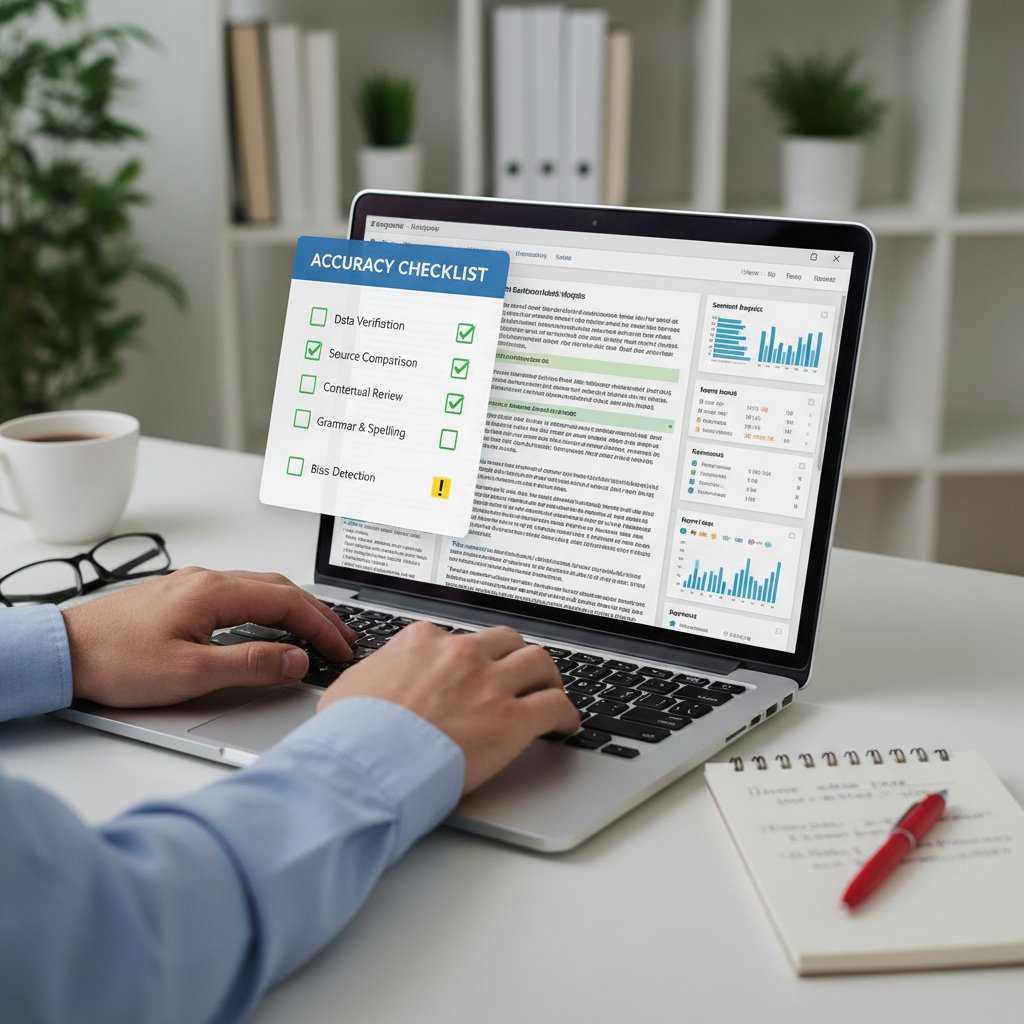
Embed these steps in your workflow and you’ll close loopholes most competitors ignore.
Red flags you can't afford to ignore
When reviewing documents, these red signals should stop you cold:
- Inconsistent data between versions or sections.
- Missing signatures, dates, or approval stamps.
- Ambiguous language that could be interpreted in multiple ways.
- Data that appears “too good to be true.”
- Evidence of manual edits or overwriting (visible track changes, unclear revisions).
- Absence of supporting documentation or source references.
- Overreliance on a single reviewer or department.
Each red flag is a potential time bomb for costly decision errors.
Self-assessment: how accurate is your process?
- Do you track and archive document versions, or rely on email chains?
- Are at least two departments involved in high-stakes reviews?
- Does your workflow include both automated analysis and manual review?
- Are feedback and lessons learned systematically captured?
If you answered “no” to any, your process is already at risk.
The rise of AI and tools like textwall.ai: promise vs. peril
What modern tools can (and can't) do for you
AI-powered document analysis platforms—like textwall.ai—promise to revolutionize accuracy. But where do they excel, and where do they fall short?

Definitions:
- AI Summarization: Instantly distills lengthy documents into concise, actionable insights.
- Intelligent Categorization: Organizes vast text volumes into logical, searchable categories.
- Automated Content Review: Flags inconsistencies, missing data, and potential risks at scale.
Where they still struggle:
- Nuanced interpretation: Machines can misunderstand subtle context, humor, or specialized jargon.
- Bias inheritance: AI is only as reliable as its training data. Historical errors can be perpetuated.
- Legal/ethical boundaries: Automated tools may miss requirements unique to highly regulated sectors.
The point: AI supercharges efficiency but needs human oversight to guarantee accuracy.
Hidden costs and unexpected benefits
| Category | Potential Hidden Cost | Unexpected Benefit |
|---|---|---|
| Implementation | Upfront integration complexity | Streamlined workflows post-deployment |
| Training | Steep learning curve for staff | Rapid upskilling, workforce modernization |
| Data Privacy | New compliance risks | Improved traceability and auditability |
| Maintenance | Continuous updates needed | Scalable as document volumes rise |
Table 4: AI document analysis—trade-offs. Source: Original analysis based on AchieveIt, 2024.
Making the switch is rarely cost-free, but the productivity and risk-reduction benefits often dwarf the investment, especially for organizations drowning in paper.
Choosing the right solution for your needs
- Assess your volume and document complexity: Not all platforms are equipped for highly specialized or regulated documents.
- Identify integration requirements: Will the tool play nicely with your existing tech stack?
- Evaluate transparency and reporting: Can you trace every change and decision back to its source?
- Prioritize adaptability: Today’s challenges won’t be tomorrow’s—pick a tool that evolves.
"The best decision-making tools don’t just speed things up—they make you think harder about what accuracy really means." — Original analysis, based on cross-industry benchmarking.
Industry breakdown: how different sectors tackle document-driven accuracy
Healthcare, law, finance, and beyond
Each sector faces unique document accuracy challenges—but the stakes, and the consequences, are universally high.
| Industry | Common Document Risks | Impact of Failure | Unique Best Practices |
|---|---|---|---|
| Healthcare | Misfiled patient records, ambiguous notes | Patient harm, lawsuits | Double-blind data entry, audits |
| Law | Misinterpreted clauses, old versions | Lost cases, compliance breaches | Peer review, clause libraries |
| Finance | Data entry errors, ignored updates | Fines, fraud, regulatory bans | Automated reconciliation, e-signature chains |
| Market Research | Manual coding errors, misleading summaries | False insights, bad strategy | AI-powered validation, interactive dashboards |
Table 5: Document accuracy challenges by industry. Source: Original analysis based on National Strategic Hub, 2023-24, AchieveIt, 2024.
Cross-industry lessons for sharper decision-making
- Treat every document as a living risk. Don’t rest on past accuracy—verify every time.
- Layer your defenses: Combine AI tools, manual review, and continuous feedback to close gaps.
- Invest in training: Even the best tech is useless if staff aren’t equipped to use it well.
- Build a data-driven culture: Organizations with robust data habits consistently outperform laggards.
What the top performers do differently
- Regularly audit document workflows and outcomes.
- Incentivize error reporting, not silence.
- Cross-pollinate best practices between departments.
- Never trust a document that hasn’t been independently verified.
“Organizations that embed data and documentation review into their DNA see fewer catastrophic mistakes and greater long-term returns.” — Original analysis, with synthesis from cited industry studies.
Controversies and debates: when accuracy becomes the enemy
The dark side of accuracy obsession
It’s possible to swing too far the other way. Ruthless pursuit of accuracy can grind innovation and agility to a halt, as teams drown in endless review cycles and bureaucratic second-guessing.

Perfection is a mirage—sometimes, “good enough” is the real path to progress.
Is perfectionism killing innovation?
- Paralysis by analysis: Endless review cycles delay key decisions, causing opportunities to pass by.
- Resource drain: Over-investment in documentation accuracy saps time and energy from creative or strategic work.
- Defensive culture: Teams prioritize covering their backs over bold moves, choking risk-taking.
“In the quest for bulletproof documentation, too many organizations become their own worst enemy.” — Original analysis, reflecting cross-industry sentiment.
Striking the right balance for real-world impact
- Define “accuracy enough” for each decision context.
- Time-box review cycles: Set hard deadlines for document sign-off.
- Automate where you can, think where you must.
- Reward learning from small errors, not just avoiding them.
Balance is power.
Your next move: practical steps to transform decision-making accuracy
Quick wins you can implement now
- Centralize all critical documents and lock down version sprawl.
- Set up automated error scans and flagging.
- Mandate a second opinion on every high-stakes document.
- Log every change and reviewer for traceability.
- Run a post-mortem on your last three decision failures—what went wrong, and why?

Long-term strategies for continuous improvement
- Invest in AI-powered platforms that augment, not replace, human expertise.
- Evolve your review processes by incorporating feedback and lessons learned.
- Build cross-functional “accuracy task forces” to share best practices and flag risks organization-wide.
- Align incentives so that reporting errors is seen as heroic, not shameful.
- Measure what matters: Track not just error rates, but decision outcomes and downstream impacts.
Staying ahead: future trends in document analysis
- Increasing convergence of AI and human review for “hybrid accuracy.”
- Rise of real-time, adaptive document analytics and dashboards.
- Movement toward transparent, explainable AI in regulated sectors.
- Growing emphasis on empathy and context in analysis, not just data crunching.
Beyond the basics: adjacent topics and ongoing challenges
Digital transformation and its impact on documentation
The shift to digital changes the game—but not always for the better. Digital documents are easier to search and share, but can also multiply errors at scale if governance is lax.

Organizations must rethink not just “how we store” but “how we scrutinize.”
Ethics, privacy, and trust in document analysis
Ethics: The responsibility to ensure documents are used fairly and do not propagate bias or harm.
Privacy: Strict protocols are necessary to safeguard sensitive information, especially in healthcare and finance.
Trust: Decision-makers must be able to trace every decision back to its documentation—and have confidence in its integrity.
"Compliance with privacy law isn’t just a regulatory obligation—it’s core to maintaining stakeholder trust." — Synthesized from National Strategic Hub, 2023-24.
Common misconceptions and how to avoid them
- Digital means accurate. (Reality: Automation amplifies errors if unchecked.)
- More reviewers always equals better accuracy. (Reality: Groupthink and review fatigue can backfire.)
- Document accuracy is the job of “someone else.” (Reality: Accountability is everyone’s business.)
Conclusion: the real cost—and power—of document accuracy
Here’s the ugly truth: getting decision-making accuracy wrong with documents isn’t rare—it’s the norm. Every industry, every team, every analyst is at risk. But the organizations that reckon with this, that refuse to trust blindly in process or technology alone, are the ones who thrive. As the research and case studies reveal, clean data and bulletproof frameworks aren’t just buzzwords—they are your insurance policy against disaster.
Tools like textwall.ai mark a new era in document analysis, but no AI, however advanced, can substitute for an informed, skeptical, and continuously improving human process. Embrace discomfort. Challenge your assumptions. Make document accuracy a living, breathing part of your culture—not just another checkbox.
If you’re ready to reduce decision errors, improve document analysis accuracy, and finally break free from the cycle of preventable mistakes, the strategies here are your blueprint. Don’t settle for the illusion of accuracy—demand the reality.
Sources
References cited in this article
- National Strategic Hub(nationalstrathub.cogta.gov.za)
- AchieveIt(achieveit.com)
- Analytics Insight(analyticsinsight.net)
- UseWhale(usewhale.io)
- Harvard Business Review(hbr.org)
- The ECM Consultant(theecmconsultant.com)
- PMC Editorial 2023(pmc.ncbi.nlm.nih.gov)
- ResearchGate(researchgate.net)
- ResearchGate: Black Box AI(researchgate.net)
- ACM Survey(dl.acm.org)
- MIT Guide(mit.edu)
- Skillmaker(skillmaker.education)
- MIT Press Reader(thereader.mitpress.mit.edu)
- China Business Knowledge(cbk.bschool.cuhk.edu.hk)
- InvenioIT(invenioit.com)
- Harvard RMF(rmf.harvard.edu)
- MIT Technology Review(technologyreview.com)
- Int-Comp(int-comp.org)
- IBM Document AI(ibm.com)
- Addepto(addepto.com)
- PDF.AI Best Practices(pdf.ai)
- The Good Boss(thegoodboss.com)
- Forbes(forbes.com)
- SAGE Journals(journals.sagepub.com)
- Boston Institute of Analytics(bostoninstituteofanalytics.org)
- Netguru(netguru.com)
- Auxis: IDP Tools 2024(auxis.com)
- Foxit Checklist(foxit.com)
- MetaSource(metasource.com)
- Insight7(insight7.io)
- Expedite Informatics(expediteinformatics.com)
Transform Complex Documents Into Clear Insights
TextWall.ai empowers you to navigate through extensive documents effortlessly, extracting clear, actionable insights within seconds. Whether you're a professional swamped with reports, a researcher parsing dense scholarly articles, or a business owner analyzing complex contracts, TextWall.ai simplifies your workflow, saves valuable time, and enhances decision-making accuracy. Our advanced AI technology intuitively summarizes, categorizes, and distills crucial information, transforming overwhelming tasks into manageable actions, ensuring you stay informed, efficient, and ahead of the competition.
Get startedReady to Master Your Documents?
Join professionals who've transformed document analysis with TextWall.ai
Frequently Asked Questions
What percentage of businesses prioritize evidence over intuition in decision-making?
According to the National Strategic Hub (2023-24), 96% of businesses now prioritize evidence over intuition in decision-making.
What are the main sources of document-driven decision errors?
Decision errors often stem from documents riddled with inconsistencies, omissions, plain human error, outdated numbers, missing context, and manual entry errors—not from the existence of documentation itself.
Why do organizations often fail to catch document-related decision errors?
Organizations elevate documentation to near-sacred status and rarely question its accuracy, operating under the false assumption that as long as documentation exists, their decisions are reliable.
What impact did digitizing documentation have on businesses according to the article?
Research from UseWhale (2024) shows that 47% of businesses digitizing documentation gained new customers thanks to improved efficiency.
How much do business leaders distrust their own data?
According to PassiveSecrets (2024), 73% of business leaders openly distrust their own data, and 92% admit that too many data sources limit decision-making progress.
Keep Reading
Explore more from Advanced document analysis

Document Analysis for Improved Accuracy When 99% Isn’t Enough

Why Document Analysis Accuracy Tools Fail in Practice

Document Analysis Decision-Making: Why Single Files Change Everything

Why Document Analysis Errors Persist Despite Modern AI Tools

Best Software for Document Analysis When Mistakes Are Not an Option
