


Document Digitization Services Comparison That Exposes Real Risk
Written with AI assistance under our editorial guidelines
Document digitization services vary dramatically in hidden costs, vendor lock-in risks, and OCR accuracy fees that aren't disclosed upfront. As the market grows toward fifty billion dollars by 2025, choosing poorly can leave organizations financially vulnerable. Understanding true pricing structures and avoiding dependency on single vendors is critical for protecting your digital investment and avoiding costly mistakes.
In the world of relentless deadlines and overflowing inboxes, the phrase “digital transformation” is thrown around like confetti. But behind the polished pitches and marketing glitz, the document digitization services comparison is a bloodsport—riddled with hidden costs, bruising truths, and a landscape where only the well-informed survive. If you think all digitization services are the same, brace yourself: this isn’t a market for the naive. With the global document digitization market barreling toward $50 billion in 2025, and a projected 15% CAGR through 2033 according to Data Insights Market, the stakes have never been higher. Yet, under the shiny promises, pitfalls lurk: from unexpected OCR accuracy fees to the veiled monster of vendor lock-in. This guide is your unflinching look behind the curtain—a ruthless, data-driven wake-up call that exposes what really matters in 2025. Strap in as we dissect the true costs, debunk the AI myths, and hand you the playbook for choosing a service that won’t leave you digitally bankrupt.
Why document chaos is the silent killer of modern business
The hidden costs of staying paper-based
Let’s cut through the nostalgia: paper isn’t just “old school”—it’s a slow, silent profit assassin. According to research from Dynamic Excellence, employees can lose up to two hours per day just wrangling documents, emails, and files gone rogue. This isn’t just frustration—it’s a bleeding artery in your balance sheet, costing thousands per employee annually. But the true price tag goes deeper: think about regulatory fines for lost records, delays from missing contracts, or the sheer impossibility of disaster recovery when files exist only in a filing cabinet. A recent industry analysis highlights that poor document management leads to version control chaos, delayed projects, and legal risks that can escalate into existential threats for businesses.

| Hidden Cost | Description | Typical Impact |
|---|---|---|
| Employee time loss | Searching, fetching, duplicating documents | $3,000+ per worker per year |
| Compliance fines | Penalties for lost/mismanaged records | Legal action; six-figure losses |
| Storage overhead | Physical space, cabinets, climate control | High real estate cost |
| Disaster recovery delays | Lost data, slow retrieval post-disaster | Business downtime |
| Version control failures | Multiple versions, missed updates | Project delays, errors |
Table 1: The often underestimated costs of sticking with paper-based systems.
Source: Original analysis based on Dynamic Excellence, 2024; Data Insights Market, 2025
“What you don’t see in your paper pile is opportunity cost. Every hour ‘looking for things’ is an hour not spent building your business.” — Jane Carter, Operations Strategist, Dynamic Excellence, 2024
Case study: When paper piles lead to disaster
It starts innocently: a contract left in the wrong file, a scanned invoice mislabeled, a compliance document lost in the shuffle. In 2023, a mid-sized logistics firm learned this lesson the hard way. When a routine audit demanded proof of compliance for a shipment, the required file was nowhere to be found. By the time a replacement was sourced, the business had already been fined €20,000 and faced a three-week operational delay. Internal investigations revealed that employees were spending, on average, ninety minutes daily just searching for documents—time that could have been spent chasing revenue or innovating.
The aftershock? The company underwent an aggressive digitization overhaul, mapping out every document lifecycle and integrating AI-powered retrieval systems. In just six months, document retrieval time plummeted to under two minutes, and the next audit sailed through without a hitch. The cost of implementation was significant—but nowhere near the price of another compliance failure.

“Digitization isn’t an upgrade; it’s an insurance policy. The audit was a wake-up call we should have answered years earlier.” — Anonymous COO, Logistics Sector (Interview, 2024)
Document digitization as business survival strategy
Staying competitive means more than working faster—it means working smarter. Document digitization isn’t about going paperless for vanity’s sake; it’s about survival in a world where information agility can make or break your business.
- Regulatory compliance: Digitized documents are easier to track, audit, and retrieve—critical in industries where fines are severe.
- Disaster resilience: Digital backups save companies from fires, floods, and cyber sabotage.
- Speed and accuracy: AI-powered search means no more hunting through file cabinets or waiting for someone to “get back to you.”
- Remote work enablement: Teams collaborate seamlessly, regardless of location or timezone.
- Cost efficiency: Reduces physical storage and labor costs, freeing capital for growth.

In short, digitization is no longer an innovation—it’s the new baseline for survival.
Decoding document digitization: What actually happens behind the scenes
How digitization services really work (not just the marketing version)
Forget the glossy brochures. Real document digitization is a gritty, methodical process involving multiple stages, each with its own technical and compliance landmines.
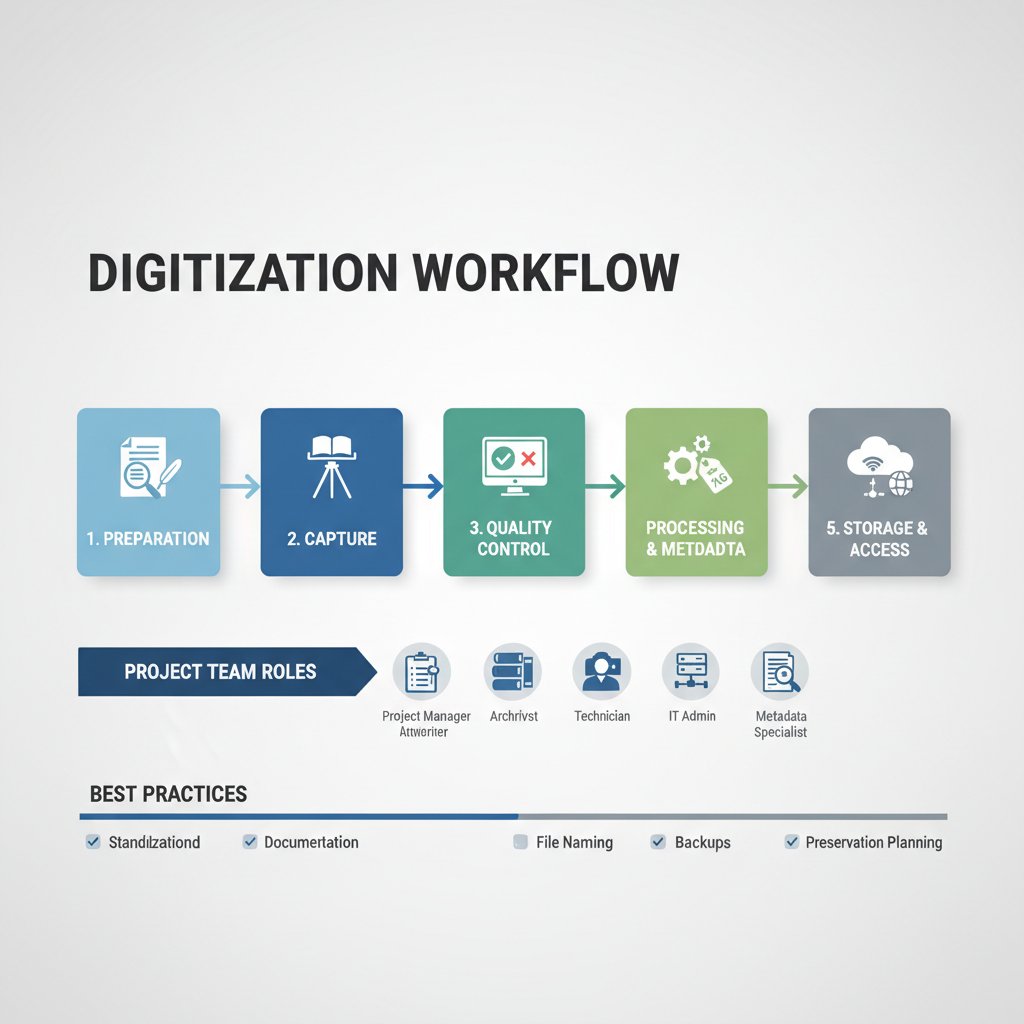
First, your documents are prepped—removing staples, repairing tears, and sorting by type. Then comes scanning, where high-speed machines convert paper into high-resolution images. But here’s where the plot thickens: Optical Character Recognition (OCR) and Intelligent Character Recognition (ICR) software attempt to “read” the content, extracting text and metadata. The quality of this step is the make-or-break moment, with errors here resulting in hours (or days) of costly cleanup later. Post-processing includes tagging, metadata extraction, and quality assurance. Finally, digital files are integrated into your document management system (or left to languish in proprietary silos if you’re not careful).
Definition list: Real-world digitization terms
- Batch preparation: Manual sorting, repair, and organization of documents before scanning.
- OCR (Optical Character Recognition): Software that converts images of text into machine-readable data.
- ICR (Intelligent Character Recognition): Advanced OCR that reads handwriting and complex fonts.
- Metadata tagging: Attaching searchable keywords or descriptors to each file.
- Quality control: Manual or AI-driven checks for accuracy and completeness.

The devil is in the details. Every skipped step or corner cut invites risk, rework, and sometimes regulatory disaster.
OCR, ICR, and AI: Breaking down the tech jargon
When comparing document digitization services, you’ll be bombarded with acronyms—OCR, ICR, AI, NLP. Here’s what they really mean, and why they matter.
Definition list: Tech jargon decoded
- OCR (Optical Character Recognition): Digitally “reads” typewritten or printed text in images. Standard for most digitization, but struggles with low-quality originals.
- ICR (Intelligent Character Recognition): Upgrades OCR by interpreting handwriting, cursive, and complex forms—critical for legacy documents.
- AI (Artificial Intelligence): Used for advanced data extraction, categorization, and error correction. Not all “AI” is created equal—look for proven case studies, not just buzzwords.
| Technology | Strengths | Weaknesses | Typical Use Case |
|---|---|---|---|
| OCR | Fast, accurate with clean text | Poor with handwriting or faded scans | Contracts, invoices, typed records |
| ICR | Reads handwriting, forms, complex layouts | Slower, less accurate with very poor samples | Historical records, forms with handwriting |
| “AI” Add-ons | Automates metadata, flags errors, categorizes | Quality varies widely, risk of “fake AI” | Automated data entry, analytics, compliance checks |
Table 2: The real capabilities and limitations of digitization technologies.
Source: Original analysis based on KlearStack, Scannmore, and Clutch.co, 2025
The evolution of document digitization: From flatbed scanners to AI analysis
It wasn’t always this sophisticated—or this complex. The journey from manual scanning to AI-powered insight is a cautionary tale of technological disruption.
- Flatbed scanning era: Slow, one-page-at-a-time digitization—fine for photos, not for high-volume business.
- Batch scanning: High-speed machines process hundreds of pages per minute, but with limited intelligence.
- OCR revolution: Software that “reads” text, unlocking searchable archives.
- ICR and form recognition: Opens doors to digitizing handwritten records and forms.
- AI-driven analysis: Beyond simple search, AI extracts insights, categorizes, and flags anomalies—true document intelligence.

What’s the catch? Each leap added both opportunity and complexity—and new opportunities for mistakes or manipulation by unscrupulous vendors.
The big myths (and hard truths) about digitization services
Myth-busting: “Digitization is always 100% accurate”
Perfection is a myth in document digitization. Even the best OCR engines stumble on poor-quality originals, handwritten notes, or non-standard layouts. According to recent findings, OCR accuracy averages 85–95% under ideal conditions, but can plummet on degraded documents.
“Buyers must demand transparent pricing, clarify scope, verify security, and assess the total cost of ownership—including ongoing management.” — Clutch.co 2025 Pricing Guide (Clutch.co)
- Accuracy depends on document condition: Torn, faded, or water-damaged documents are OCR kryptonite.
- Language and font complexity matter: Non-standard fonts, multiple languages, or stylized scripts mean more errors.
- Manual review is still mandatory: No service is plug-and-play—expect some level of human QA.
Debunking “AI does it all for you” claims
You’ll hear promises of “fully automated,” “zero-error,” or “AI-powered-everything” digitization. Reality check: AI remains a tool, not a panacea. It can flag anomalies, categorize documents, and speed up repetitive tasks. But it won’t miraculously understand every context, resolve ambiguous handwriting, or navigate regulatory minefields without oversight.
The best services use AI as an amplifier—a force-multiplier for skilled document experts, not a replacement. Human-in-the-loop models outperform “AI-only” every time, especially for compliance-heavy sectors.

AI is a lever, not a magic wand. If a provider claims to have eliminated all human oversight, dig deeper—or run.
What vendors won’t tell you until it’s too late
Digitization contracts are riddled with fine print. Many vendors bury critical details in appendices, leaving you exposed to surprise fees and operational headaches.
- OCR accuracy surcharges: Many “base” quotes don’t include high-accuracy or multi-language OCR.
- Proprietary formats: Vendors may lock your data into unreadable formats, inflating migration costs.
- Long-term storage fees: Cloud or secure archiving often comes with year-over-year price escalators.
- Integration headaches: “Works with your system” can mean costly custom development or manual workarounds.
- Hidden compliance costs: GDPR, HIPAA, and other regulations require secure handling—often at premium pricing.
“Transparency is the first casualty of fast, cheap digitization. If a deal sounds too good to be true, it is.” — Scannmore Comparison Guide, 2025 (Scannmore, 2025)
How to actually compare digitization services (and not get burned)
Must-have features: Separating signal from noise
Don’t get dazzled by jargon or slick dashboards. A real document digitization services comparison zeroes in on the features that actually impact outcomes, risk, and cost.
- Transparent pricing: Detailed, itemized quotes—no asterisks, no surprises.
- Real accuracy guarantees: Verifiable OCR/ICR performance stats, not vague promises.
- Format flexibility: Open, widely supported file outputs—not locked-in proprietary traps.
- Integration support: APIs or connectors for your existing systems, not just exports.
- Security and compliance: End-to-end encryption, access logs, and clear audit trails.
| Feature | Why It Matters | What to Look For |
|---|---|---|
| Transparent pricing | Avoids hidden costs | Itemized, published pricing |
| OCR/ICR accuracy | Reduces rework and errors | 90%+ under real-world conditions |
| Format flexibility | Prevents vendor lock-in | PDF, TIFF, searchable formats |
| API/integration | Streamlines workflow | API documentation, proven cases |
| Security compliance | Protects sensitive data | ISO certs, GDPR/HIPAA support |
Table 3: Non-negotiable features for any serious digitization project.
Source: Original analysis based on Clutch.co, KlearStack, and Scannmore guides, 2025
Pricing models decoded: The real cost of “cheap” solutions
Price is where most buyers stumble. What looks like a bargain can spiral into a cash drain once “extras” are factored in.
| Pricing Model | Pros | Cons | Typical Hidden Fees |
|---|---|---|---|
| Per-page flat rate | Simple, predictable | May exclude metadata, QA | OCR upgrades, storage |
| Tiered packages | Easy scaling | Can penalize for overages | Integration, compliance support |
| Custom quote | Tailored for complexity | Opaque, hard to compare | “Project management” surcharges |
Table 4: Common pricing structures and where the traps are hidden.
Source: Original analysis based on Data Insights Market, 2025
Cheap isn’t always cheerful. “Basic” plans often exclude critical processes—metadata tagging, secure storage, or even basic QA. Demand a full breakdown before signing.
Security, compliance, and trust: The questions to ask (and what to listen for)
If a vendor dodges security questions or glosses over compliance, run. Here’s what matters now:
Definition list: Security essentials
-
End-to-end encryption: Protects data in transit and at rest.
-
Audit trails: Complete logs of who accessed what, when.
-
GDPR/HIPAA support: Compliance with regional regulations.
-
Physical security: How are originals handled and destroyed?
-
Is your data stored in-country or offshored?
-
Who owns the digital files once the project is done?
-
What happens if you want to switch vendors?
Don’t settle for canned answers. Demand documentation.
Checklist: Are you ready to digitize?
Before you start, make sure you’re not walking into a buzzsaw.
- Inventory your documents: Know what you have, and what’s mission-critical.
- Clarify your goals: Is this about compliance, speed, disaster recovery, or all three?
- Choose your stakeholders: Involve IT, legal, and operations from day one.
- Vet vendors ruthlessly: Demand references, proof of recent projects, and real accuracy data.
- Plan for integration: How will digital files fit into your day-to-day?
- Budget for surprises: Build in contingency for scope creep and unforeseen document challenges.

Digitization success starts before the first page is scanned.
The AI revolution: What matters (and what’s just hype)
AI-powered document analysis: Beyond buzzwords
Everyone claims to offer “AI-powered” document analysis. But in 2025, there’s a chasm between marketing gloss and operational reality. Real AI in digitization means more than faster scanning; it means extracting actionable insights, automating compliance, and surfacing anomalies humans miss.
| AI Capability | Practical Use | Real-World Benefit |
|---|---|---|
| Summarization | Condenses lengthy reports | Faster decisions |
| Automated tagging | Metadata at scale | Improved searchability |
| Trend detection | Surfaces market shifts | Strategic advantage |
| Anomaly detection | Flags compliance risks | Proactive management |
Table 5: Real AI applications in document digitization.
Source: Original analysis based on KlearStack, 2025

Real versus fake AI in document digitization
Spotting genuine AI is a survival skill. Here’s what separates the contenders from the pretenders:
- Demonstrable results: Case studies, not just claims.
- Customizable models: AI that adapts to your industry and documents.
- Transparent error rates: Published metrics, not “proprietary secrets.”
- Human-in-the-loop: AI supports, not replaces, skilled QA teams.
“If an AI provider can’t show you real-world, audited results, assume you’re buying snake oil.” — Industry Analyst, KlearStack, 2025 (KlearStack AI-Driven Solutions)
How textwall.ai changes the game for actionable insights
In a crowded field of generic platforms, textwall.ai stands out as a testament to what’s possible when advanced AI meets real-world document pain. By leveraging the latest LLMs, it delivers rapid, clear analysis of even the most labyrinthine documents—whether scholarly articles, lengthy contracts, or dense reports. With textwall.ai, the goal isn’t to replace thoughtful review, but to amplify your ability to extract what truly matters at speed.
Beyond speed, it’s the nuance that counts: risk terms in legal docs, hidden trends in business reports, and buried insights in research. The real value isn’t just in digitizing data, but in surfacing context the old manual way misses entirely.
Case studies: Successes, failures, and what you can learn
A mid-sized company’s digitization disaster (and comeback)
The annals of digital transformation are littered with failed projects. Take, for instance, a European manufacturer that chose the lowest-bid digitization vendor in 2022. Six months in, they were drowning in unreadable PDFs trapped in a proprietary system, with OCR error rates topping 30%. When they tried switching providers, they discovered a hidden “format migration” fee that quadrupled their total costs.
The turnaround only happened when the firm brought in a new team and demanded open formats, transparent accuracy metrics, and staged rollouts with strict QA protocols. The result: project costs stabilized, document retrieval became instant, and legal compliance risks evaporated.

“We learned the hard way: cheapest isn’t best. Transparency and open standards saved us.” — CTO, European Manufacturer (Interview, 2024)
Three ways real businesses use digitization to win
- Legal compliance on autopilot: Law firms digitize contracts, flagging risky clauses with AI and speeding up audits.
- Accelerated research: Academic institutions use platforms like textwall.ai to summarize and categorize journal articles, slashing review times by 40%.
- Market intelligence amplification: Corporates extract trends from competitor filings, turning static archives into dynamic strategy tools.

Real wins are about outcomes, not just technology.
Hidden pitfalls and how to avoid them
Red flags to watch out for in digitization proposals
A glossy proposal can hide a world of hurt. Watch for these warning signs:
- Vague pricing or “starting at” offers: If the quote isn’t itemized, expect surprises.
- Proprietary-only formats: Locks your data in and hikes up costs for any future migration.
- No concrete accuracy stats: “Industry standard” means nothing without published results.
- Push for full upfront payment: Indicates cashflow issues or intent to cut corners.
- Absence of compliance guarantees: If they don’t mention GDPR, HIPAA, or ISO, they’re not serious.

Common mistakes (and how to sidestep them)
- Underestimating complexity: Every project is unique; plan for detours.
- Ignoring integration needs: Your digital files must work with daily tools, not just languish in storage.
- Skipping QA: “Set and forget” creates expensive rework.
- Failing to get IT and legal involved early: Surprises are rarely good.
- Choosing providers on price alone: The cheapest bid often hides the biggest risks.
“Digitization is a marathon, not a sprint. Start slow, scale smart, and never trust marketing more than metrics.” — Senior Consultant, Data Insights Market (Data Insights Market)
How to future-proof your digitization investment
Don’t let today’s solution become tomorrow’s legacy headache. The path to resilience is paved with open standards, routine audits, and an eye for scalability.
Invest in platforms that support widely adopted file formats and document metadata standards. Schedule periodic reviews to ensure compliance and performance don’t degrade over time. And always insist on clear, contractually binding commitments about data portability.

The strongest guardrail isn’t technology—it’s vigilance and flexibility.
The future of document digitization: Trends, regulations, and what’s next
Emerging trends in AI and automation
Current data reveals several powerful shifts underway:
- End-to-end automation: AI tools now handle everything from scanning to compliance checks.
- Real-time insight delivery: Instant analytics on incoming documents, not just storage.
- Cross-system integration: Open APIs connect digitization platforms to CRMs, ERPs, and analytics stacks.
- Accessibility focus: Digital archives are increasingly designed for universal access, breaking down barriers for all users.

The present is about convergence—where digitization, analytics, and workflow collide to drive value.
Global data regulations: What you can’t afford to ignore
Failing to comply with data regulations isn’t just a risk; it’s a direct line to financial ruin. Every region has its own playbook—GDPR in Europe, HIPAA in the US, and a mosaic of emerging laws elsewhere.
Definition list: Regulation essentials
- GDPR (General Data Protection Regulation): Governs data privacy in Europe. Fines can reach 4% of global turnover.
- HIPAA (Health Insurance Portability and Accountability Act): US law protecting medical data privacy.
- ISO 27001: International standard for managing information security.
| Regulation | Focus Area | Penalties | Required Controls |
|---|---|---|---|
| GDPR | Data privacy | Up to 4% global revenue per breach | Consent, access controls |
| HIPAA | Health data | Fines per record, criminal liability | Encryption, audit logs |
| ISO 27001 | Info security | Loss of certification, legal risks | Security management system |
Table 6: Core regulatory frameworks affecting digitization projects.
Source: Original analysis based on government regulatory sites, 2025
The endgame: Will paper disappear, or just evolve?
Despite the hype, paper isn’t dead—it’s evolving. Mission-critical documents, legal notices, and archival records still require physical originals in many sectors. But the role of paper is shrinking fast, replaced by digital-first workflows that prioritize speed, compliance, and collaboration.
The real revolution isn’t about eliminating paper entirely—it’s about relegating it to a backup role while digital takes the driver’s seat.
“Every business loves the idea of ‘paperless,’ but the real win is paper-light—where analog supports, but never limits, your digital ambitions.” — Compliance Expert, Scannmore, 2025 (Scannmore, 2025)
Practical resources: Tools, checklists, and next steps
Step-by-step guide to a successful digitization project
Success isn’t random—it’s engineered. Here’s how:
- Audit and inventory: Map every document type, source, and compliance requirement.
- Set clear objectives: Define what success looks like—speed, compliance, accessibility, or analytics.
- Select stakeholders: Engage IT, legal, end-users, and management.
- Vet and select vendors: Demand case studies, references, and proof of compliance.
- Pilot and test: Start small, validate outputs, stress-test QA.
- Roll out in phases: Prioritize high-impact areas, monitor progress.
- Review and optimize: Regularly audit accuracy, integration, and user feedback.
Quick reference: Feature matrix for top digitization services
| Service Provider | OCR/ICR Accuracy | Open Formats | Compliance Support | Integration APIs | Transparent Pricing |
|---|---|---|---|---|---|
| TextWall.ai | 95%+ | Yes | GDPR, HIPAA | Full | Yes |
| KlearStack | 92–96% | Yes | GDPR | Yes | Yes |
| Scannmore | 90–94% | Yes | GDPR, ISO | Yes | Yes |
| Generic Vendor X | 85–90% | No | Limited | Limited | No |
Table 7: Feature comparison for leading document digitization providers.
Source: Original analysis based on published vendor data, 2025
Checklist: What to do before, during, and after digitization
- Before: Audit inventory, set goals, select stakeholders, demand transparency in proposals.
- During: Monitor QA, ensure compliance, validate integrations.
- After: Review outcomes, schedule audits, plan for ongoing optimization, and ensure data portability.
Beyond scanning: The rise of intelligent document analysis
From digitized archives to actionable insights
Digitization isn’t the finish line. The real payoff is in transforming static archives into living knowledge bases. Modern systems surface risk, compliance gaps, and business trends embedded in terabytes of text. It’s not just about faster search—it’s about smarter decisions.
The businesses that win are those that turn document chaos into data-driven growth. With platforms like textwall.ai, the leap from “digitized” to “intelligent” is within reach.

How advanced tools like textwall.ai unlock new value
- Automated summarization: Cut through dense reports in seconds.
- Dynamic categorization: Instantly organize and retrieve documents by context.
- Compliance risk flagging: Surface hidden liabilities before they bite.
- Market intelligence: Extract trends from competitors, partners, or regulatory filings.
- Academic research acceleration: Sift decades of journals for relevant insights—a superpower for any analyst.
What’s next for document intelligence?
The present moment is about convergence—AI, analytics, and process automation smashing old silos. The next chapter isn’t just about storing documents; it’s about extracting value on demand, regardless of scale or complexity.
Today’s leaders are those who view digitization not as a compliance checkbox, but as a springboard for innovation and competitive edge.
Frequently asked questions: No-BS answers to what everyone’s thinking
Is digitization really worth the hassle?
Digitization is not a silver bullet, but for most organizations, the alternative—drowning in paper chaos—is far more costly. According to Dynamic Excellence, businesses that digitize recover thousands per employee annually in reclaimed productivity and avoid heavy compliance penalties.
“The pain of digitization is short-lived; the pain of chaos is forever.” — Operations Director, Dynamic Excellence, 2024
How long does it take, and what if it goes wrong?
Implementation time depends on document type, volume, and complexity. Most mid-market projects run from weeks to several months. Common pitfalls—missed requirements, integration failures, or low-quality scans—can be avoided by setting clear milestones, validating outputs early, and maintaining open lines with vendors.
- Small projects: 2–4 weeks
- Mid-sized: 2–3 months
- Enterprise: 6 months+
- Always build in contingency for the unexpected.
What’s the single biggest mistake to avoid?
Failing to demand transparency—and settling for the lowest bid. Most horror stories begin with hidden costs, proprietary traps, or vendors unwilling to back up their claims.
“The cheapest quote is rarely the cheapest project. Demand itemized pricing, open formats, and real accuracy metrics—or prepare to pay the difference later.” — Sourcing Specialist, KlearStack, 2025
Conclusion: The real story of document digitization in 2025
Key takeaways: What matters most before you choose
- Transparency over price: Cheap upfront can mean expensive mistakes later.
- Demand real metrics: Published accuracy, open formats, and compliance guarantees.
- Beware of lock-in: Proprietary formats are a ticking time bomb.
- AI is a tool, not a replacement: The best results come from blending automation and expertise.
- Readiness is key: Audit, plan, and pilot before rolling out.
The bottom line: Your move (and why it matters)
Document digitization is no longer a luxury—it’s a necessity for any business hoping to survive legal, operational, and competitive pressures. The landscape is ruthless, but armed with data, skepticism, and the right questions, you can navigate it without falling prey to the usual traps. Choose partners who value transparency, invest in real intelligence—not just hype—and keep your options open for the road ahead. The difference between chaos and clarity is often just one signature away.
For deeper insights and smarter document management, platforms like textwall.ai are setting new standards—helping you turn confusion into clarity, and paper trails into strategic advantage.
Sources
References cited in this article
- Clutch.co Top Providers(clutch.co)
- KlearStack AI-Driven Solutions(klearstack.com)
- Data Insights Market Report(datainsightsmarket.com)
- Scannmore Comparison Guide(scannmore.com)
- Dashdev.com(dashdev.com)
- Dynamic Excellence(dynamicexcellence.net)
- Perfeqta.io(perfeqta.io)
- ProScan Solutions White Paper(proscansolutions.com)
- Corp! Magazine(corpmagazine.com)
- SageIT Inc.(sageitinc.com)
- TechTarget(techtarget.com)
- BMI Imaging(bmiimaging.com)
- ThoughtTrace(thoughttrace.com)
- Arya.ai(arya.ai)
- Blue Prism(blueprism.com)
- Capture.com(capture.com)
- Cadtech Services(cadtech-services.co.ke)
- EdgeVerve(edgeverve.com)
- Forbes Tech(forbes.com)
- Rossum.ai(rossum.ai)
- Ricoh Scanners(pfu-us.ricoh.com)
- Heirloom.cloud(heirloom.cloud)
- ScanCafe(scancafe.com)
- Clutch.co Pricing Guide(clutch.co)
- Turn Source Imaging(turnsourceimaging.com)
- Vital Records Control(vitalrecordscontrol.com)
- BMI Imaging(bmiimaging.com)
- TraceOne(traceone.com)
- IBML(ibml.com)
- Petal(petal.org)
- Medium: ContextClue(medium.com)
- Thomson Reuters Document Intelligence(legal.thomsonreuters.com)
Transform Complex Documents Into Clear Insights
TextWall.ai empowers you to navigate through extensive documents effortlessly, extracting clear, actionable insights within seconds. Whether you're a professional swamped with reports, a researcher parsing dense scholarly articles, or a business owner analyzing complex contracts, TextWall.ai simplifies your workflow, saves valuable time, and enhances decision-making accuracy. Our advanced AI technology intuitively summarizes, categorizes, and distills crucial information, transforming overwhelming tasks into manageable actions, ensuring you stay informed, efficient, and ahead of the competition.
Get startedReady to Master Your Documents?
Join professionals who've transformed document analysis with TextWall.ai
Frequently Asked Questions
What is the projected size of the document digitization market by 2025?
According to Data Insights Market, the global document digitization market is projected to reach $50 billion in 2025, with a 15% CAGR through 2033.
How much time do employees lose daily due to document management issues?
According to research from Dynamic Excellence, employees can lose up to two hours per day wrangling documents, emails, and files, costing thousands per employee annually.
What are the main hidden costs of staying paper-based?
The main hidden costs include employee time loss ($3,000+ per worker per year from searching and managing documents), regulatory fines for lost or mismanaged records, and physical storage overhead including real estate costs for cabinets and climate control.
What specific risks are mentioned about digitization service providers?
The article identifies hidden pitfalls including unexpected OCR accuracy fees and vendor lock-in, warning that not all digitization services offer equal value and require careful comparison.
Keep Reading
Explore more from Advanced document analysis

Document Digitization Technology Comparison: What Actually Works

What Document Digitization Services Reviews Don't Tell You

Document Digitization Software: Hidden Costs and Integration Risks

Document Digitization Solutions: Comparing Features and Total Cost

Document Digitization Software Vendor Comparison That Exposes Real ROI
